The AI text-to-speech market has matured fast. What was a novelty three years ago is now infrastructure for e-learning teams, content studios, indie developers, and solo creators publishing narrated content at scale. That maturity brings a harder problem: the tools are no longer obviously different. They all claim natural voices, AI voice cloning, and broad language support. Most of them are actually good enough.
This AI text-to-speech comparison cuts through the positioning. We cover five active text-to-speech tools - Lovo AI, ElevenLabs, Murf.ai, Amazon Polly, and Google Cloud TTS - with honest verdicts on who each one actually serves. We also cover PlayHT, which was acquired by Meta in July 2025 and shut down; if you're a displaced PlayHT user searching for alternatives, that section is for you. And we address the other elephant in the room: Lovo's active lawsuit, which is the most discussed topic in TTS communities right now and one you deserve to know about before spending money.
The Tools at a Glance
| Tool | Best For | Price (approx.) | Voice Quality | Rating |
|---|---|---|---|---|
| Lovo AI | Solo creators, e-learning, all-in-one | $24-48/mo | Good (English), Weak (non-English) | 3.5/5 |
| ElevenLabs | Quality-first, voice cloning, podcasting | $5-22/mo | Excellent | 4.7/5 |
| PlayHT | - | Discontinued (Meta acquisition) | - | N/A |
| Murf.ai | Business presentations, corporate training | $19-139/mo | Good | 4.1/5 |
| Amazon Polly | Cloud/enterprise apps, AWS stack | Pay-per-use | Adequate | 3.8/5 |
| Google Cloud TTS | GCP-native apps, WaveNet voices | Pay-per-use | Good (WaveNet), Robotic (Standard) | 3.9/5 |
Lovo AI (Genny): The All-in-One Argument
Rating: 3.5/5
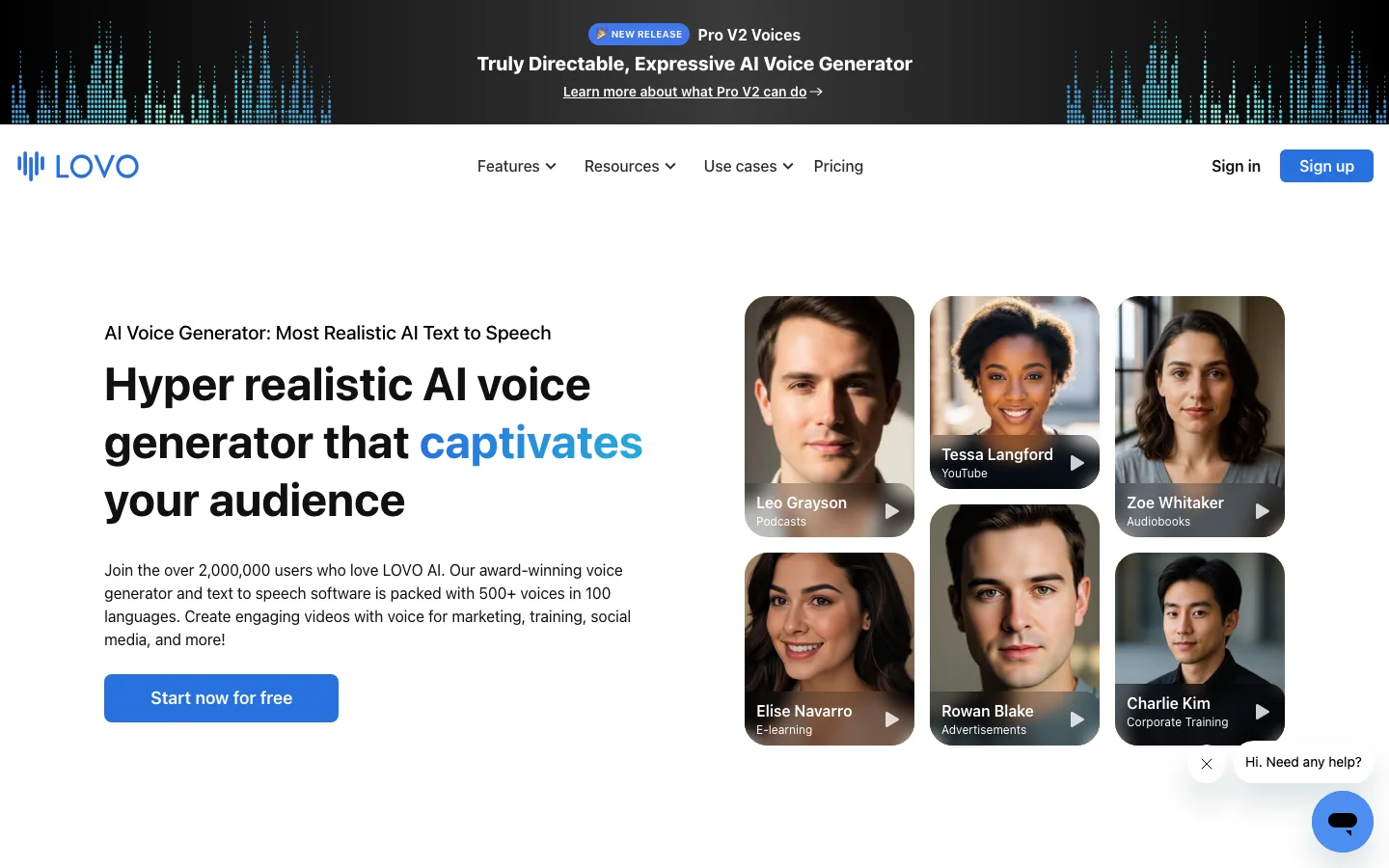
Lovo AI - sold under its Genny editor brand - is the only TTS platform on this list that bundles voice generation with a video editor, a ChatGPT-powered scriptwriter, AI image generation, and a stock footage library. If you're a solo creator who currently pays for four separate tools to produce narrated video content, the case for Genny is straightforward: one subscription, one workflow.
The voice library is large: 500+ voices, 140+ languages, 30+ emotional styles. Word-level controls let you adjust pitch, emphasis, pronunciation, and pauses - more granular than most mid-tier tools. Voice cloning works from a short audio upload. A developer community has built stable API integrations into production workflows (there's a well-documented FileMaker-to-After Effects pipeline with real follow-up discussion). E-learning teams have confirmed months of production use for audiobook content.
Where it falls short. English voice naturalness doesn't reach ElevenLabs. In every organic comparison thread, users testing both conclude ElevenLabs sounds more natural for conversational English. The 140+ language claim requires a closer look: actual non-English voice quality is materially weaker than the headline suggests - users building non-English content have found the selection inadequate despite the number. Monthly generation limits are a hard cap that pushes high-volume users out. There's also a documented bug where text starting with a number fails to generate correctly, with no official fix in sight.
The lawsuit. This needs to be said plainly. Lovo faces a class action lawsuit - Lehrman v. LOVO, Inc., filed in Manhattan federal court - alleging that LOVO hired voice actors on Fiverr under the pretense of a "secret research project with no commercial use," paid them around $1,200, then commercialized those recordings as AI voice clones without consent. The amended complaint added a second plaintiff class: Lovo's own paying customers, who unknowingly used those voices.
This isn't a rumor or a Reddit complaint. It's a federal court filing. LOVO has not visibly engaged on any of the lawsuit-related threads in major subreddits. That silence is a signal in itself.
What does it mean for you as a buyer? The lawsuit doesn't make the product stop working. But if voice ethics matter to your brand, or if you're producing content at scale that might later face scrutiny, this is material information. We'd recommend monitoring the lawsuit's progress before committing to heavy reliance on the platform.
Honest verdict: Lovo AI is the right call for solo creators who want TTS, video editing, and scripting under one subscription, don't require best-in-class English naturalness, and produce content at moderate volume. It is not the right call for anyone who needs ElevenLabs-quality audio, produces non-English content as a primary output, or is uncomfortable with the lawsuit context.
ElevenLabs: The Quality Benchmark
Rating: 4.7/5
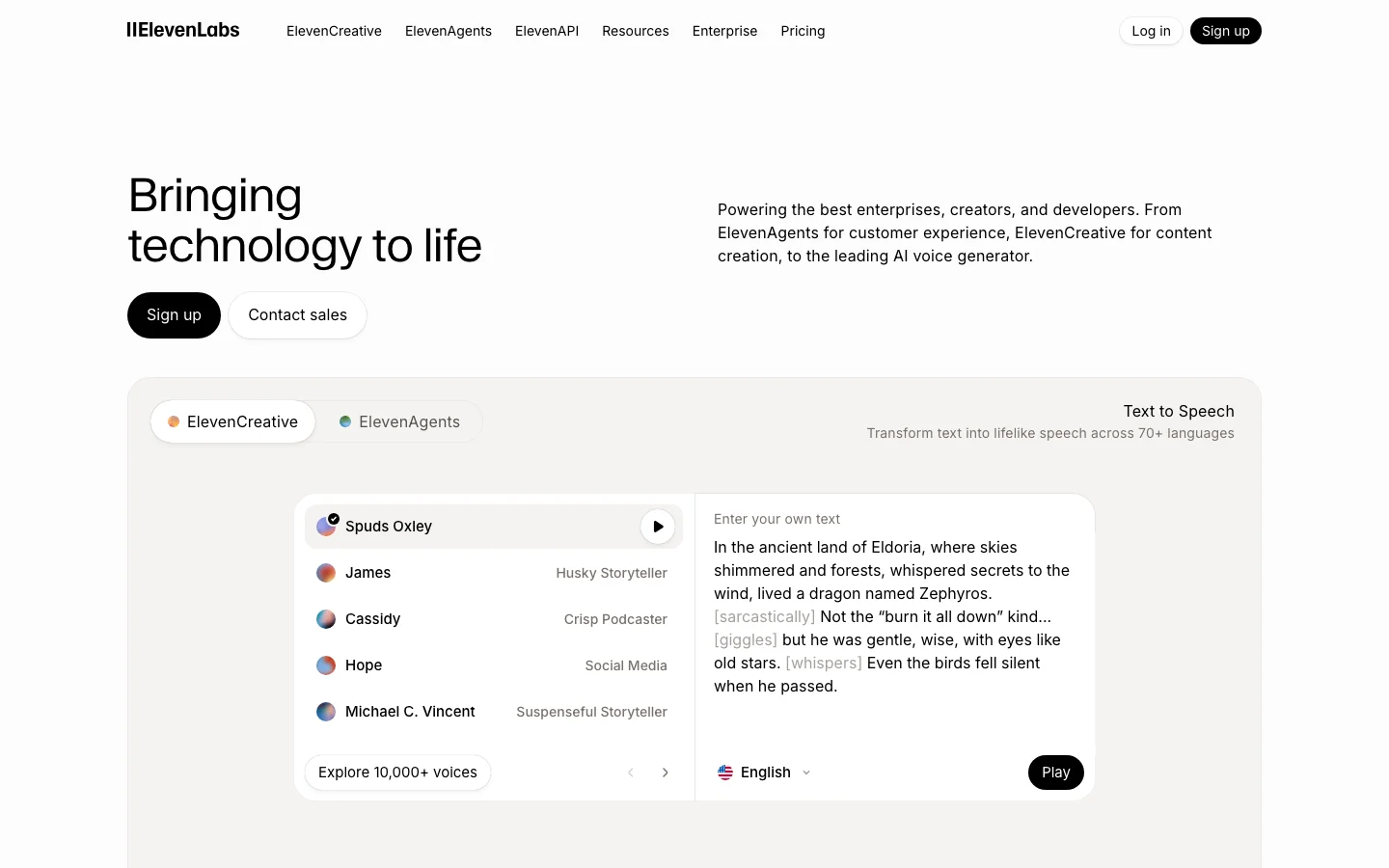
ElevenLabs is the default recommendation in the TTS market right now. Ask in any developer forum or content creator community which tool produces the most natural English voice, and ElevenLabs comes up first. That reputation is earned - its multilingual v2 and the newly released Eleven v3 model produce audio that's consistently harder to distinguish from a human recording than anything else in this tier. Eleven v3 just exited alpha and the reception has been strong: symbol-reading errors (numbers, URLs, phone numbers) are reduced by roughly two-thirds, and emotional expressiveness, accent control, and multi-character dialogue are all noticeably improved.
Voice cloning is ElevenLabs' showcase feature. The instant voice clone (from a one-minute sample) and professional clone (from a curated dataset) are both genuinely useful. The clones retain emotional nuance, not just timbre. For podcasters dubbing episodes in multiple languages, or for creators who want a consistent branded voice across all content, this capability justifies the subscription alone.
The platform is not all-in-one. ElevenLabs generates audio. It doesn't edit video, write scripts, or produce images. If you need those capabilities, you'll combine it with other tools - which adds cost and workflow friction. The free tier is useful for evaluation but quickly limiting for production. The Creator plan at $22/month (110,000 characters, commercial license, instant voice cloning) is the realistic ceiling for most individual users - scaling beyond that means enterprise territory.
Pricing is the #1 reason people leave ElevenLabs - not quality. That's worth saying plainly. The quality is undisputed. But "credit anxiety" is a recurring phrase in creator communities, and the 2025 rollout of a paywall on the ElevenReader app (previously free) caused real trust damage: no in-app warning, no email, users hit mid-session paywalls. ElevenLabs partially reversed the change but the trust cost was already paid. If you're evaluating ElevenLabs, go in with clear expectations on cost.
Best for: Podcasters, audiobook producers, anyone dubbing video in multiple languages, developers building voice-forward products where naturalness is non-negotiable. If you're a displaced PlayHT user looking for the closest quality equivalent, ElevenLabs is the default landing spot the community has converged on.
Cheaper ElevenLabs Alternatives: Price vs Quality
If the quality-first argument above convinced you but the pricing did not, here is where the market actually lands once you look past ElevenLabs.
| Tool | Starting Price | Free Tier | Voice Quality | Best For | Commercial Rights |
|---|---|---|---|---|---|
| ElevenLabs | $6/mo (Starter) | 10,000 chars/mo, no commercial | Excellent | Voice cloning, podcasting, narration | Starter plan and above |
| Murf AI | $19/mo | 10 min, no downloads, no commercial | Good | Corporate e-learning, business narration | Paid plans only |
| Lovo AI | $24/mo | 2 generations/mo, watermarked | Good (English) | All-in-one: TTS + video editor | Paid plans only |
| Vozo AI | Paid plans | Limited trial, watermarked | Functional | Video dubbing and translation | Paid plans only |
The decision axis most people are actually on: You want ElevenLabs quality but cannot justify $22/month for your current volume. Here is the honest routing.
Go with Murf AI if you need corporate or business narration at a predictable price. The $19/month plan gives you a clean workflow, no credit anxiety, and solid enough quality for e-learning and training content. You will miss voice cloning and the expressive range, but for slide narration and HR training, you will not notice.
Go with Lovo AI (Genny) if you want to stop paying for separate tools. Lovo bundles TTS with a video editor, AI scriptwriter, and stock footage under one subscription. For a solo creator currently running four separate tools, $24/month covers a lot. Read the lawsuit context in our Lovo section above before committing.
Stay with ElevenLabs at the Starter tier ($6/month) if the primary blocker was the $22 figure, not the monthly spend in general. The Starter plan at $6/month gives you 30,000 credits, commercial license, Instant Voice Cloning, and Dubbing Studio. You lose Professional Voice Cloning and the API, but for most individual creators those are not blockers.
For users who want to test before paying anything, see our free AI voice generator guide. It covers exactly what each free tier gives you and where you will hit walls.
PlayHT: No Longer Available (Meta Acquisition)
Status: Discontinued
PlayHT was acquired by Meta in July 2025 and shut down as a standalone commercial product with approximately five days notice to users. The service is gone. Paying subscribers - including AppSumo lifetime deal holders who had paid hundreds of dollars - received no compensation. Support tickets went unanswered. The help desk went dark alongside the product.
This is worth dwelling on because PlayHT had a genuinely strong following before the shutdown. It was API-first and developer-focused, with the fastest generation speeds among cloud TTS providers and emotional intonation quality that users praised as a differentiator - "nothing came remotely close to the emotional intonations and quality of PlayHT" was a recurring description in audiobook production communities. It was a real product with real users whose workflows were built around it.
Meta's acquisition ended that without warning.
If you were a PlayHT user and are searching for alternatives, the community has largely converged on ElevenLabs as the closest quality equivalent, with Cartesia gaining ground for latency-sensitive API use cases. "PlayHT alternatives" and "PlayHT replacement" are currently high-intent search terms precisely because so many users were stranded and are actively rebuilding their stacks.
There is nothing to recommend here. Do not pay for PlayHT. The product does not exist.
Murf.ai: Business-Grade TTS, Honestly Positioned
Rating: 4.1/5
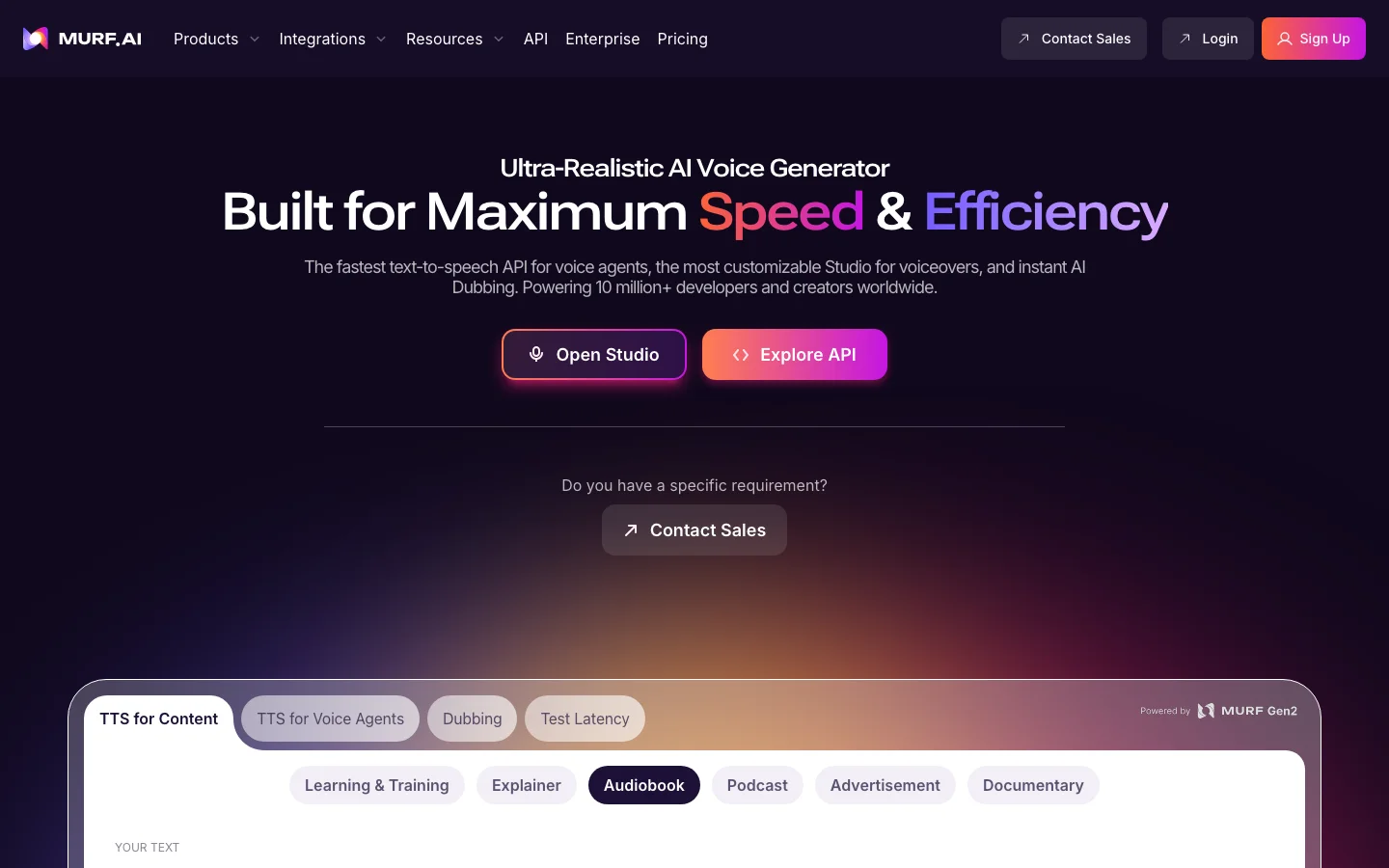
Murf.ai has quietly built a defensible position in the corporate market. The voice quality is solid - not ElevenLabs-level natural, but professional and clean, which is exactly what slide deck narration or corporate training video requires. The web editor is polished and non-technical users can operate it without a learning curve. Teams can collaborate on projects, which Lovo's interface doesn't prioritize.
Pricing runs $19-$139/month depending on tier. Unlike ElevenLabs' credit model, Murf uses a character/word-based limit per plan that users find more predictable for batch work - "credit anxiety" doesn't appear in Murf discussions the way it does for ElevenLabs. Significant discounts (50%+) are routinely available and the community knows to look for them before paying list price.
The "robotic or corporate" label follows Murf in broader TTS discussions - users evaluating it for documentary narration or expressive fiction content find it falls short. That's fair criticism. But it also describes exactly why Murf fits its actual market: L&D teams, HR training, corporate video narration, and e-learning publishers don't need emotional range. They need consistent, clean, professionally-voiced output with a workflow that non-technical stakeholders can operate. Murf delivers that.
One genuine pain point: pronunciation fine-tuning - fixing acronyms, product names, technical terms - is gated behind higher plan tiers. For e-learning content with specialized vocabulary, that's a real frustration at entry-level pricing.
Best for: HR teams producing training content, marketers building product walkthroughs, educators narrating course material, L&D managers scaling from a handful of modules to dozens. Not ideal for fiction, podcasting, or any context where expressiveness matters.
Amazon Polly: If You're Already in AWS
Rating: 3.8/5
Amazon Polly is a utility play. The voices are functional - Neural voices are noticeably better than the older Standard voices - but the quality ceiling is below Murf and ElevenLabs. The real reason to choose Polly is AWS integration. If your application already lives in the AWS ecosystem, Polly drops in cleanly via the SDK, and the pay-per-character pricing ($4 per million characters for Neural) is cost-effective at volume.
The web console is minimal. This is infrastructure for developers, not a tool for content creators. No built-in editor, no collaboration features, no stock footage. Voice cloning requires Amazon's separate IVS/Connect products.
Best for: Backend developers building AWS-native applications, teams with existing AWS contracts, high-volume use cases where cost per character matters more than voice naturalness.
Google Cloud TTS: WaveNet Is Good, Standard Is Not
Rating: 3.9/5
Google Cloud TTS has two distinct quality tiers, and the gap between them is large enough to matter. WaveNet and Neural2 voices are genuinely natural - among the better cloud options available. Standard voices (the cheaper tier) are robotic and dated by 2026 standards.
The pricing model reflects this: WaveNet is ~$16 per million characters versus $4 for Standard. If you're evaluating Google Cloud TTS, budget for WaveNet - Standard voices will hurt the user experience of anything facing an end user.
Like Polly, this is a developer-facing product. GCP SDK integration is clean, latency is low, and the API is reliable at scale. The voice selection covers 40+ languages with multiple speakers per language. Voice cloning is not available as a direct feature.
Best for: GCP-native applications, teams with existing Google Cloud contracts, use cases requiring reliable API performance at scale with WaveNet quality.
How to Choose: Use-Case Routing
You need one subscription that covers TTS + video editing + scripting. Start with Lovo AI (Genny). The all-in-one value proposition is real, especially for solo creators. Accept the English quality ceiling and the lawsuit context as known risks.
Voice naturalness is non-negotiable and English is your primary language. ElevenLabs. It's not close. Pay the premium - the quality difference is audible to end listeners.
You're building an application and need a reliable API with low latency. ElevenLabs has a capable API, and Cartesia is worth evaluating specifically for streaming latency. PlayHT was the go-to for this use case but is no longer available - see the PlayHT section above.
Your team needs corporate training or business presentation narration. Murf.ai handles this workflow better than any tool in this list, with collaborative editing and clean voice quality for professional-context audio.
You're deeply inside AWS or GCP and need native SDK integration. Amazon Polly or Google Cloud TTS respectively. Pick the cloud you're already in. Both are infrastructure plays, not creative tools.
You produce content primarily in non-English languages. This is nuanced. Lovo's 140+ language claim is broad but quality outside English drops. ElevenLabs is more consistent across languages and the stronger choice for multilingual production.
You want zero generation limits and have technical skills. Open-source options (Bark, OpenVoice, Kokoro) exist and have no character caps. Quality is variable and you'll need to run inference yourself, but the ceiling on volume is removed entirely.
AI Text to Speech: The Same Searchers, a Different Entry Point
If you arrived here searching for "AI text to speech" or "text to speech AI" rather than "AI voice generator," you are looking for the same tools. The distinction is mostly framing, not technology.
"AI voice generator" is the term creative users tend to use: podcasters, video creators, game developers building dialogue, audiobook producers. "AI text to speech" is the term production and workflow users tend to use: e-learning developers automating course narration, software teams building accessibility features, developers integrating TTS into applications.
The tools above serve both. The routing changes slightly depending on where you sit:
E-learning and course narration (TTS use case): Murf AI is built for this. The workflow is designed for non-technical users producing corporate training content at steady volume. Predictable pricing, clean voice output, team collaboration. See the Murf AI review.
Developer API and application integration (TTS use case): ElevenLabs has the most mature API surface in this category at the Creator price point. REST API, streaming, voice cloning endpoints, MCP server integration. For AWS-native applications, Amazon Polly integrates more cleanly with the existing stack.
Audiobook and long-form narration (voice generator use case): ElevenLabs at Creator tier. The 440,000 character monthly allowance on Flash/Turbo covers a full audiobook per month. The v3 model holds listener attention across long-form content in a way that other tools at this price do not.
YouTube narration and content creator workflows (voice generator use case): ElevenLabs Creator or Lovo AI depending on whether you need all-in-one video editing. If you are combining TTS with video production, Lovo's Genny editor removes a tool from your stack.
The Honest Ranking for 2026: Best AI Voice Generator
- ElevenLabs - English voice quality leader, AI voice cloning benchmark. Eleven v3 just raised the ceiling further. Worth the price if naturalness matters.
- Murf.ai - Quietly excellent for business and corporate content. Predictable pricing, strong studio UX.
- Google Cloud TTS (WaveNet) - Solid cloud infrastructure play for GCP teams.
- Amazon Polly (Neural) - AWS-native utility, functional but not inspiring.
- Lovo AI - Genuine value for all-in-one solo creators, but the lawsuit and quality ceiling are real. Eyes open.
PlayHT is excluded from this ranking. It was acquired by Meta in July 2025 and is no longer available as a commercial product.
The AI voice market will keep moving. ElevenLabs is investing heavily in multilingual models and platform expansion beyond TTS. Open-source alternatives (Kokoro, Chatterbox, Qwen3-TTS) are closing the quality gap fast and pricing pressure from below is real. And Lovo will need to resolve its legal situation one way or another - that resolution, or lack of it, will say a lot about where the platform stands. PlayHT's exit is also a reminder that even well-regarded SaaS products in this space can disappear quickly - build workflows with that in mind.
For now: match the tool to the job. A developer building a voicebot and an e-learning designer narrating safety training have almost nothing in common in terms of what they need. The tools above are differentiated enough that the right choice is usually clear once you know your actual requirements.
Related: Full Lovo AI review | See all AI voice tools on Belreos
Related Comparisons
Looking for more AI tool comparisons? Check out our guides:
Browse more: AI Voice Tools | All AI Tools