The best AI writing tools market looked very different two years ago. A handful of platforms - Writesonic, Jasper, Copy.ai - competed on who could generate the most content the fastest. Teams bought subscriptions, built workflows around bulk output, and measured success in words per dollar.
That race is over. And the winner isn't any of them.
In 2026, the honest answer to "what's the best AI writing tool?" is usually "just use ChatGPT or Claude directly." That's uncomfortable for a category that's raised hundreds of millions of dollars, but the data from actual users is consistent: dedicated AI writing platforms have not kept pace with the base models. The output gap has widened, not narrowed.
That said, dedicated tools still serve real purposes - they're just different purposes than they used to be. Understanding which tool fits which workflow is the whole game now.
| Tool | Best For | Price Range | Our Take |
|---|---|---|---|
| Writesonic | GEO/AEO tracking, agency brand visibility | ~$20-$299/month | Best-in-class GEO; writing product needs editing |
| Jasper | Enterprise brand voice, team compliance | ~$49-$69/month+ | Strong workflow; same AI-stiffness problem |
| Copy.ai | Sales automation, CRM-fed personalization | Free-$249/month+ | Best for outbound volume, not editorial |
| ChatGPT | Quality-first writing with skilled prompting | Free-$25/month | Beats most dedicated tools on raw output |
| Claude | Editorial quality, longer-form content | Free-$25/month | Best prose quality; no built-in workflow |
How the Category Has Changed: GEO Has Redefined What "AI Writing Tool" Means
Before comparing products, you need to understand a shift that's happened quietly across the category.
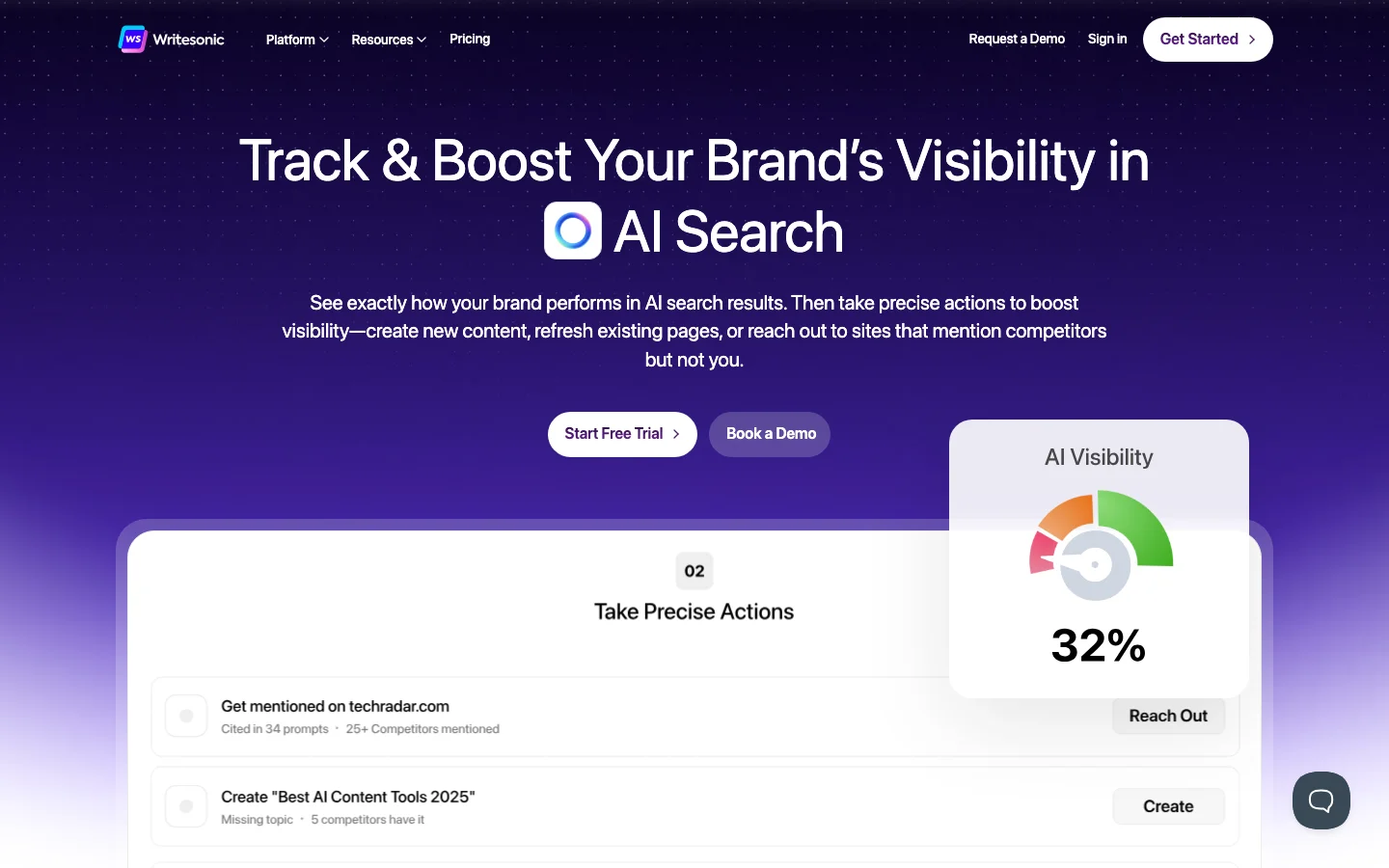
Several major AI writing platforms - Writesonic most visibly - have pivoted away from content generation toward GEO (Generative Engine Optimization) and AEO (Answer Engine Optimization). These are tools for tracking and improving how your brand appears inside AI-generated answers: when someone asks ChatGPT or Perplexity about your product category, do you show up? What do the AI engines say about you?
This is a legitimate and growing problem for marketing teams. It's also a fundamentally different product than an AI writer.
The practical consequence: if you're shopping for an "AI writing tool" and you land on Writesonic's pricing page, you may be looking at a GEO intelligence platform, not primarily a writing platform. The category has fractured. Know what you're buying.
There's also a quality plateau worth naming. Across the board, AI writing output in 2026 has a recognizable signature - a certain "AI stiffness" that readers and AI detectors can both identify. The frontier models (GPT-4o, Claude 3.5/3.7) have partially solved this with better instruction-following and style matching. Most dedicated writing platforms are still running on older model versions or fine-tuned variants that don't match the base quality. The result: you often get better, less AI-sounding output by prompting Claude or ChatGPT directly than by using a specialized tool with a slicker UI. This roundup covers generation tools; if you need grammar and clarity checking on writing you already have rather than drafting from scratch, see our Grammarly review.
Writesonic: The GEO Pivot Story
Best for: Marketing agencies tracking brand visibility in AI search. Not for teams that need publish-ready writing.
Pricing: From ~$20/month for writing; $299/month for the agency GEO plan.
Rating: 3.5/5
Writesonic's story in 2025-2026 is one of the more honest product pivots in the category. They built an AI writing platform, watched the writing quality competition get commoditized by the base models, and shifted their development focus toward something the base models can't easily replicate: GEO and AEO intelligence infrastructure.
The product now centers on a dashboard that tracks where your brand appears in ChatGPT, Perplexity, and other AI search answers. It shows sentiment, identifies gaps, and - according to agency users who've been running it for real clients - delivers actual ROI. One agency user reported clients getting leads who said they found them through AI search, crediting Writesonic's action center for surfacing what to fix. That's not a generic testimonial; it's a specific mechanism producing a specific outcome.
The writing product hasn't disappeared. Chatsonic (their chatbot with live web access), brand voice training, bulk article generation, and long-form drafting are all still there. But the honest picture from real users is damning: output "reads like AI," flags detectors regardless of prompt tuning, and needs substantial editing before anything is publishable. Some users have started layering separate "humanizer" tools on top of Writesonic output - which is a signal that the core writing product isn't self-sufficient.
The bundled SEO angle is real: The $299/month agency plan includes an SEO toolkit that users describe as essentially free given the GEO pricing. If you're already paying for an SEO platform and considering a GEO tool, the math on consolidating into Writesonic's agency plan may work out.
Where to be cautious: The GEO space is crowded and moving fast. Guzu.ai has already pulled at least one agency away from Writesonic by offering cheaper pricing and what users describe as better data visualization. Profound is the enterprise market leader but priced out of SME reach. Ahrefs is beginning to build GEO features, which represents a longer-term threat from a tool most agencies already trust.
Read our full Writesonic review for the complete breakdown.
ChatGPT: The Default Comparison
Best for: Teams with skilled prompt writers who want maximum writing quality and flexibility.
Pricing: Free (GPT-4o limited); $20/month (Plus); $25/month per user (Team).
The uncomfortable truth in any AI writing tool comparison is that ChatGPT used directly - with thoughtful prompting - outperforms most dedicated writing platforms on output quality. This isn't a knock on the platforms; it reflects the reality that OpenAI's frontier models have improved faster than the tools built on top of them.
Where ChatGPT falls short as a content workflow tool: it has no CMS integration, no brand memory that persists across sessions (without workarounds), no bulk generation, and no SEO tooling built in. Unlike dedicated AI writing software, you're working in a chat interface, starting fresh each session, exporting manually.
For a solo writer or small team that can absorb that friction, the quality-to-cost ratio is hard to beat. For an agency running dozens of client workflows with brand guidelines and content calendars, the missing infrastructure matters.
The practical question isn't "is ChatGPT better?" - it often is, on raw quality - but "does the quality difference justify the workflow overhead vs. a dedicated tool?"
For most professional content teams, the answer is: use ChatGPT or Claude for final drafts and voice-sensitive writing; use dedicated tools for research, brief generation, and workflow automation.
Jasper: Enterprise AI Writing
Best for: Large content teams with existing brand guidelines, compliance requirements, or enterprise procurement needs. (Looking for a Jasper AI review? Here's our honest take.)
Pricing: From approximately $49/month (Creator); $69-$125/month (Pro); Enterprise pricing available. Jasper + Surfer SEO together is consistently described by users as "the most expensive option" in the category. Confirm current pricing at jasper.com.
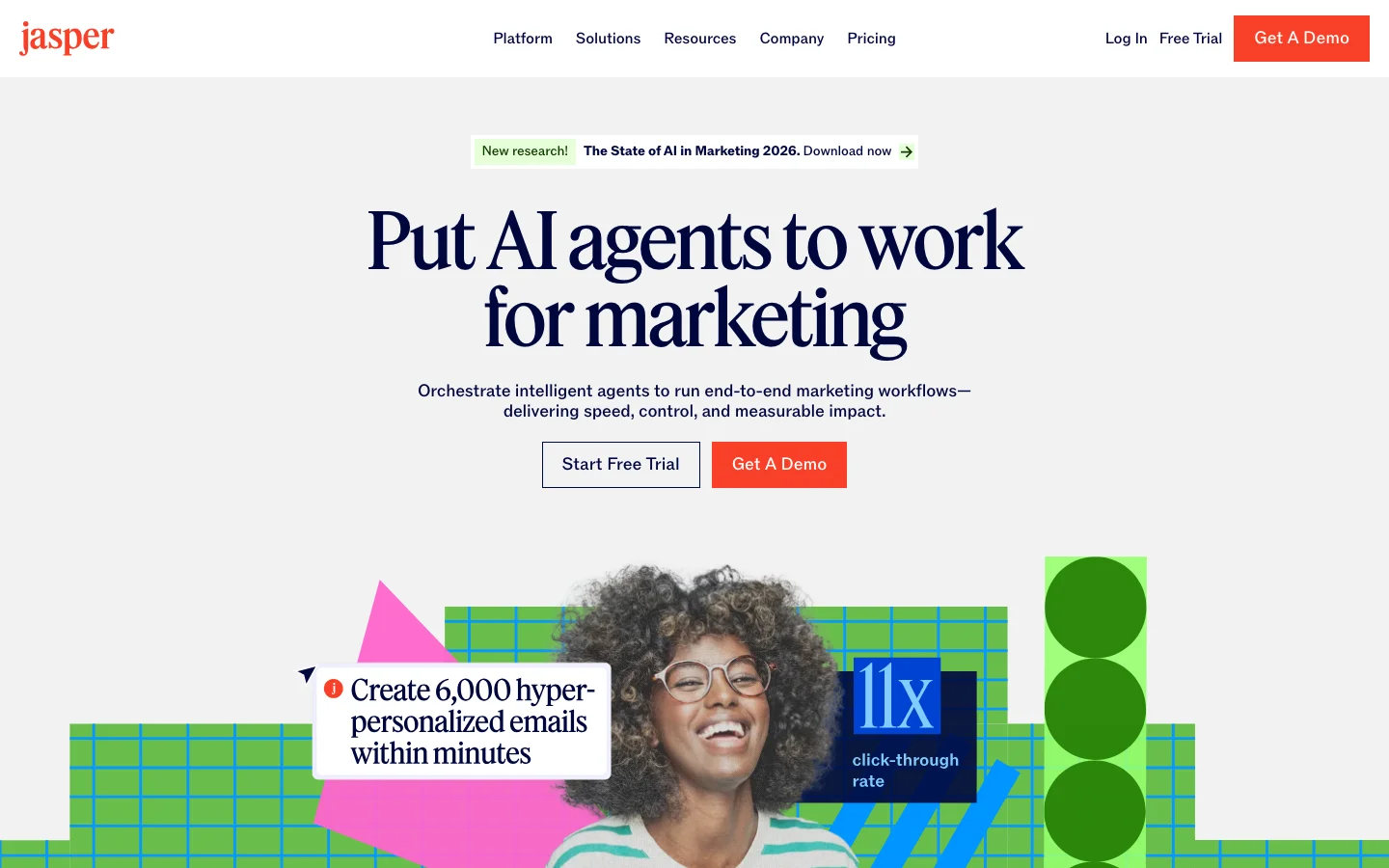
Jasper is the tool that kept its focus on writing quality when others pivoted. Their Jasper Brand Voice feature is genuinely sophisticated - you can train it on existing content and have it apply tone, terminology, and style across outputs. For enterprise teams managing consistent brand voice across multiple writers and markets, this is real infrastructure. In community discussions through 2026, Brand Voice is the only feature consistently cited as Jasper's genuine differentiator post-ChatGPT - no competitor in the $49-$125 range replicates it as well according to real user reports.
The trade-off: you're paying enterprise prices for a writing tool whose base model output still has the same AI-stiffness problems as everyone else. Jasper's strengths are in workflow (templates, campaigns, team collaboration features, integrations with Surfer SEO and HubSpot) and brand compliance - not in producing prose that reads like a skilled human wrote it.
The ChatGPT comparison is Jasper's biggest challenge. Solo users consistently arrive at the same conclusion: ChatGPT Plus at $20/month covers roughly 80% of Jasper's use cases at less than half the price. The remaining 20% - Brand Voice enforcement across a team, Surfer SEO integration in the writing flow, HubSpot publishing, multi-seat approval workflows - is where Jasper's moat actually lives. That moat is real but it's narrow, and it's almost exclusively an enterprise justification. For solo writers or small teams, the value-to-cost math doesn't hold.
One additional nuance worth naming: Reddit signal on Jasper is thinner than on Writesonic or Copy.ai. Community discussion concentrates in LinkedIn and marketing Slack channels rather than Reddit - which means Reddit-sourced reviews (including many affiliate comparisons) are working from an incomplete picture of the Jasper user base. The loudest voices are often dissatisfied solo users who bought a team tool expecting a solo solution.
In the writesonic vs jasper comparison, the answer depends entirely on what you're optimizing for. Writesonic wins if you need GEO tracking; it loses on everything else. Jasper wins on team workflow and brand voice; it loses on pricing for smaller teams. Neither is the right answer if what you actually need is great writing.
Jasper makes the most sense inside larger organizations where the writing tool is part of a larger content ops stack, where there are legal or brand compliance requirements that need workflow enforcement, and where the procurement process favors established enterprise vendors.
Copy.ai: The Workflow Automation Angle
Best for: Sales and marketing teams automating high-volume, structured content like email sequences, ad copy, and CRM-fed personalization. (Need a Copy.ai review? See our breakdown below.)
Pricing: Free (limited, heavily credit-gated - users report burning through 2/3 of the trial allowance on a single request); $49/month (Starter); $249/month (Team); Enterprise pricing. Confirm current pricing at copy.ai.
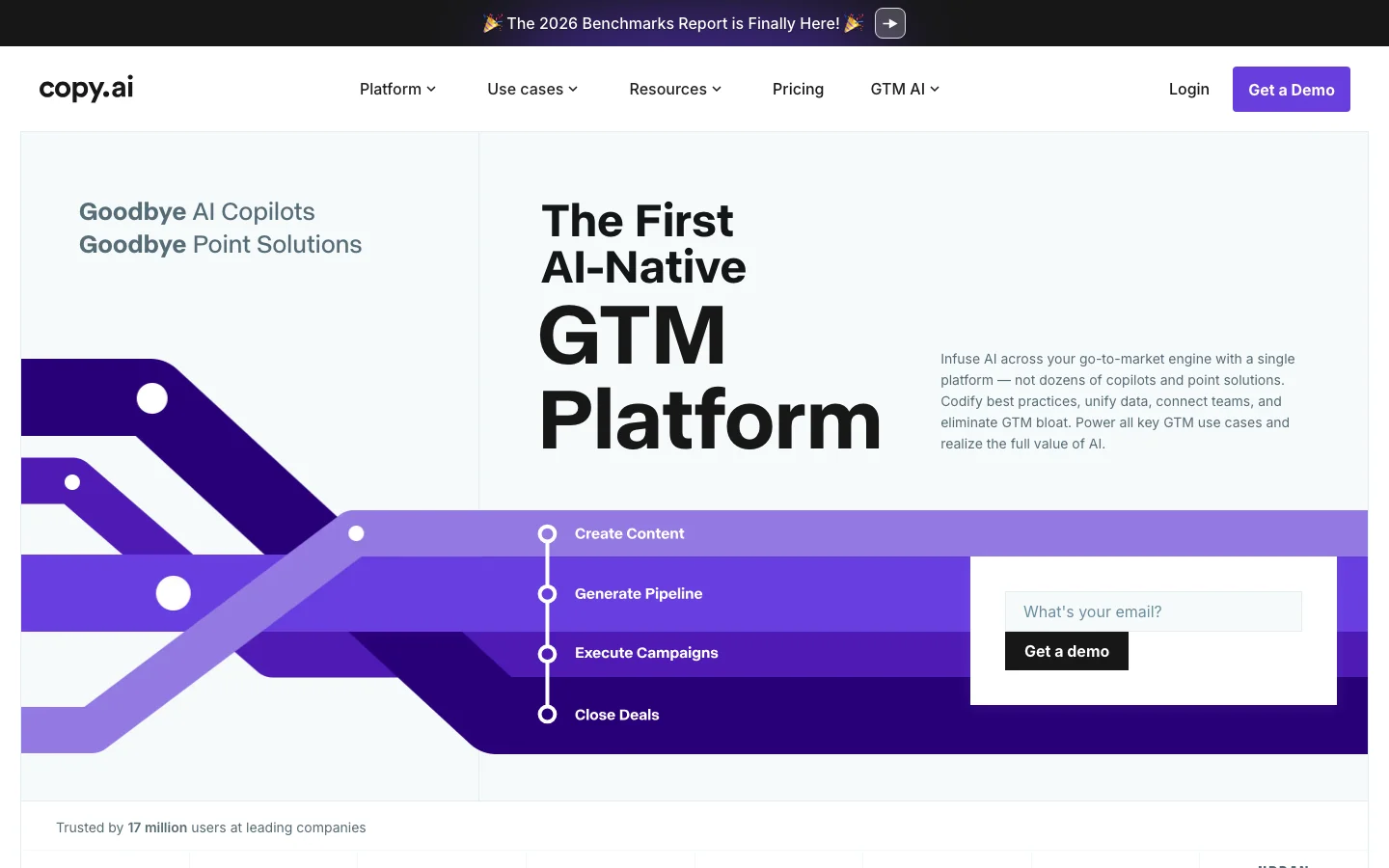
Copy.ai has navigated the quality plateau problem by moving upstream from content generation into workflow automation. Their GTM (Go-to-Market) AI platform connects to CRM data, sales tools, and content workflows to automate personalized outreach at scale - not just "write me an email" but "pull this prospect's data from Salesforce and generate a personalized cold email sequence." A 2024 partnership with Perplexity adds real-time web intelligence to that workflow, giving sales reps current market data inside their outreach generation.
This is a genuinely different value proposition than straight content generation. If you're running an outbound sales operation or a demand gen team sending high-volume personalized campaigns, the workflow automation angle has real value that you can't easily replicate by prompting ChatGPT directly.
For pure content writing - blog posts, articles, long-form - Copy.ai is not where you want to be. Raw quality feedback from actual users is harsh: one r/marketing commenter with 7 upvotes put it directly: "Compared to even GPT 3.5, it's been very useless to me and I find it hard to prompt it to create something non-repetitive." Long-form coherence is a documented weakness - outputs lose continuity across sections, and outputs require heavy editing before anything is publishable. This is not a tool to evaluate for editorial content.
The pivot story is also worth understanding because it creates a positioning gap that most reviews miss. Copy.ai has near-zero organic Reddit footprint in 2025-2026 - almost all visible mentions are cross-posted marketing content in low-karma subreddits, not genuine user discussion. The product has lost its individual user community (writers who moved to ChatGPT) before building a visible enterprise champion community. It exists in a credibility gap: no longer trusted by the writers who made it famous, not yet trusted by the sales leaders it's now targeting. That's a real risk factor for a tool you're evaluating for a long-term workflow investment.
The positioning comparison: Copy.ai and Writesonic's writing products occupy almost identical territory. The differentiator is the direction they've expanded. Writesonic went toward GEO intelligence; Copy.ai went toward sales automation. Know which expansion direction is relevant to your problem.
Claude: For Teams That Need Publish-Ready Quality
Best for: Teams producing editorial-quality content where voice, nuance, and accuracy matter.
Pricing: Free (limited); $20/month (Pro); $25/month per user (Team).
Claude (Anthropic's model) is increasingly the recommendation for content teams that have tried the dedicated writing tools and been disappointed by output quality. The reasoning is practical: Claude 3.5/3.7 Sonnet produces longer-form prose with better structural coherence and fewer AI-tells than most dedicated writing platforms, often at a lower effective per-word cost.
What Claude lacks is everything that dedicated tools provide in terms of workflow: no built-in SEO research, no CMS integrations, no brand voice training, no bulk generation. You're working with a chat interface and, if you're on the API, whatever integrations you build yourself.
For teams with developer resources, Claude's API is worth considering as the engine inside a custom workflow. You get frontier-quality output with the infrastructure you build around it. For teams without development capacity, Claude Pro as a manual writing assistant often produces better results than subscribing to a dedicated platform and using its generation features.
The honest position: if you've been using a dedicated AI writing tool and still spending significant editing time fixing AI-sounding output, try a Claude Pro subscription for a month and do the same workflows manually. Many teams find the editing time drops meaningfully, making the workflow overhead of no dedicated platform integration acceptable.
The Verdict: Who Should Use What
The AI writing tool comparison question has stopped having a clean answer because the tools have stopped competing in the same space.
Use ChatGPT or Claude directly if:
- Your team has experienced writers who can prompt effectively
- Writing quality and voice fidelity matter more than volume
- You can absorb the workflow overhead of no CMS integration
- You're producing editorial content, not marketing copy at scale
Use Writesonic if:
- You run a marketing agency and need to track brand visibility in AI search (ChatGPT, Perplexity)
- You want a bundled GEO + SEO platform without paying for both separately
- You need first-draft volume generation and have editors to clean it up
- See our full Writesonic review for the complete breakdown
Use Jasper if:
- You're at an enterprise that needs brand voice enforcement across multiple writers
- You have compliance or procurement requirements that favor established vendors
- Team collaboration features and integrations matter as much as output quality
Use Copy.ai if:
- You're running sales automation or demand generation at volume
- You need AI that connects to your CRM and personalizes at scale
- The use case is structured marketing copy (email sequences, ad variants), not editorial content
When a dedicated tool beats using an LLM directly: The honest answer is narrower than the marketing suggests. A dedicated tool beats direct LLM use when: (1) you need workflow integration the base models don't offer, (2) you're running volume that requires bulk generation or team coordination, or (3) you're buying GEO intelligence, not writing at all.
If none of those apply, the cost-quality math usually favors using the base models directly.
The AI writing tool category is not going away. But it's being reorganized around the workflows and infrastructure layers that the base models can't provide - not around writing quality, where they've already won. The teams that understand that distinction will spend their tool budgets more effectively than those still comparing word counts.
Pricing and product features current as of March 2026. AI tool pricing changes frequently - confirm on vendor sites before purchasing.
Related Comparisons
Looking for more AI tool comparisons? Check out our guides:
- Best AI Video Generation Tools 2026
- Best AI Art Generators 2026
- Best AI Tools for Small Business 2026
Browse more: AI Writing Tools | All AI Tools