HeyGen vs Synthesia 2026: Which AI Video Platform Actually Delivers?
Both tools generate AI avatar video from a script. Both offer multilingual dubbing. Both let you build a custom avatar from a recording. On paper they are near-identical. In practice, they serve completely different buyers, and picking the wrong one will cost you either money or time. Here is the current state of each platform as of April 2026, what changed since last year, and who should use which.
To compare all AI video generators, not just avatar platforms, see our AI video category.
Quick Verdict
If you are evaluating every AI video tool on the market, start with our AI video generation roundup first. If you are specifically comparing HeyGen and Synthesia, read on.
Avatar Quality and Realism
HeyGen Avatar V
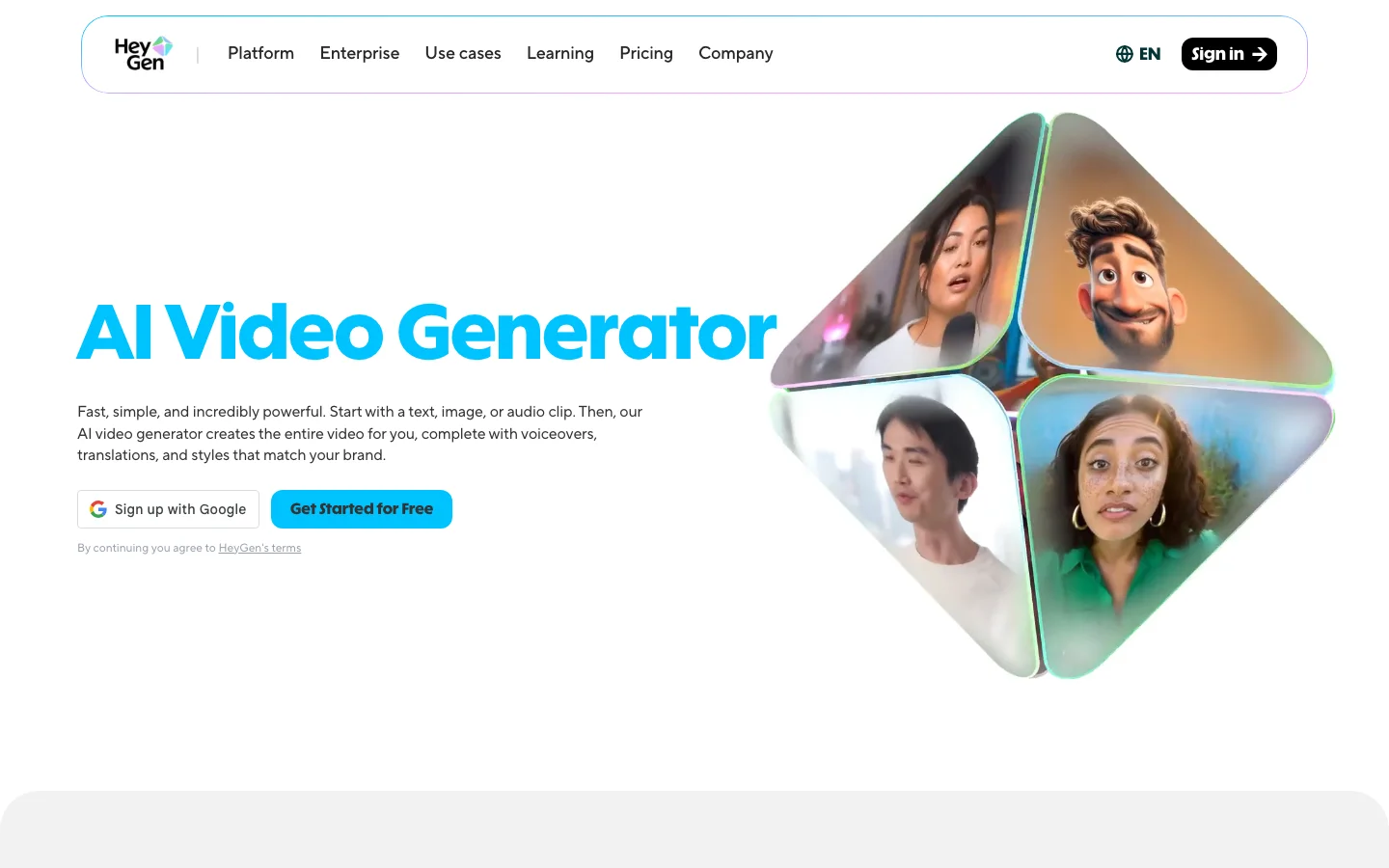
The biggest change since early 2026: HeyGen launched Avatar V, their new flagship avatar model. It replaces Avatar 4.0 and represents a meaningful architectural shift. Earlier systems conditioned avatar generation on a single reference frame. Avatar V operates over a full video context window, which is how it achieves the consistent identity that prior models struggled with across scene changes.
In practical terms: Avatar V creates your digital twin from a 15-second webcam recording. The same face, the same micro-expressions, the same presence whether the video is 30 seconds or 10 minutes. Wide shots, medium frames, and close-ups all stay consistent. HeyGen trained the model on 10M+ data points specifically to get the details that tip an avatar from uncanny to believable: natural brow movement, genuine eye contact, phoneme-level lip sync across 175+ languages.
For creator and consumer-facing content where the uncanny valley kills engagement, HeyGen Avatar V is currently the best option in this category. That is not a close call.
Synthesia Studio Avatars
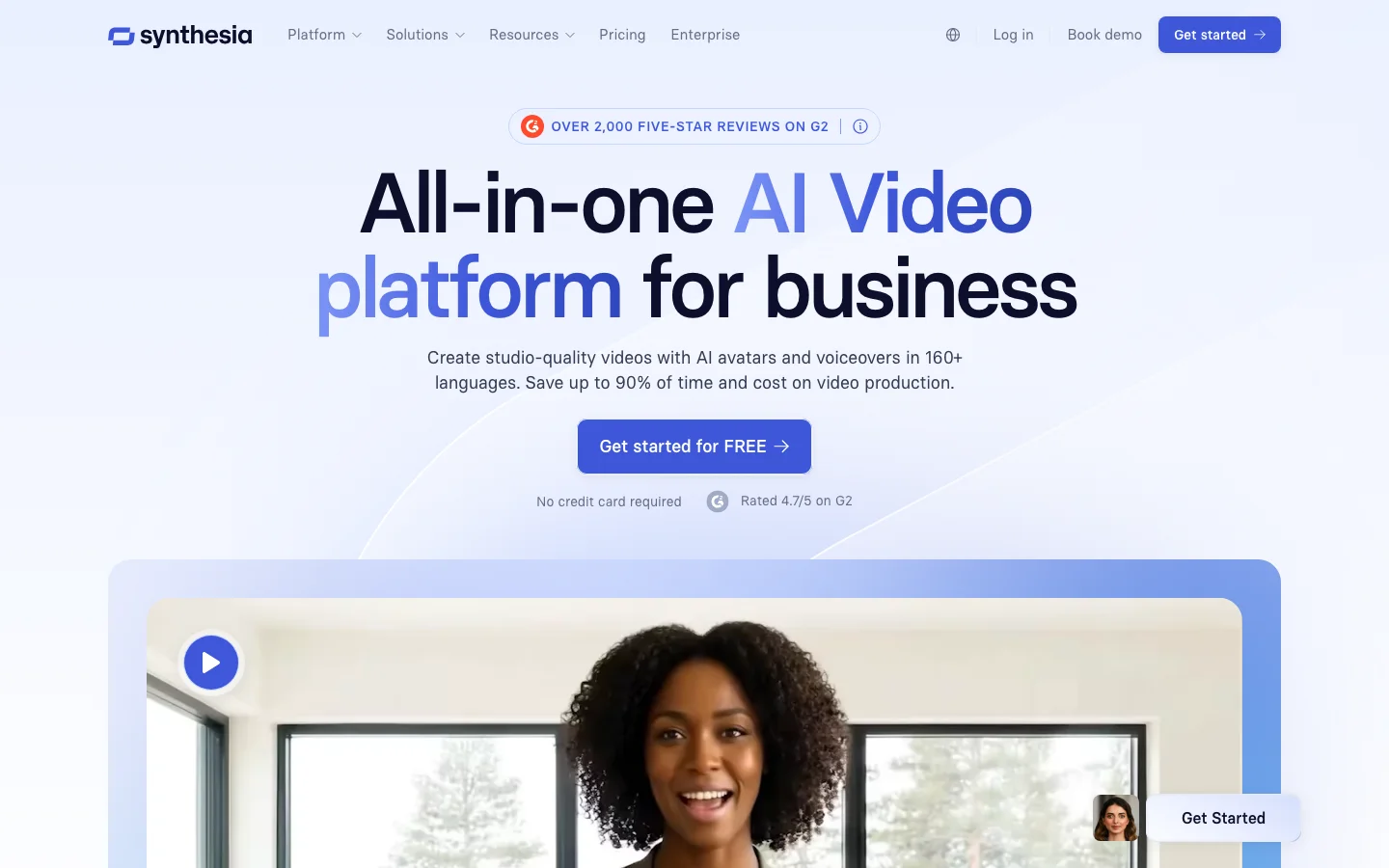
Synthesia offers 160+ stock AI Avatars and custom Personal Avatars via a 15-20 minute controlled recording session. Their Studio Express-1 custom avatar is a paid add-on at $1,000/year, available on enterprise plans only. The quality is professional and credible for corporate video. It reads as artificial in any context where emotional authenticity matters.
The lip sync gap remains a documented complaint. Community feedback in r/instructionaldesign notes mouth movement mismatches with some frequency: "The mouth movement does not match the actual script as people tend to look at the mouth when people speak." Synthesia's model updates have improved this, but it comes up consistently enough to be worth flagging before you commit.
For corporate training and onboarding content where the audience accepts a professional-but-polished aesthetic, Synthesia is sufficient. For anything consumer-facing, marketing, or creative, the realism gap versus Avatar V is visible.
Bottom line on avatar quality
HeyGen Avatar V leads on realism. Synthesia leads on avatar library size (160+ stock avatars vs HeyGen's 700+ stock video avatars on Creator plan, though quality varies widely across both libraries). For custom avatars, HeyGen's Avatar V model produces better output from a shorter recording.
Pricing Breakdown 2026
| Plan | HeyGen | Synthesia |
|---|---|---|
| Free | $0/mo: 1 video/month, up to 3 min, 720p, 30+ languages | $0/mo: up to 10 min of video/month total, 125+ avatars (Basic plan) |
| Entry paid | Creator: $29/mo ($24/mo annual): unlimited videos, up to 30 min each, 1080p, 175+ languages, voice cloning, brand kit | Starter: $29/mo ($22/mo annual): 10 min of video/month total, 1 Personal Avatar, AI Dubbing |
| Mid tier | Pro: $99/mo ($79/mo annual): 4K export, up to 60 min per video, faster processing, translation script editing | Creator: $89/mo ($67/mo annual): 30 min of video/month, API access, 5 Personal Avatars, multiple avatars per scene |
| Enterprise | Business: $39/seat/mo (annual): unlimited videos, 4K, fastest processing, Avatar V extended generation, SCIM, multi-workspace | Custom pricing: unlimited minutes, Studio Express-1 avatar add-on ($1,000/year), SSO, SCIM, audit logs |
The minutes gap at $29/month
The most important pricing difference is at the entry paid tier, where both platforms charge $29/month. HeyGen Creator gives you unlimited videos, each up to 30 minutes long. Synthesia Starter gives you 10 minutes of video per month total. That is not a minor difference. If you produce three 4-minute videos in a month, you have hit your Synthesia Starter limit. On HeyGen Creator you could produce 50 of them.
Synthesia's Starter plan is primarily useful for teams that produce infrequently, one or two short videos per month for internal communications. For any active production cadence, the Creator plan at $89/month is the realistic entry point, and it still caps you at 30 minutes of video per month total.
HeyGen credit model
HeyGen's Creator plan is genuinely unlimited for standard video generation. The credit system applies to premium features (Avatar V extended generation, real-time avatar sessions, video translation minutes). The Pro plan includes 10x more Premium usage if you are hitting limits on Creator. Most users on Creator will not hit the premium limits with a normal workflow.
Enterprise cost considerations
Synthesia's enterprise pricing requires a custom quote. The Studio Express-1 high-quality custom avatar is a $1,000/year add-on on top of enterprise pricing. HeyGen's Business plan is $39/seat/month on annual terms, which is transparent. Both platforms have annual contract requirements at enterprise tier. HeyGen's annual lock-in and limited exit flexibility are documented complaints in community discussions, so read the contract before you sign.
Languages and Voice Cloning
HeyGen supports 175+ languages and dialects for video generation and voice cloning, with phoneme-level lip sync accuracy in each. Video Translation, their flagship feature, takes an existing video in one language and produces a lip-synced version in another. Major language pairs (English to Spanish, French, German, Mandarin) hold up to casual scrutiny. Less-resourced languages produce less natural prosody and benefit from a human review pass before publishing.
Synthesia supports 130 languages. That is narrower than the 140+ figure in older documentation. For most teams, 130 languages covers every language requirement they will encounter. For global organizations with requirements in smaller languages, verify your specific languages against both platforms before committing.
The key workflow difference: HeyGen translates existing footage. You upload a video, you get a lip-synced translation. Synthesia does not have this capability. With Synthesia you write a script in the target language and generate a new video. For content libraries that already exist in one language, HeyGen's Video Translation is the more practical path to multilingual distribution.
Voice cloning
HeyGen includes voice cloning on the Creator plan ($29/month) and above. You upload a voice sample and generate video with that voice across any language. Synthesia's voice approach is tied to their avatar system; voice cloning in the same way HeyGen offers it is not a prominent feature of their standard plans.
Use Cases by Audience
Marketing and social media teams
HeyGen is the better fit. Avatar V realism makes avatar video viable for consumer-facing content. Video Translation enables multilingual campaign variants from a single source shoot. The Streaming Avatar API opens interactive demo and personalization use cases. Creator plan pricing at $29/month is accessible for small marketing teams with regular production needs.
L&D and corporate training
Synthesia is the established choice. SCORM export integrates with Cornerstone, Docebo, and other LMS platforms without needing additional tools. Slide-to-video and screen recording are built in. The enterprise client list (Reuters, BBC, Accenture) carries weight in procurement conversations with IT security and vendor risk teams. Instant script regeneration when compliance requirements change is a genuine operational advantage for regulated industries.
That said: Synthesia fatigue is documented in L&D communities. After two or three years on the platform, teams regularly report that "the price is not worth it" and find redundancy with other tools in their stack. Evaluate whether you actually need the self-contained SCORM workflow before paying enterprise pricing.
Course creators and educators
Depends on your output. If you are building a YouTube channel or selling courses on Teachable or Kajabi where the audience expects engaging, human-feeling content, HeyGen Avatar V is the better choice. If you are building compliance training for a corporate L&D buyer who will upload it to their LMS, Synthesia's SCORM pipeline is worth the overhead.
Enterprise and regulated industries
Synthesia for most enterprise deployments. The institutional trust signal from their documented client base matters in procurement. The compliance tooling (SSO, SCIM, audit logs) is built for enterprise IT requirements. HeyGen's enterprise tier has these capabilities too, but Synthesia's enterprise sales motion and client references are more developed for this buyer.
Developers and API users
HeyGen clearly. The Streaming Avatar API enables real-time interactive avatar sessions: an AI avatar speaking live, with dynamic responses from an LLM backend. This is the infrastructure layer for sales demos, customer service bots, AI companions, and interactive training applications. Synthesia has no real-time capability. HeyGen's standard video API is available on Creator plan and above. Synthesia's API access starts at the Creator plan ($89/month) and requires enterprise for advanced use cases.
Workflow and UX
HeyGen is a focused video generation tool. Write a script, select or generate an avatar, produce a video. Video Translation adds an upload-and-dub workflow. The platform does not include screen recording, slide-to-video, or LMS integration. You will need external tools for those workflows. For teams that already have their production stack and need avatar video as one component, HeyGen fits cleanly.
Synthesia is a self-contained content production platform. Screen recording, slide-to-video, brand kit, media library, SCORM export, all built in. L&D teams that want to produce a full course module including software walkthroughs alongside narrator video and package it for their LMS can do that entirely within Synthesia. For teams that want to minimize the number of vendors in their stack, this is a genuine advantage.
Both platforms have web-based editors with no desktop software required. Both support team collaboration. Synthesia's Starter plan includes 1 editor and 3 guests; Creator includes 1 editor and 5 guests. HeyGen's team collaboration features are more developed at the Pro and Business tiers.
Verdict
The choice between HeyGen and Synthesia has gotten clearer, not murkier, with Avatar V.
HeyGen wins on: avatar realism (Avatar V is the category leader), Video Translation of existing footage, Streaming Avatar API for real-time/interactive use cases, language coverage (175+ vs 130), and value at the $29/month price point (unlimited videos vs 10 minutes/month).
Synthesia wins on: enterprise institutional trust and procurement track record, self-contained L&D tooling (SCORM, screen recording, slide-to-video), and compliance infrastructure for regulated industries.
If you are a creator, marketer, developer, or course creator, HeyGen is the better tool in 2026 on nearly every dimension that matters. The $29/month Creator plan is straightforward value. Avatar V realism is a real differentiator. Video Translation has no equivalent in Synthesia.
If you are an enterprise L&D team with LMS integration requirements, SCORM workflows, and IT procurement constraints, Synthesia remains the default for a reason. Evaluate whether you have actually hit the limits of HeyGen's enterprise tier first, but for teams already embedded in the Synthesia ecosystem with working LMS integrations, the switching cost is real.
For teams sitting on the fence at $29/month: HeyGen Creator gives you substantially more video production capacity than Synthesia Starter at the same price. Start there.
FAQ
Is HeyGen better than Synthesia in 2026?
For most use cases, yes. HeyGen Avatar V leads on realism, Video Translation has no equivalent in Synthesia, and the Creator plan gives you unlimited videos at $29/month versus Synthesia Starter's 10 minutes of video per month at the same price. Synthesia maintains an advantage for enterprise L&D teams with LMS and SCORM requirements.
What is HeyGen Avatar V?
Avatar V is HeyGen's newest avatar model, launched in early 2026. It creates your digital twin from a 15-second webcam recording and maintains consistent identity (same face, same expressions, same presence) across every video you produce. It replaces Avatar 4.0 and represents a meaningful improvement in realism and character consistency, particularly for custom avatars.
How much does Synthesia cost per month?
Synthesia's Starter plan is $29/month (billed monthly) or $264/year ($22/month). Creator is $89/month or $804/year ($67/month). Enterprise pricing is custom. The Starter plan is limited to 10 minutes of video per month total, which is a meaningful constraint for active production.
Does Synthesia have video translation like HeyGen?
No. HeyGen's Video Translation feature takes existing footage and produces lip-synced versions in 40+ languages. Synthesia is script-based only: you provide a script in the target language and generate a new video from scratch. There is no equivalent to HeyGen's upload-and-dub workflow in Synthesia.
Which is better for small teams on a budget?
HeyGen Creator at $29/month. Unlimited videos up to 30 minutes each, voice cloning, 175+ languages, Avatar V generation, and 1080p export. Synthesia Starter at the same price caps you at 10 minutes of total video per month. For any team producing more than two or three short videos monthly, HeyGen Creator is the better value by a wide margin.
Can I use HeyGen or Synthesia for real-time interactive avatars?
HeyGen only. The Streaming Avatar API enables real-time interactive avatar sessions, an AI avatar responding live, driven by an LLM backend. It is used for sales demos, customer service bots, AI companions, and interactive training. Synthesia has no real-time capability. All Synthesia output is pre-rendered video.