If you're deciding where to spend your AI art budget in 2026, you've probably considered both OpenArt and Midjourney. They occupy the same general category, they both generate images, and at the $30/month tier they cost about the same. But they are built for completely different people doing completely different work.
This comparison is for creators who have already done basic research and want a clear, honest verdict. We'll cover image quality, pricing, video generation, character consistency, licensing risks, and the specific user profiles where each tool wins. No hype, no affiliate cheerleading.
We tested both platforms, reviewed hundreds of community posts on r/midjourney, r/StableDiffusion, and r/AI_UGC_Marketing, and pulled from our own database of verified tool research. The verdict below reflects what real users experience, not marketing copy.
TL;DR Verdict
OpenArt wins if you need multiple AI models under one account, want the best Kling AI video credit volume at the ~$30/month tier, run UGC or social media content workflows, or plan to train custom LoRA models without self-hosting.
Midjourney wins if you are a creative professional who needs the highest aesthetic quality ceiling for photorealism, painterly illustration, or cinematic concept art, and output fidelity matters more to you than model breadth or video volume.
Neither wins if you need a public API for developer integration. Midjourney has no official API. OpenArt offers API access for some models. If you are building an application, start with Leonardo.ai or Stability AI instead.
Image Quality and Model Variety
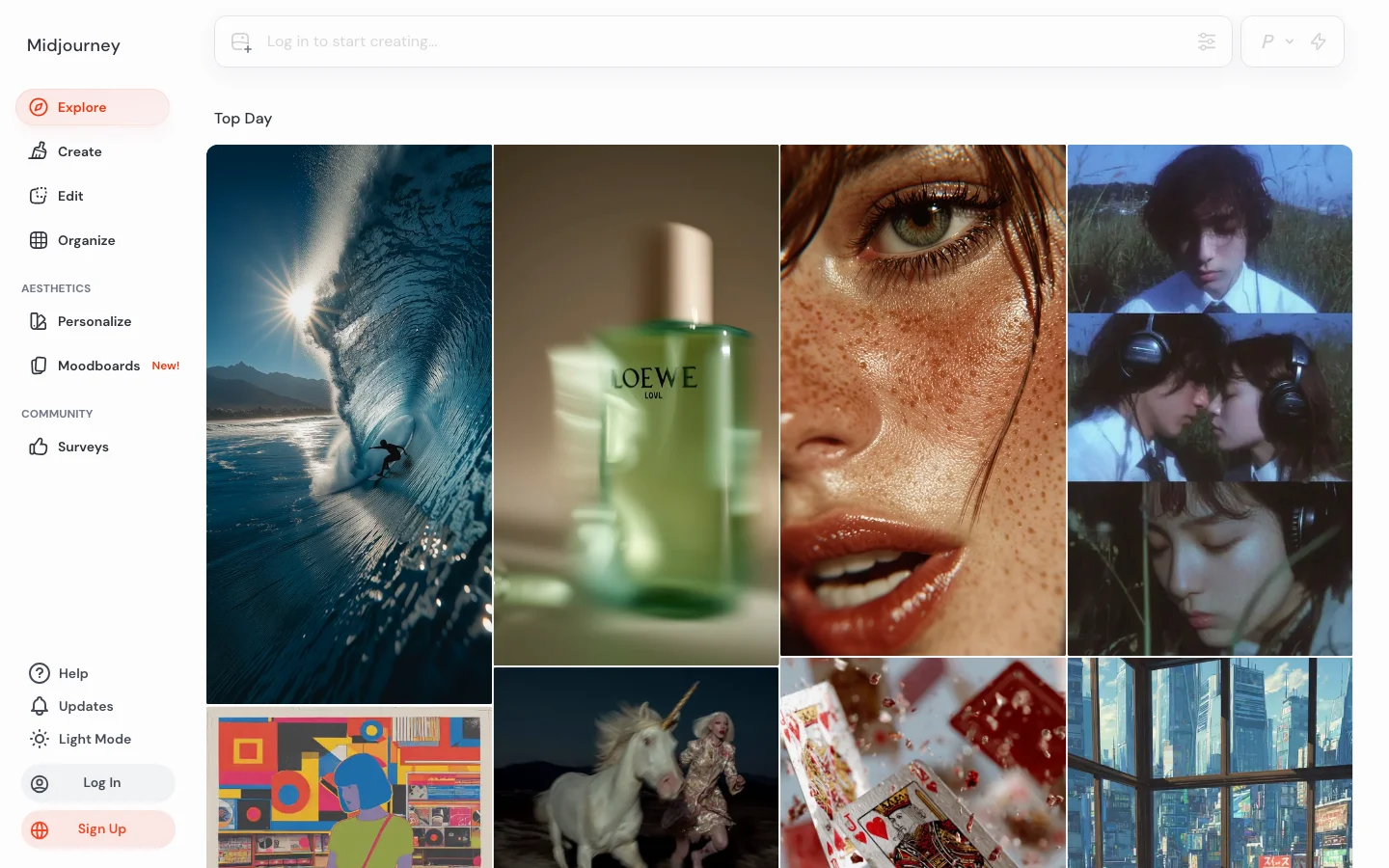
Midjourney holds the aesthetic quality crown by community consensus. In repeated blind comparisons across r/StableDiffusion and r/midjourney, no competitor is described as definitively beating it on photorealism, painterly styles, and compositional sophistication. V6.1 remains the stable workhorse that experienced users trust. V7 launched in early 2026 with personalization enabled by default and improved hand and anatomy rendering, but the reception was divided. A significant portion of the community stayed on V6.1 while V7 stabilized, describing the alpha as "nearly on the level of 6.0" and "a step back in the majority of things."
The V7 personalization system is Midjourney's most meaningful competitive moat. After about five minutes of preference ranking, users get a personal style profile that shapes all subsequent outputs. The longer you use the platform, the more tuned your results become. Competitors have not replicated this at the platform level.
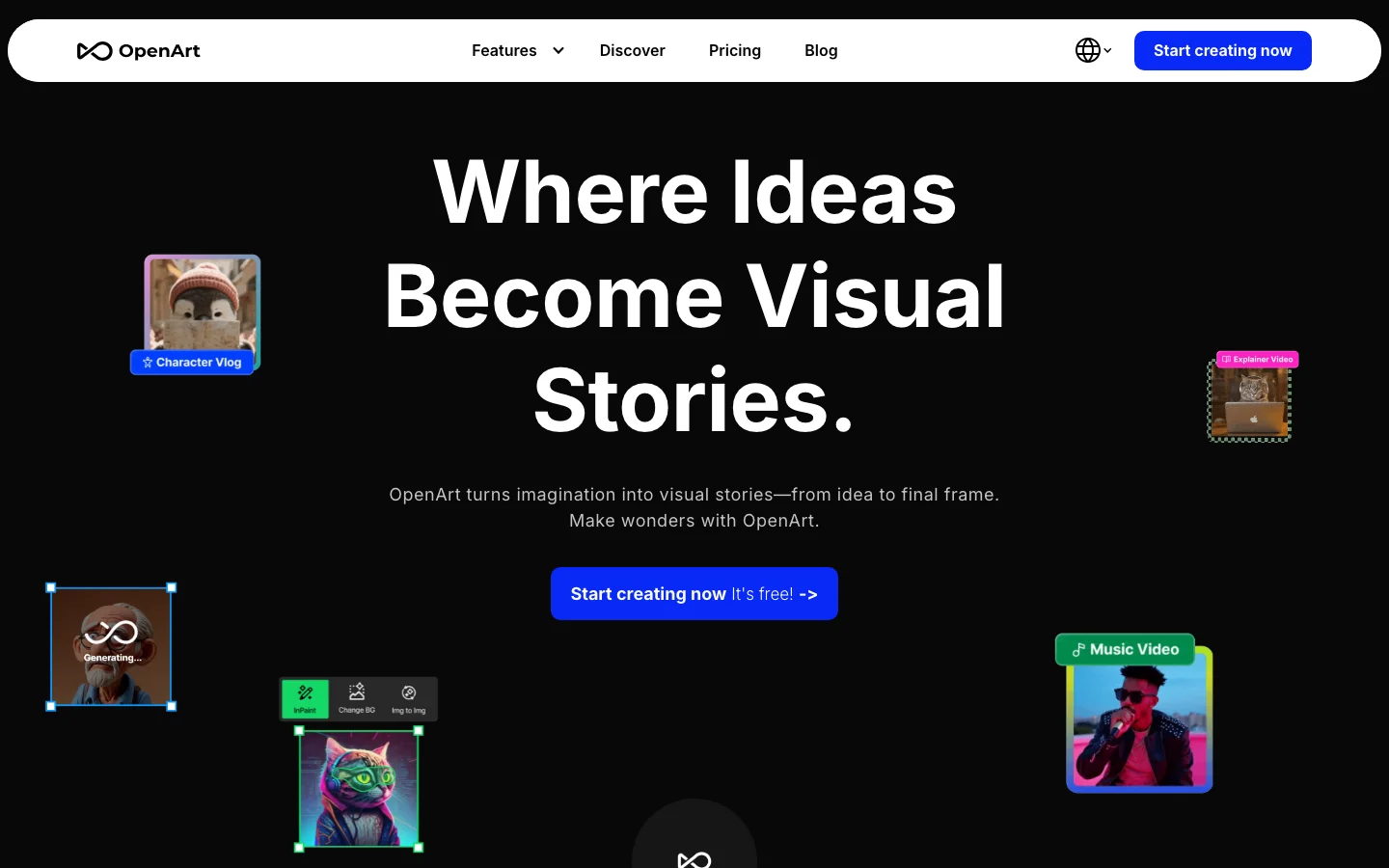
OpenArt takes a different approach. Rather than building and refining a single model, it aggregates 100+ models including Flux, Kling, Veo3, Seedream, Nano Banana, and multiple Stable Diffusion variants under one account. The image quality ceiling depends on which model you select. Flux and Nano Banana Pro produce results that hold up well against Midjourney for many use cases. But OpenArt does not have a single "best" image model the way Midjourney does, and for buyers who want consistently excellent output without thinking about model selection, Midjourney is the simpler answer.
Model Comparison at a Glance
| Factor | OpenArt | Midjourney |
|---|---|---|
| Image quality ceiling | Good (Flux, Nano Banana Pro) | Best in class |
| Number of models | 100+ | 1 (V6.1 / V7) |
| Personalization system | No | Yes (V7 default) |
| Custom model training (LoRA) | Yes (mid-tier plans) | No |
| Anime / illustration mode | Multiple SD models | Niji mode |
| ComfyUI workflow support | Yes (community library) | No |
Pricing Breakdown 2026
At face value, both platforms offer a tier around $30/month. What you get for that money is very different.
OpenArt Pricing
| Plan | Monthly Price | Credits | Notes |
|---|---|---|---|
| Free | $0 | ~40 one-time | Not renewable. Insufficient for workflow testing. |
| Starter | ~$15/month | Limited | Basic image generation |
| Essential | ~$29-30/month | ~12,000/month | Best Kling video credit value in category |
| Advanced | ~$49/month | Higher allotment | LoRA training, more parallel slots |
| Annual plans | ~$700-800/year | Best per-credit rate | Lock-in risk. Read the section below before committing. |
The annual plan warning: Multiple Reddit threads document buyers regretting annual OpenArt commitments. The 40 free one-time credits are not enough to evaluate a multi-generation character or video workflow. Users who committed to $700-800/year plans have posted publicly about credit loss bugs and UX changes that broke their workflows after payment. If you trial OpenArt, start monthly before committing to annual.
Midjourney Pricing
| Plan | Monthly Price | GPU Time | Notes |
|---|---|---|---|
| Basic | $10/month | 200 fast GPU min | Limited video access |
| Standard | $30/month | 15 hr fast GPU | Most common tier for regular users |
| Pro | $60/month | 30 hr fast GPU | Stealth mode, commercial use |
| Mega | $120/month | 60 hr fast GPU | Maximum volume professional use |
| Annual billing | ~20% off | Same as monthly | Discount applied across all tiers |
Midjourney has no free tier as of early 2026. The $10/month Basic plan is the entry point. For casual users, Meta AI now generates comparable results for free with some limitations. That free competition puts real pressure on the Basic tier value proposition.
Who Each Platform is For
The clearest way to choose between OpenArt and Midjourney is to look at your actual workflow, not at feature lists.
Choose OpenArt if you are:
- A UGC creator or social media content producer who needs consistent AI characters across scenes. OpenArt's Character feature, combined with HeyGen for lip sync, is an active production workflow cited by real creators. You generate the character in OpenArt, animate in HeyGen. This combo has no Midjourney equivalent.
- A Kling AI video buyer who wants the most credits for your money. At the ~$30/month tier, OpenArt delivers 125 Kling 2.6 (1080p, 5s) videos and 168 Kling o1 credits, ahead of Higgsfield (120 Kling 2.6 videos), Freepik (82), and Krea (37).
- An AI experimenter or power user who wants access to Flux, Veo3, Seedream, Nano Banana, and Stable Diffusion all in one account without managing multiple subscriptions.
- A creator who wants to train custom LoRA models without self-hosting. OpenArt provides accessible LoRA fine-tuning on mid-tier plans.
Choose Midjourney if you are:
- A creative professional who needs the quality ceiling. Illustrators, concept artists, art directors, and marketing designers who cannot afford to produce work that looks like anything other than the best will find Midjourney consistently delivers.
- An agency or freelancer whose clients recognize the brand. Midjourney is the name clients say when they mean "AI art." That brand recognition reduces friction in project proposals and client conversations.
- Someone building a long-term personal style profile. The V7 personalization system compounds over time. If you commit to one platform for months, Midjourney's tuned outputs become a genuine workflow advantage.
- A non-technical creative who wants simple, excellent results. You type a prompt, you get a great image. No model selection, no credit math, no ComfyUI workflows.
Video Generation: Where OpenArt Has a Real Advantage
OpenArt integrated Kling AI video generation and the math at the $30/month tier is clear. If you are generating AI video at volume, OpenArt is the most cost-effective access point for Kling in 2026.
Midjourney launched Image-to-Video in mid-2025, generating 5-second clips extendable to 21 seconds. The quality reflects Midjourney's image strength. But it is not competing with purpose-built video tools for narrative production, and Kling video credit volume is not Midjourney's focus.
Video Generation Comparison
| Platform | Kling 2.6 clips/month (~$30) | Max clip length | Video model quality |
|---|---|---|---|
| OpenArt | 125 (1080p, 5s) | Platform-dependent | Kling 2.6 + Kling o1 + Veo3 |
| Midjourney | Included (credit-limited) | 21 seconds | MJ I2V (proprietary) |
| Higgsfield (~$30) | 120 | Platform-dependent | Multiple models |
| Freepik (~$30) | 82 | Platform-dependent | Multiple models |
Speed, UX, and Workflow
Midjourney has a well-documented interface problem. The platform was built Discord-first and the Discord workflow remains the most feature-complete experience. The web interface has persistent mobile bugs (dropdown failures across Android browsers, unresolved as of late 2025) and is not yet at full feature parity with Discord. For non-technical users or professionals presenting work in client-facing tools, the Discord slash-command experience has a real learning curve.
Generation speed on Midjourney fast mode is solid. The GPU minute allocation is what determines how much you can generate per month, and the measurement is transparent once you understand it.
OpenArt has the opposite UX problem. The interface is a standard web app with no Discord dependency, which should be simpler. The problem is instability. The platform has shipped multiple UI overhauls that broke established user workflows without adequate migration paths. One documented case: a committed long-term user had 100,000 AI images organized into 120 folders. After an OpenArt redesign, the folders were gone. This kind of UX churn is the primary reason users cite when leaving for Leonardo.ai, which they describe specifically as having "a UI that's actually stable."
Both platforms have UX friction. Midjourney's is structural and unlikely to change. OpenArt's is self-inflicted and theoretically fixable, but the pattern has been consistent.
Commercial Use and Licensing
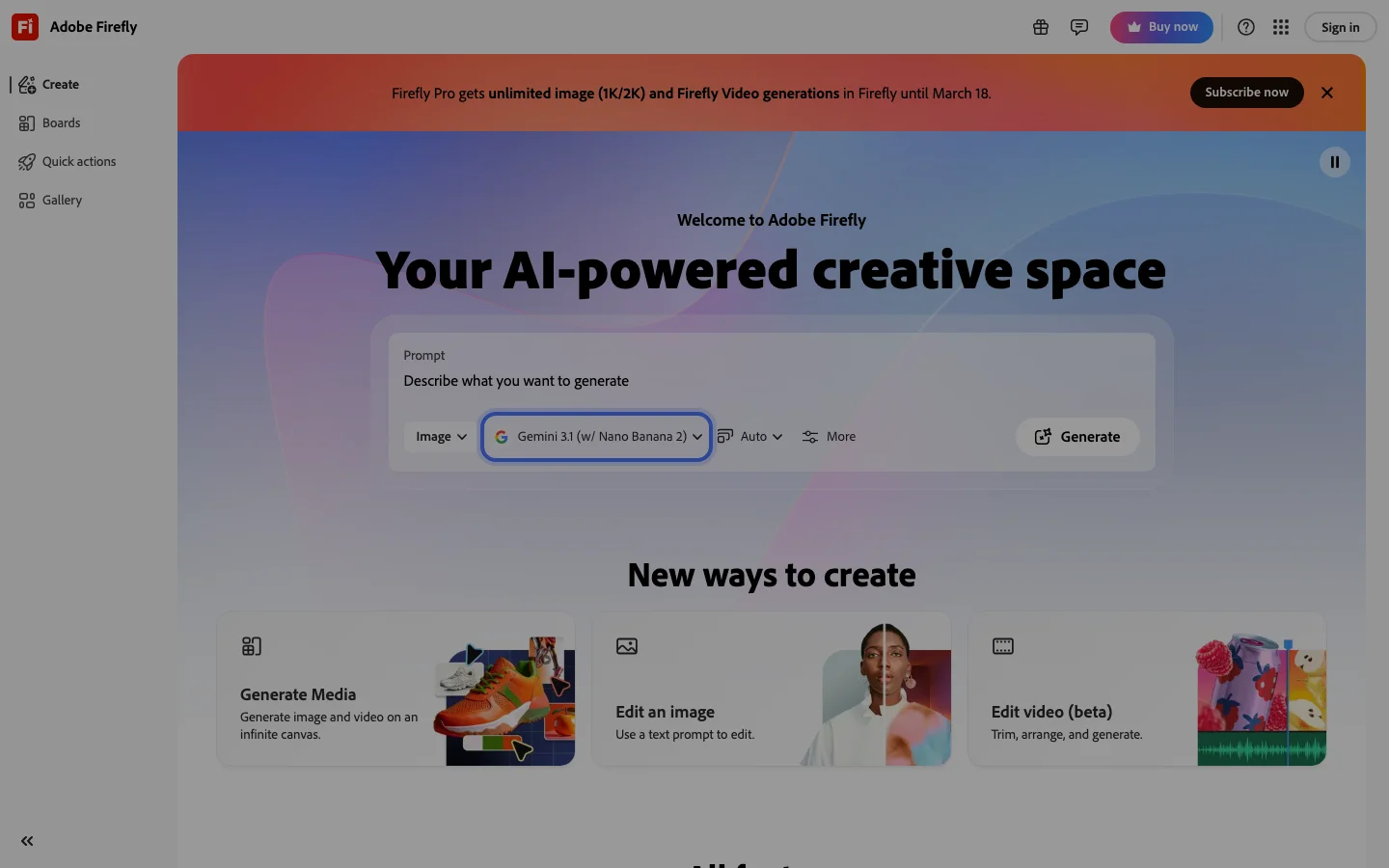
Neither platform offers IP indemnification. If a client needs legal protection for AI-generated work used in commercial campaigns, neither OpenArt nor Midjourney provides it. Adobe Firefly is currently the only major AI image tool that offers commercial IP coverage.
Midjourney's commercial licensing situation carries additional risk. Disney and Universal filed a copyright lawsuit against Midjourney in June 2025, citing unlicensed use of Star Wars, The Simpsons, and other IP in training data. The r/StableDiffusion post covering the lawsuit drew 532 upvotes and significant community concern. The legal outcome could affect training data practices, model capabilities, or business continuity. This is a live risk worth monitoring for anyone using Midjourney for professional commercial work.
OpenArt faces no comparable active legal action. Standard terms of service apply to generated content.
Licensing Summary
| Factor | OpenArt | Midjourney |
|---|---|---|
| Commercial use allowed | Yes (paid plans) | Yes (Pro+ plans) |
| IP indemnification | No | No |
| Active copyright lawsuit | None | Yes (Disney/Universal, June 2025) |
| Stealth/private mode | Varies by plan | Pro plan and above |
| API for developers | Yes (select models) | No public API |
Our Verdict
After reviewing both platforms against real user feedback, actual credit math, and documented reliability issues, here is where we land.
Midjourney is the right tool for creative professionals whose primary deliverable is image quality. If your work goes into client presentations, editorial publications, concept art portfolios, or marketing campaigns where visual fidelity is the brief, Midjourney earns its price. The V7 personalization moat is real and compounds over time. The lack of a free tier and the Discord-primary interface are real friction points, but they are friction for people using the tool for the right reasons. The Disney lawsuit is worth monitoring but has not changed what the product delivers today.
OpenArt is the right tool for UGC creators, social media producers, and AI experimenters who need model breadth, competitive Kling video credits, and character consistency under one account. The value proposition at the $30/month tier is genuine, particularly for Kling video volume buyers. The platform has trust problems rooted in UX instability and documented credit bugs. The recommendation for OpenArt comes with a clear condition: start monthly, not annual, and evaluate actual generation reliability before committing to a $700+ year plan.
If you are unsure which fits your workflow, the simpler test is this: do you primarily need images that look exceptional, or do you primarily need a flexible multi-model environment that handles video, characters, and image generation together? The answer to that question separates the two platforms clearly.
Browse our full reviews: OpenArt review and Midjourney review. For more options in this category, see our AI art generators comparison.
Frequently Asked Questions
Is OpenArt better than Midjourney for beginners?
Neither is ideal for absolute beginners. Midjourney's Discord interface has a learning curve that surprises new users. OpenArt's web interface is more familiar in format but the 40 one-time free credits are not enough to learn the platform properly. For beginners on a budget, Leonardo.ai offers a more stable free tier with a web interface that is widely cited as more accessible.
Can I use OpenArt or Midjourney images commercially?
Both platforms allow commercial use on appropriate paid plans. Midjourney requires a Pro plan ($60/month) or above for full commercial rights and stealth mode. OpenArt allows commercial use on paid plans. Neither platform offers IP indemnification, which matters for brands doing large-scale campaigns. Adobe Firefly is the only major competitor that includes commercial IP coverage.
Does OpenArt have Midjourney's image quality?
Midjourney holds the aesthetic quality benchmark for AI image generation by community consensus. OpenArt can produce excellent images using Flux and Nano Banana Pro, but it is a multi-model aggregator rather than a single curated model optimized for visual quality. For consistent high-quality output without model selection decisions, Midjourney is ahead. For flexibility and model breadth, OpenArt is the stronger choice.
Which has better AI video: OpenArt or Midjourney?
OpenArt has a clear advantage for AI video volume. At the ~$30/month tier, it delivers 125 Kling 2.6 (1080p, 5s) videos per month, more than competing platforms at that price point. Midjourney added Image-to-Video (5 seconds, extendable to 21) in mid-2025. Midjourney's video inherits its image quality strengths, but it is not competing on credit volume. For Kling AI video at scale, OpenArt is the better value.
Is Midjourney worth it when Meta AI is free?
For casual users who just want interesting AI images, Meta AI generates comparable results with some limitations (portrait aspect ratio only, no upscaling, no personalization). If you are using AI art professionally, for client work, or to build a personal style profile that compounds over time, Midjourney justifies the cost. If you are experimenting or using AI image generation occasionally, the free options have closed the quality gap enough to be worth trying first.
What is the OpenArt annual plan risk?
Multiple documented Reddit threads describe buyers regretting OpenArt's annual plan ($700-800/year) after experiencing credit loss bugs, UX changes that disrupted workflows, and support delays. The 40 one-time free credits are not sufficient to evaluate a multi-generation workflow before committing. If you plan to use OpenArt, start with a monthly plan first. Test actual generation reliability, especially for video and character workflows, before committing to annual billing.