Leonardo AI and Midjourney are the two names that come up in every AI art generator conversation. If you are searching for a direct comparison, you have probably already seen a dozen posts that tell you Midjourney has better aesthetics and Leonardo has a free tier, and leave it at that.
That is not enough. In 2026, both platforms are in the middle of significant transitions. Midjourney is recovering from a V7 launch its own CEO called disappointing, and Leonardo is navigating life after being acquired by Canva while fighting a content moderation crisis that has genuinely alienated paying subscribers. Neither tool is at its peak right now, which makes this comparison more honest than the usual feature-matrix rundown: here is what each tool actually does well today, what it does poorly, and who should pick which.
The Quick Answer
If you want the short version before the details:
| Leonardo AI | Midjourney | |
|---|---|---|
| Best for | Game assets, API workflows, volume generation, free start | Best aesthetic quality, fine art, editorial photography |
| Free tier | Yes (~150 tokens/day) | No |
| Starting price | ~$12/month | $10/month |
| API access | Yes (official REST API) | No |
| Model variety | 6+ models + community LoRAs | Single model family (V6.1, V7, V8 alpha) |
| Video generation | No (third-party workflows) | Yes (Image-to-Video, launched June 2025) |
| Fine-tuning | Yes (train custom LoRA models) | No |
| Text in images | Functional (Phoenix model) | V8 alpha: working; V7 and below: weak |
| Personalization | Character references + LoRA | Style profile that compounds over time |
| Interface | Web-native | Discord-primary (web app exists, mobile buggy) |
| Current risk | Canva acquisition + content filter crisis | V7 disappointment + Disney/Universal lawsuit |
The sections below explain why each of these matters and where the trade-offs bite.
Leonardo AI in 2026: The Swiss Army Knife With a Filter Problem
Leonardo AI was acquired by Canva in July 2024. The founding team - CEO JJ Fiasson and the original engineering staff - remain in place and continue to operate independently. The product has kept shipping: Phoenix flagship model, Real-time Canvas, Universal Upscaler, and integration of Google's Nano Banana (Imagen 3 Fast) model all launched post-acquisition.
The honest caveat the community repeats is that "the team is still independent" and "nothing has degraded yet" are load-bearing qualifiers. Users who watched Pi AI get absorbed by Microsoft, or the Figma-Adobe near-miss, are pattern-matching. That anxiety is not irrational. The top-rated post on r/leonardoai about the acquisition (80 upvotes) reads: "The filters for generating images practically won't let you do anything now. It will get worse. Time to find a new platform."
So what is Leonardo actually good at, beneath the acquisition noise?
What sets Leonardo apart
Multi-model access is the structural advantage. Phoenix for composition and prompt adherence. Nano Banana Pro (Google Imagen 3 Fast) for speed and character consistency in video workflows. KinoXL, Leonardo Diffusion, Anime presets, Flux Schnell - all accessible from one account. No other hosted platform gives you this breadth without switching tools. Users on r/midjourney are combining Midjourney for hero images with Nano Banana on Leonardo for character consistency. That cross-platform workflow tells you something about where each tool fits.
The game asset pipeline is Leonardo's clearest moat. Purpose-trained models for game textures, character sheets, and environment concepts produce stylistically consistent output across a production run. Indie developers on r/gamedev have organically converged on Leonardo as the category default. This is not marketing positioning; it is community consensus.
LoRA fine-tuning lets you train custom models on your own reference images directly in the browser. No GPU, no Python, no local setup. For brand consistency or character identity work across dozens of scenes, this is the hosted alternative to spinning up a Stable Diffusion environment.
In-image text rendering on the Phoenix model is a concrete differentiator. Legible text in AI-generated images - logos, banners, poster layouts - is where most generators fail. Phoenix is one of very few tools where this actually works. DALL-E 3 competes here. Midjourney does not (until V8 stabilizes).
API access via official REST API with token-based pricing. If you are building generation into a content pipeline, app, or automation workflow, Leonardo is the option. Midjourney has no official API.
Real-time Canvas updates the preview as you type, changing the iteration loop from generate-evaluate-adjust to continuous refinement. For layout-sensitive and spatial design work, this is a meaningful workflow improvement.
The content filter problem
This is not a footnote. It is the dominant topic on r/leonardoai in March 2026.
Benign prompts are being blocked. A paying subscriber using Nano Banana Pro for character projects reported that "swimwear and athletic wear now blocked after moderation update. These were passing fine 10 days ago." Another user's prompt - "Parent sways side by side singing, baby calms and smiles, floating musical notes" - triggered a content safety violation. Retroactive content deletion has been documented: images previously generated and saved to collections deleted without token refunds.
The blocked-word list documented by users includes terms like "hot," "skin," "skirt," "mini," "body," "exotic," "swimsuit," and specific anime character names. The top-rated complaint (27 upvotes): "No other generative AI service has a moderation algorithm as off base as yours."
If your workflow regularly involves stylistically unusual prompts or anything adjacent to fashion, fitness, or character design with non-conservative clothing, Leonardo is a genuine liability here. This is not theoretical. It is costing paying subscribers working time and generated assets right now.
Leonardo pricing
- Free tier: ~150 tokens/day (~8 generations on standard models, fewer on premium). Token bank introduced: unused tokens persist 3 months. The free tier has degraded post-acquisition - Alchemy features gated, image-to-image broken for free users.
- Paid tiers (Apprentice, Artisan, Maestro): Community consistently references $12-$24/month for the mid-tier Artisan plan. Token top-ups: $50 = 35,000 tokens, $200 = 165,000 tokens.
- Token system reality: Opaque per-model cost variation makes actual spend hard to predict. A grey market of token resellers advertising 75-90% discounts has emerged across multiple subreddits - which tells you a meaningful segment finds official pricing unsustainable for volume work.
Midjourney in 2026: The Quality Benchmark in a Rough Transition
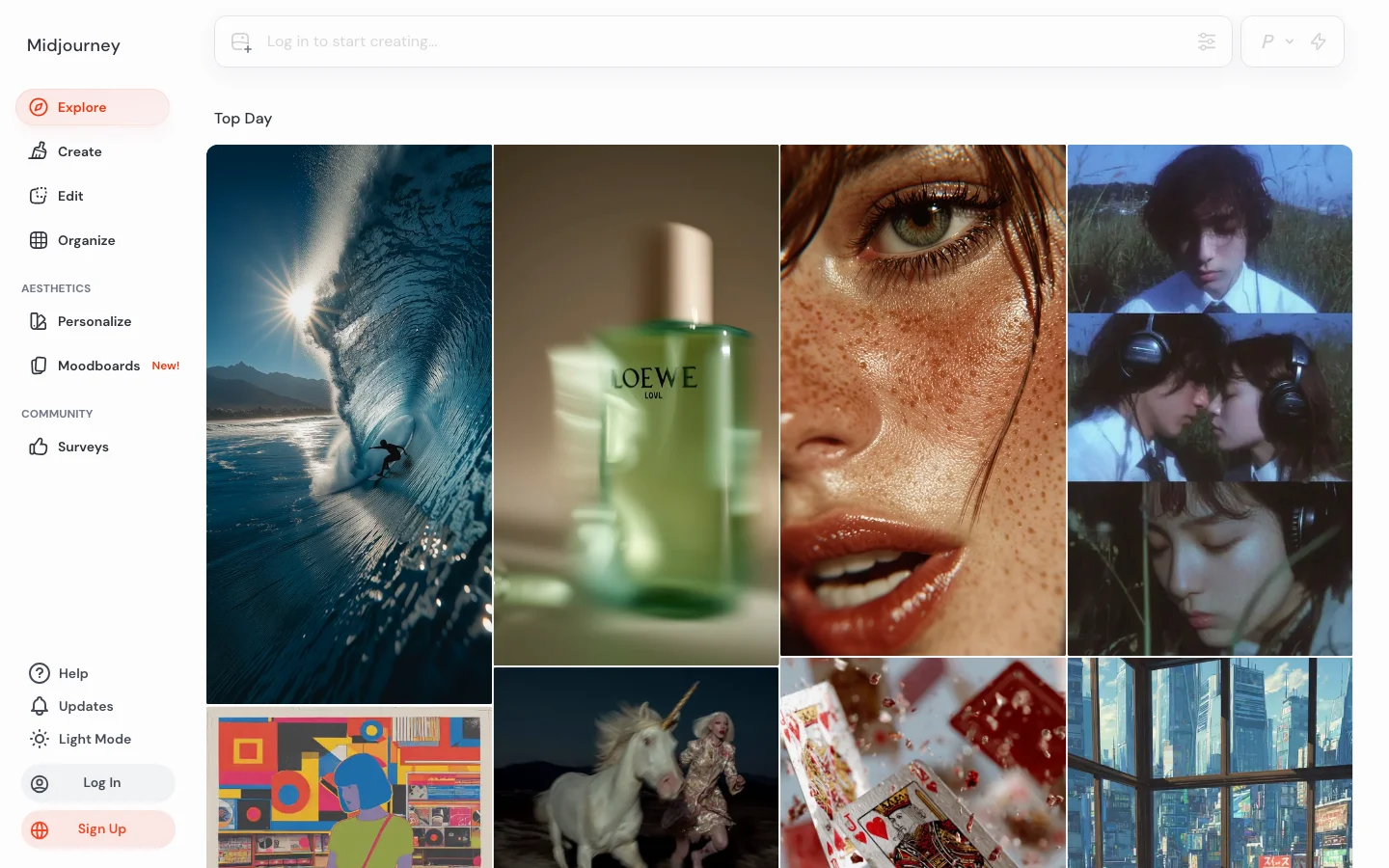
Midjourney sets the aesthetic quality ceiling for AI image generation. Feed it a vague prompt and the result is polished. It requires the least prompt engineering to produce an image you would actually share. That has been true since V5, and it remains true in 2026.
But 2026 Midjourney is a platform in transition, and the transition has not been smooth.
The V7 disappointment
Midjourney V7 launched in 2025 to a reception the company itself acknowledged was poor. CEO David Holz stated at Office Hours that the team was "profoundly unsatisfied" with V7 (this post scored 108 on r/midjourney, meaning the community noticed and amplified it). The top comment: "V7 is really mid."
The specific complaints are consistent: V7 is described as "boring" compared to V6.1. Users report that personalization - the feature that makes your outputs improve over time - regressed. Prompt adherence declined. One post with 50 upvotes: "Midjourney has become unusable. It never listens to prompts. Lucid Origin, FLUX Kontext get much better results. Prompting with MJ has become a pure lottery."
The consensus among experienced users: stay on V6.1 until V8 stabilizes. The team announced it would skip V7.1 (which was supposed to fix anatomy and hands) and go directly to V8 - meaning known V7 bugs will persist for everyone not in the alpha.
V8 alpha: cautious hope
V8 entered alpha in March 2026. The official announcement (53 upvotes on r/midjourney) highlights: generation ~5x faster than V7, much better prompt adherence, text rendering via quoted text, native 2K HD mode, and backward compatibility with V7 personalizations and style references.
Early community reaction is mixed-positive. "V8 for characters is insane tbh. Much better than V7 and also fast." But also: "Images appear to be incredibly generic. Maybe it takes a really long detailed prompt to get what you want." Judgment is reserved until full release - which is the right call.
What Midjourney does that nobody else matches
Style personalization is the genuine moat. After five minutes of rating images, Midjourney builds a personal style profile that influences all future outputs. The longer you use it, the more tuned your results become. No competitor offers this at the platform level. This compounds: a six-month Midjourney user gets meaningfully different (better, for their taste) results than a new subscriber.
Aesthetic quality remains the benchmark. For photorealism, painterly styles, cinematic composition, and editorial photography, Midjourney consistently tops community quality rankings. The gap has narrowed - Gemini was described by one r/midjourney user (66 upvotes) as having "massively surpassed Midjourney for creating usable and realistic assets" - but for artistic coherence and visual polish, Midjourney is still the default recommendation.
Image-to-Video launched in June 2025. Four clips per generation, five seconds each, extendable to 21 seconds. Low and high motion modes. HD Video Mode at 3.2x cost premium for Pro/Mega plans. The community reception was positive as a foundation - professional workflows combine Midjourney images with Kling or Runway for longer video production.
Layers and Editor bring canvas-style editing within the platform. Official staff actively support the feature with Reddit tutorials.
What Midjourney does not do
No free tier. Midjourney is paid-only. A free trial existed historically but is not consistently available. If you want to evaluate before committing $10+/month, you cannot.
No official API. This is the single biggest technical limitation. Third-party wrappers (unofficial) fill the gap, but for production integration this is a hard constraint. If your use case requires programmatic access - app building, automation, content pipelines - Midjourney is not the tool.
Discord-primary interface. The web app exists and is improving, but Discord remains the primary interface. It is unintuitive for new users, chaotic in shared servers, and not suitable for client-facing work. Mobile web has documented bugs - dropdown menus broken on Android across multiple browsers, unresolved as of late 2025.
No fine-tuning. You cannot train custom models or LoRAs on Midjourney. Style personalization through the rating system is powerful but it is not the same as training a model on your specific brand assets.
Midjourney pricing
- Basic: ~$10/month (~200 fast GPU minutes, limited video)
- Standard: ~$30/month (the community sweet spot for regular users)
- Pro: ~$60/month (commercial use rights, stealth mode, more GPU hours)
- Mega: ~$120/month (maximum fast hours, highest-volume professional use)
- Annual billing: ~20% discount across all tiers
The Disney lawsuit
Disney and Universal filed a copyright suit against Midjourney in June 2025 for unlicensed use of Star Wars, The Simpsons, and other IP in training data. The r/StableDiffusion post about it scored 532 upvotes with the top comment: "When Disney gets involved, shit is about to hit the fan." The outcome is unresolved. This is a material legal risk to the platform's model capabilities and long-term business continuity.
Head-to-Head: The Dimensions That Matter
Image quality
Midjourney wins on raw aesthetics. The output is more polished per prompt with less engineering required. Leonardo's Phoenix model is strong on composition and multi-subject scenes - it handles complex prompts with multiple characters more reliably - but the average single-subject image from Midjourney looks better with less effort. For portfolio or editorial work where visual polish matters most, Midjourney is the answer.
Prompt adherence
Leonardo's Phoenix excels here, particularly for multi-subject scenes with specific spatial requirements. Midjourney V7 regressed on prompt adherence (the "pure lottery" complaint is real); V6.1 was better; V8 alpha claims improvement but is not yet proven at scale. For users who write detailed, specific prompts and need the output to match, Leonardo is currently more reliable.
Free tier and accessibility
Leonardo has a functional free tier. ~150 tokens per day, token bank for unused credits, enough to meaningfully evaluate the platform before paying. The free tier has degraded - features gated, image-to-image broken - but it exists. Midjourney has no free tier. Period. For budget-conscious users or anyone who wants to try before committing, this is a binary difference.
Developer and API access
Leonardo wins decisively. Official REST API with token-based pricing. Midjourney has no official API. If you are building AI image generation into a product, pipeline, or automation, the comparison ends here.
Model variety and fine-tuning
Leonardo offers 6+ models plus community LoRAs plus the ability to train your own custom models. Midjourney offers a single model family (V6.1, V7, V8). For users who need different generation philosophies for different tasks - anime for one project, photorealism for another, game textures for a third - Leonardo's breadth is unmatched in hosted tools.
Video generation
Midjourney wins. Image-to-Video is first-party, shipping to all subscribers, with HD mode available on higher tiers. Leonardo does not offer native video generation - users rely on third-party tools (Kling, Runway) in external workflows.
Content moderation
Both platforms filter aggressively. Leonardo's moderation is currently more erratic - blocking benign prompts, retroactively deleting saved images, maintaining an inconsistent banned-word list that catches fashion, fitness, and anime content. Midjourney's NSFW filtering is aggressive (bikini beach images flagged as "overt sexuality") but more predictable. Neither is friendly to users working in mature content or boundary-pushing creative territory. If content freedom is your priority, neither hosted tool is the answer - Stable Diffusion locally is.
Community and ecosystem
Midjourney's community (r/midjourney) is larger, more active, and produces higher-quality shared work. The style ranking system creates a feedback loop where community participation improves the model. Leonardo's community (r/leonardoai) is active but currently dominated by moderation complaints and acquisition anxiety. For inspiration and learning, Midjourney's community is stronger.
Platform risk
Leonardo: Canva acquisition. The community fears corporate integration will degrade the standalone product. Content moderation changes post-acquisition have confirmed the pattern-match for many users.
Midjourney: Disney/Universal copyright lawsuit. If successful, it could force model retraining, limit IP-adjacent prompting, or create business continuity risk. V7's rough launch also raised questions about the team's ability to ship quality upgrades reliably.
Both carry real risk. Different kinds.
Who Should Pick What
Pick Leonardo AI if:
- You need API access for automation, app-building, or pipeline integration
- You are a game developer or concept artist - the dedicated game asset models and LoRA training are unmatched in hosted tools
- You want to try before paying (free tier)
- You need multi-model access without switching platforms
- You need legible text in generated images (banners, posters, ad creatives)
- You are building with custom fine-tuned models for brand consistency
- You need strong character reference across many scenes
- You want a web-native interface, not Discord
Pick Midjourney if:
- Aesthetic quality is non-negotiable - you need the most visually polished output
- You are creating fine art, illustrations, cinematic compositions, or editorial photography
- You want video generation integrated with image generation in one platform
- You value personalization that compounds the longer you use the tool
- You are a creative professional doing hero images, brand assets, or high-end concept art
- Brand recognition matters to your clients or collaborators
- You are already a subscriber and V8 is coming
Pick neither - consider alternatives if:
- You want free and unrestricted generation: Stable Diffusion / ComfyUI locally
- You already pay for ChatGPT: DALL-E 3 is bundled and functional for non-artistic generation
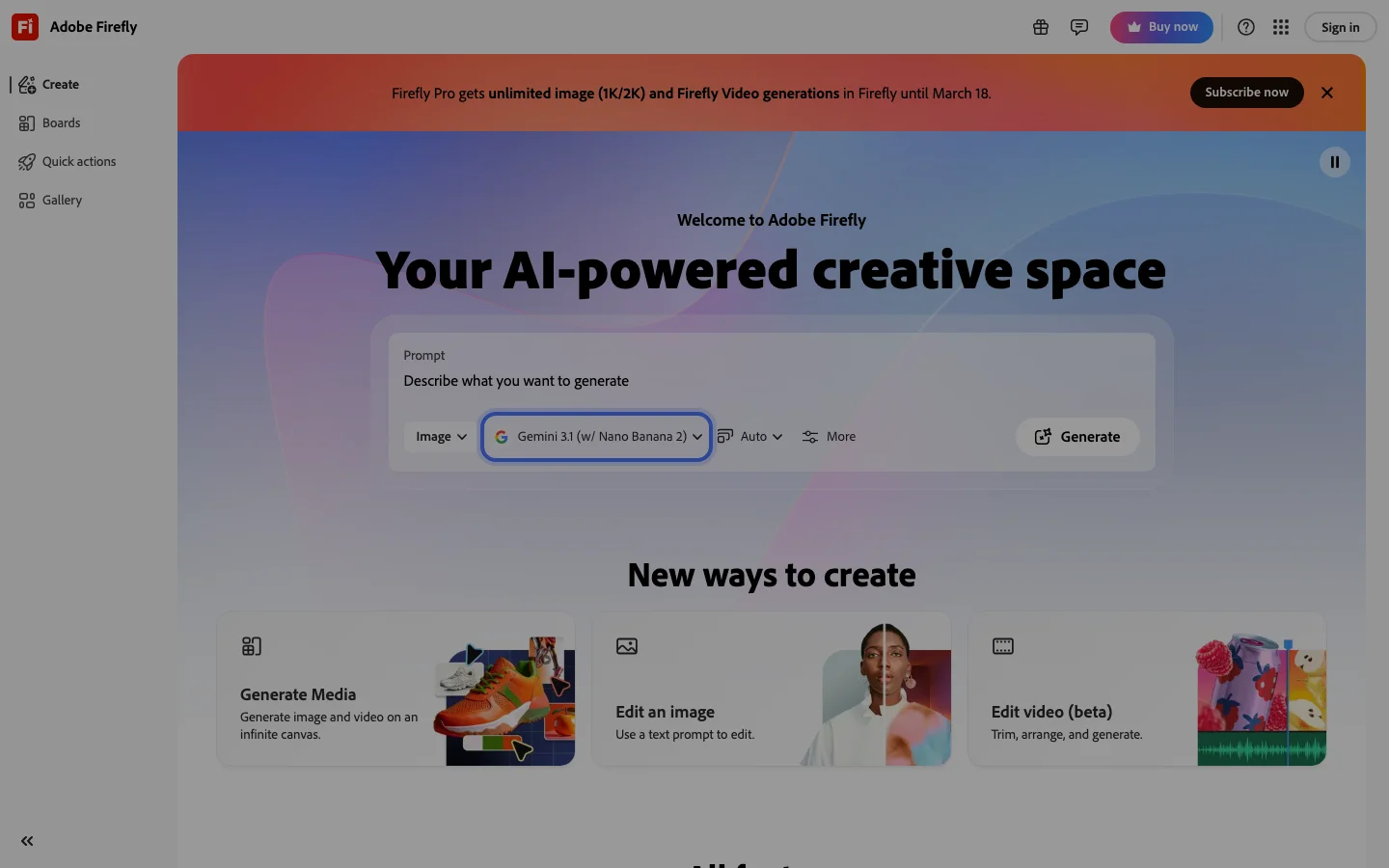
- You need commercial safety and IP indemnification: Adobe Firefly is trained on licensed content only
- You want casual mobile generation: Meta AI is "basically Midjourney for free with limitations" per r/midjourney users
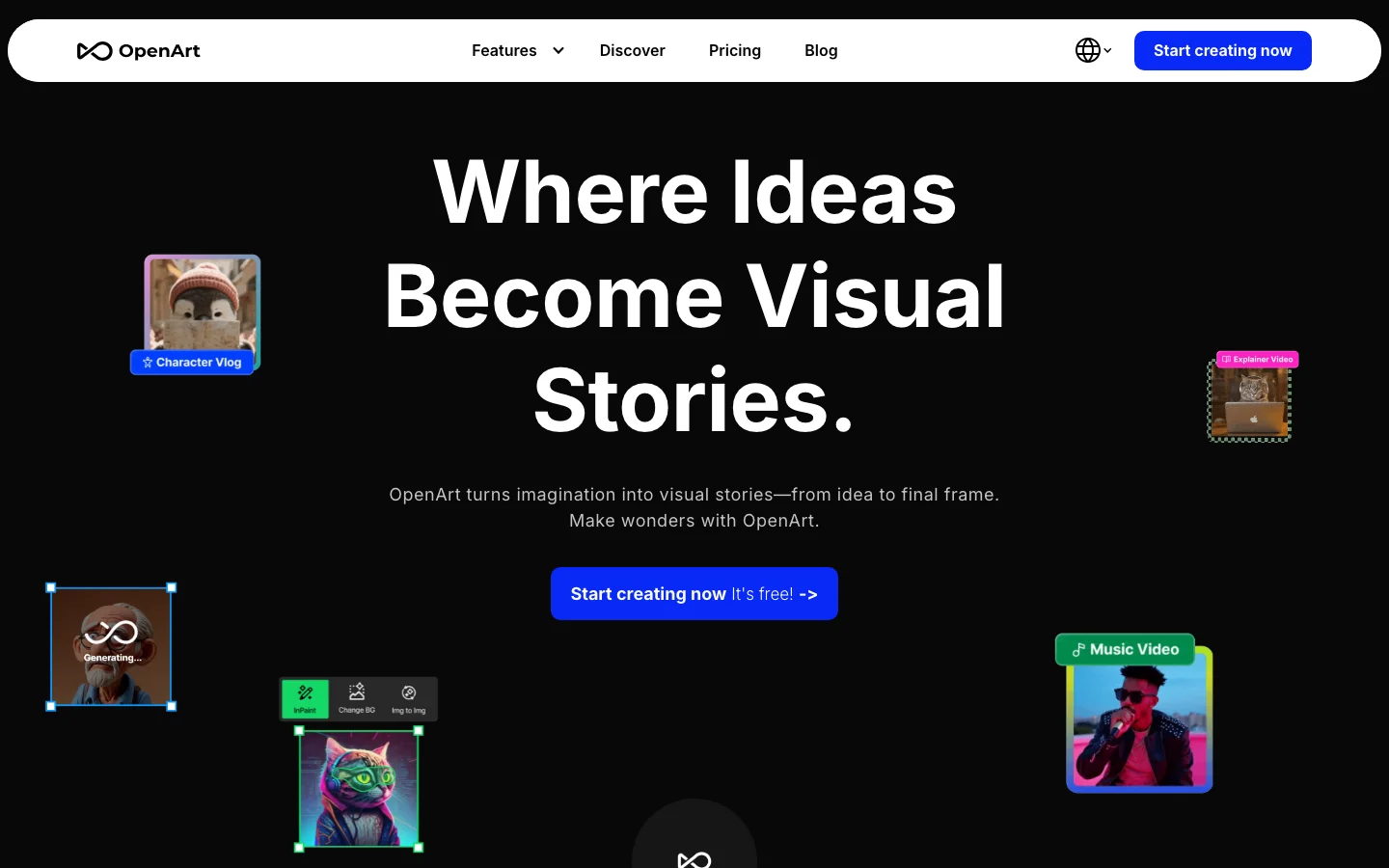
- You want an AI art generator with maximum model breadth and Kling video: OpenArt (with caveats - read our full comparison)
The Verdict
Leonardo AI and Midjourney are both powerful tools. They are not competing for the same user.
Midjourney is the tool for people who want the best-looking image with the least effort. Its style personalization is a genuine moat - the longer you use it, the better it gets for you specifically. The V7 transition was rough, but V8 is promising, and the aesthetic quality ceiling remains the highest in the category. Accept the Discord interface, the lack of API, the $10/month minimum, and the Disney lawsuit risk. If those trade-offs are fine, Midjourney is still the honest first recommendation for pure image quality.
Leonardo AI is the tool for people who need more than beautiful images - they need control, flexibility, and integration. The multi-model library, LoRA fine-tuning, official API, and game asset pipeline make it the deeper platform for production workflows. The free tier lets you evaluate before committing. The content filter crisis is real and currently costing subscribers working time. The Canva acquisition is real uncertainty. But for game developers, concept artists, marketing teams doing volume work, and anyone building generation into a pipeline, Leonardo delivers capabilities Midjourney does not offer at any price.
The right answer depends on what you are making, how often, and which trade-offs you can absorb. Both tools are worth using. Neither is universally best.
Compare tools directly: Leonardo AI · Midjourney · See all AI art generators
Frequently Asked Questions
Does Leonardo AI have a free tier in 2026?
Yes. Leonardo AI offers approximately 150 tokens per day on its free tier, with unused tokens banking for up to three months. The free tier has been degraded post-Canva acquisition - Alchemy features are gated and image-to-image is broken for free users - but it provides enough access to meaningfully evaluate the platform before paying.
Does Midjourney have an API?
No. Midjourney does not offer an official API. Third-party unofficial wrappers exist, but for production pipeline integration this is a hard constraint. If programmatic access is a requirement, Leonardo AI is the only viable choice between the two.
Which AI art generator is better for game developers?
Leonardo AI. It has purpose-trained models for game textures, character sheets, and environment concepts, plus LoRA fine-tuning for custom asset pipelines. The indie game development community on r/gamedev has organically converged on Leonardo as the category default for AI-assisted game art.
Is Midjourney worth it in 2026 after the V7 disappointment?
For pure image quality, yes. V7 was a rough transition, but experienced users running V6.1 are still getting the best aesthetic output in the category. V8 entered alpha in March 2026 with promising early results. If visual polish is your priority and you can absorb the $10/month minimum and lack of API, Midjourney remains the honest recommendation for non-technical creative work.
Related Comparisons
Looking for more AI tool comparisons? Check out our guides:
- Best AI Art Generators 2026
- Best AI Video Generation Tools 2026
- Best AI Writing Tools 2026
- Best AI Tools for Small Business 2026