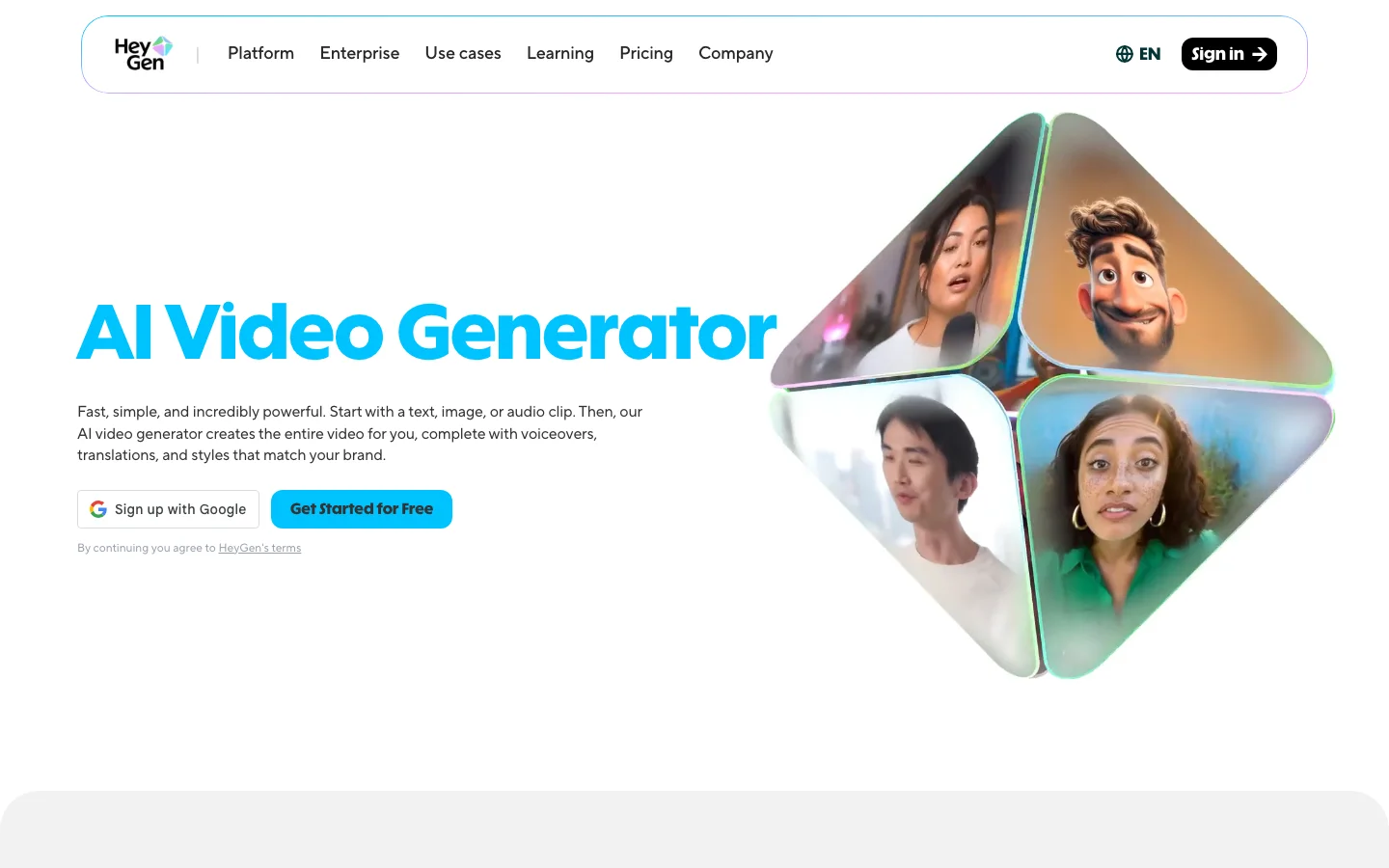

HeyGen competes directly with Synthesia in the AI avatar video category and has pulled ahead on the dimensions that matter most to creators: realism, multilingual dubbing, and the ability to build interactive avatar experiences. Synthesia built for enterprise L&D teams; HeyGen built for creators, UGC marketers, and developers who want avatar video that doesn't look like a corporate training module. Both generate talking-head video from scripts. The aesthetic output, community, and pricing model are distinct enough that choosing between them isn't really a close call once you know what you're making. Video Translation is the feature that put HeyGen on the map in creator communities. Upload a video in English, get a lip-synced Spanish, German, or Japanese version in minutes. YouTube creators publishing multilingual channel variants, personal brands reaching international audiences, companies localizing marketing video without re-shooting - this workflow is documented extensively and the speed is real: a 10-minute video dubbed in under 30 minutes including review is consistently reported. Quality varies by language pair; major European languages and Mandarin produce strong results, while less-resourced languages can drift into unnatural prosody that needs a human pass before publishing. The Streaming Avatar API is where HeyGen separates from the pack entirely. Real-time interactive avatar sessions - an AI avatar speaking live responses driven by a language model backend - are what developers are building for sales demos, customer service bots, and AI companions. Synthesia hasn't entered this category. In our view, this positions HeyGen as both a batch video generator and a real-time avatar infrastructure layer, which is a meaningfully broader surface. UGC pipelines pairing HeyGen lip sync with OpenArt Consistent Character and ElevenLabs voice cloning are explicitly documented in creator communities - HeyGen is the lip-sync layer in serious multi-tool AI character video workflows. For context on where HeyGen sits in the broader market, see our AI video generation roundup or the full AI video category. We'll be honest about the friction: custom avatar quality lives and dies by your recording conditions. Clean lighting, controlled audio, minimal background movement. A home office setup without prep will produce unusable results. Video Translation quality drops noticeably on less-resourced language pairs. The credit/time-limit model creates the same per-generation cost anxiety you'll find across most AI video tools - Creator at ~$29/month gets you 15 videos/month, which goes fast if you're actively producing. Enterprise institutional trust still defaults to Synthesia; if you're selling into procurement teams at Reuters-tier companies, that matters. HeyGen is the right tool for creators, social media teams, and developers building interactive avatar applications. Synthesia is still the better fit for enterprise L&D at scale. Pricing: Creator ~$29/month, Pro ~$89/month, Enterprise custom. Verify at heygen.com. Frequently Asked Questions Is HeyGen legit and safe to use? HeyGen is a legitimate, well-funded AI video company with a substantial creator and business user base. The platform has enterprise-grade privacy and security terms, and is used by creators and marketing teams globally. It is a real product with active development. Avatar 4.0, launched in 2025, represents a genuine quality leap that community reviewers have called difficult to distinguish from real footage. No major security incidents or data handling concerns appear in independent community coverage. How much does HeyGen cost in 2026? HeyGen's Creator plan runs approximately $29 per month with a 15-video monthly cap, making it more expensive than Synthesia at comparable video volumes for lower-tier plans. Higher tiers scale with video minutes rather than a fixed count. The credit and time-limit model can create per-generation cost anxiety for high-volume production teams. Custom avatar creation from a short recording is available on paid plans; the Streaming Avatar API requires developer integration on enterprise tiers. Verify current plan details at heygen.com. Is HeyGen worth the subscription? For multilingual video translation and creator-facing avatar content, HeyGen is the stronger choice over Synthesia. Video Translation into 40+ languages with lip-sync matching is the most-cited feature, and Avatar 4.0 leads in realism for social and creator contexts. The Streaming Avatar API opens interactive AI companion and demo use cases that no direct competitor offers. For enterprise L&D buyers who need institutional credibility (Reuters, BBC, Accenture-level trust signals), Synthesia has the stronger corporate pedigree. HeyGen wins on creator flexibility; Synthesia wins on enterprise trust. Does HeyGen have a free trial or free plan? HeyGen offers a free plan that allows users to generate a limited number of videos without a paid subscription. The free tier is sufficient to test avatar quality and video translation before committing to a Creator plan. Custom avatar creation and higher-resolution exports require a paid subscription. The free plan does not include the Streaming Avatar API access.
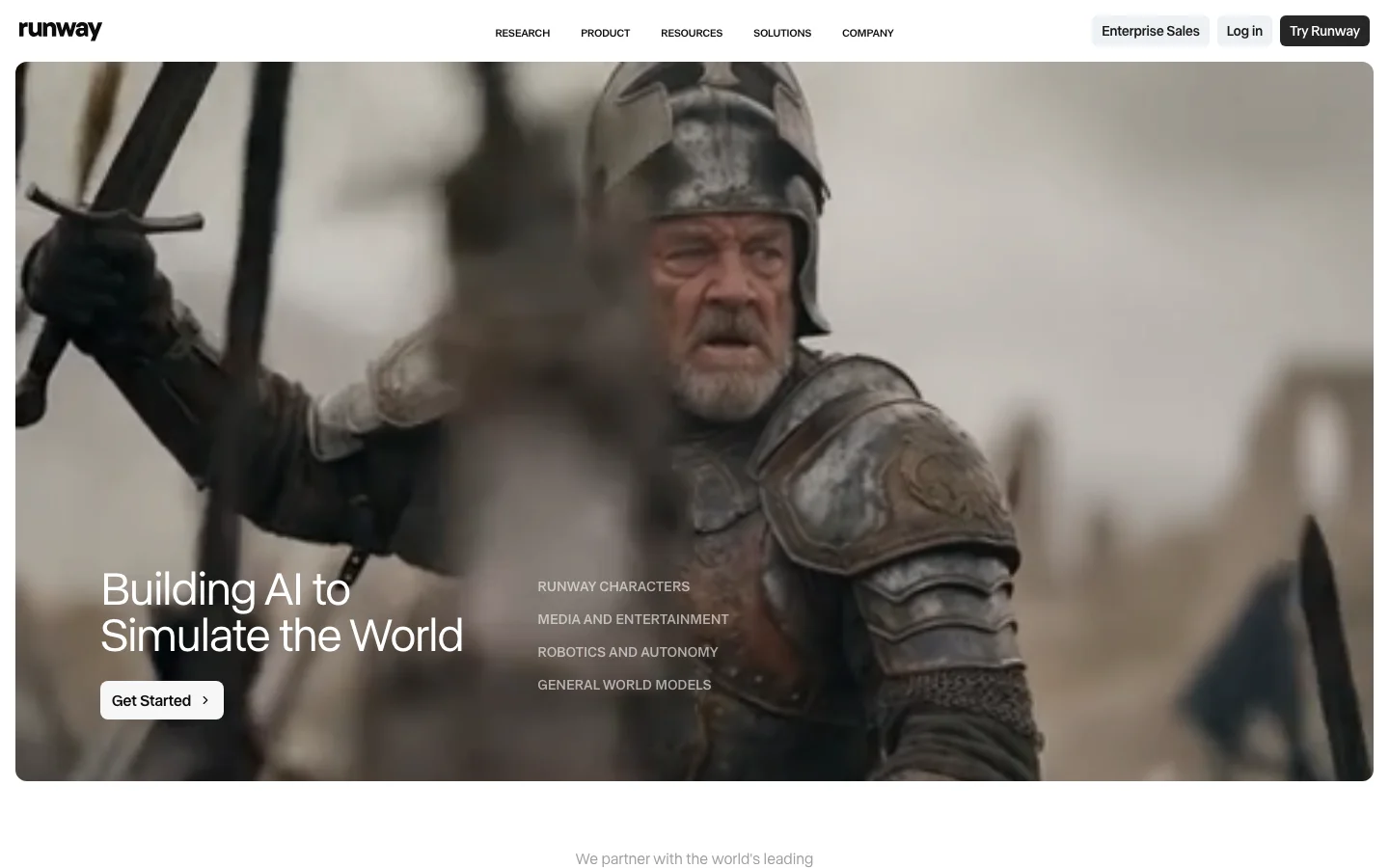

RunwayML is the filmmaker's tool of record for narrative video work. Where Kling AI and Luma Dream Machine generate video from prompts with limited directorial control, Runway gives you compositional intent encoded at generation time. The camera control system is the clearest competitive moat: specify dolly in, dolly out, pan left, pan right, tilt, zoom, orbit, or static at defined intensity, and the model applies that camera movement while maintaining subject coherence across the clip. This is not a post-generation filter; it is shot language specified before the model runs. Narrative filmmakers, music video directors, and commercial video teams use Runway for shots that require specific camera vocabulary in a way that pure text-to-video generators simply cannot deliver. No competitor in the hosted category matches this feature depth for cinematically intentional work. Gen-4 is the current stable model and the one most production workflows rely on. It introduced the References feature: upload reference images to lock character appearance or visual style across multiple shots, enabling narrative consistency that single-clip generators cannot provide. A reported workflow illustrates what the feature enables: a complete music video produced entirely in Gen-4 in two hours using References for character lock. Gen-4.5 added Image-to-Video with API support launching on the same day as the consumer release, a developer-first commitment that signals Runway's intent to be infrastructure, not just a consumer tool. Motion Brush (paint movement onto specific image regions), Director Mode (multi-shot sequence planning), and Inpainting are creative editing tools that exist in combination nowhere else in the category. The platform integrates cleanly into Adobe Premiere, DaVinci Resolve, and After Effects through official plugins, fitting directly into professional post-production pipelines. As a US-incorporated company, Runway carries no geopolitical friction in enterprise procurement, an explicit advantage over Kling (Kuaishou/China) in professional and government procurement contexts. The credit math is the primary friction and it is worth modeling before subscribing. Gen-4 costs approximately 50 credits per 5-second clip. The Pro plan at $35/month includes 2,250 credits, yielding roughly 45 Gen-4 clips per month before overage. A short-form content creator needing 100+ generations per month burns through Pro in the first week and faces either overage charges or an upgrade to the Unlimited plan at $95/month, which is labelled misleadingly, as throttling and fair-use caps apply and advanced features still consume credits even on Unlimited. For production pipelines with deadline pressure and unpredictable generation volume, this creates real budget uncertainty. The second material gap is audio: Gen-4.5 generates silent video. Kling 2.6 ships with native audio generation; Veo 3 ships with native audio. Runway requires separate audio post-production for every clip, adding a workflow step that competitors have eliminated. Generation length is currently capped at 10 seconds; Kling and Luma are pushing toward longer native clip lengths. Runway is the right platform for narrative filmmakers, commercial directors, and music video producers who need specific camera language, character consistency across shots, and clean integration into professional post-production software. It is not the right platform for high-volume social content creators who need cheap rapid iteration, developers building audio-visual pipelines who cannot absorb a separate audio step, or teams with restrictive enterprise procurement policies around Chinese-origin software who nevertheless need physics-heavy animation (Kling's actual strength). Pricing: Free (125 one-time credits), Standard $15/month, Pro $35/month, Unlimited $95/month. Verify current generation costs and credit allocations at runwayml.com as pricing has changed with each model release. RunwayML Director Mode Director Mode is RunwayML's multi-shot sequencing tool. It lets you plan a sequence of individual clips before generating anything, define camera movements for each shot, and assemble a narrative arc rather than a collection of unrelated generations. The practical result is that you can specify a push-in on shot one, a pan across on shot two, and a static close-up on shot three, and Runway treats them as a coherent sequence rather than three separate prompts. Gen-4.5 integrates directly with Director Mode, so the camera vocabulary you specify translates into the model's generation parameters at runtime. This is not a timeline editor applied after the fact; the directorial intent is encoded before the model runs. Combined with the References feature, which locks character appearance across shots using uploaded images, Director Mode makes RunwayML the only accessible tool that lets you work like a director rather than a prompt engineer. Filmmakers use it for music videos where character consistency matters across 20 to 30 shots. Commercial video teams use it to pre-visualize scene structure before committing to a full generation budget. If you have compared RunwayML to Sora, Kling AI, or Luma Labs and felt the others lack precision, Director Mode is the specific reason Runway is different. How Director Mode Works: Step by Step Director Mode operates as Runway's multi-shot pre-production interface. Here is how a typical session runs: Start a new sequence. From the Runway dashboard, open Director Mode and create a new project. Each project holds a series of shots you plan before any generation runs. Define each shot. For every clip in your sequence, you set the camera movement type: dolly in, dolly out, pan left, pan right, tilt up, tilt down, zoom, orbit, truck, or static. Each movement has an intensity slider, and the convention is to start conservative (0.5 to 1.0 range) and increase only if the motion reads as too subtle on playback. Add reference images for character lock. Upload reference images of your subject using the References feature before generating. Gen-4.5 uses these to lock character appearance across every shot in the sequence, so the same person or object reads consistently even when the camera angle and framing change between clips. Use Motion Brush for region-specific movement. On image-to-video shots where you want only part of the frame to move, Motion Brush 3.0 lets you paint the specific area and assign a direction vector and speed to that region. A character's hair moves; the background stays still. This is a separate tool from camera control and works at the object level rather than the shot level. Generate and chain. Each clip renders at 5 to 10 seconds. Director Mode treats the sequence as a unit rather than isolated generations, which keeps camera grammar consistent across cuts. Clips stitch in the in-browser timeline editor before export. The core difference between Director Mode and the camera controls in Kling 3.0 and Luma Dream Machine is where the control lives. Kling 3.0's storyboard tool and Luma's Camera Motion Concepts both work primarily through natural language at prompt time: you describe the camera move in text and the model interprets it. Runway's Director Mode encodes the camera instruction as a structured parameter before the model runs, which gives more predictable output when you need a specific move to land exactly right. Luma's 3D volumetric architecture produces excellent parallax on orbit and dolly shots, and Kling 3.0 added native lip-synced audio to its storyboard pipeline that Runway does not currently match. The practical advantage of Director Mode is precision and repeatability across a planned sequence rather than any single shot type. RunwayML Pricing Plans 2026 RunwayML offers five tiers. The Free plan provides 125 one-time credits with watermarked output, enough to test the interface but not enough for production work. Standard at $15/month adds roughly 625 credits per month, which covers about 12 to 15 Gen-4.5 clips, and is the minimum subscription tier for casual creators who generate infrequently. Pro at $35/month is the practical entry point for regular use. It includes around 2,250 credits monthly, yielding approximately 45 five-second Gen-4.5 clips before overage. Community consensus is that Standard burns through too quickly for anyone iterating seriously. Unlimited at $95/month removes the hard credit cap but applies fair-use throttling and lower generation priority, so the "unlimited" label is not literal under deadline conditions. Enterprise pricing is negotiated directly and covers dedicated capacity, custom data handling, and SLA commitments, primarily relevant for studios and post-production houses. For comparison, Kling AI charges roughly $0.12 per five-second clip on pay-as-you-go, which is more cost-efficient for high-volume work. Luma Labs offers a free tier with no watermark. Runway's pricing reflects its positioning as a professional tool rather than a high-volume generation engine. Verify current credit costs at runwayml.com before subscribing, as pricing has changed with each model release. Frequently Asked Questions What is RunwayML Director Mode? Director Mode is RunwayML's multi-shot planning tool that lets you design a sequence of camera movements before generation runs. Available in Gen-4.5, it lets you specify push-ins, pull-outs, pans, and tracking shots for each clip in a sequence, then generate them with consistent camera language and character appearance using the References feature. How much does RunwayML cost in 2026? RunwayML pricing in 2026: Free (125 one-time credits, watermarked), Standard at $15/month (~625 credits), Pro at $35/month (~2,250 credits, roughly 45 Gen-4.5 clips), Unlimited at $95/month (fair-use throttled), and Enterprise at custom pricing. Credits are consumed per generation; Gen-4.5 costs approximately 50 credits per five-second clip. Check runwayml.com for current rates. Is RunwayML worth it for solo creators? It depends on what you are making. If you need precise camera control for narrative or commercial video, the Pro plan at $35/month is hard to replace. If you primarily need high-volume social content or photorealistic generation without specific camera intent, Luma Labs or Kling offer better cost-per-clip ratios. RunwayML earns its price for creators who treat it like a cinematography tool, not a generation machine. Does RunwayML have a free trial? Yes. RunwayML's Free plan includes 125 one-time credits with watermarked output. That is enough for eight to ten test clips using Gen-4.5. There is no time limit on the free tier, but the credit pool does not replenish monthly. If you exhaust the 125 credits and want to continue, you need to subscribe to Standard or above.

Chatbase is where most people start when they want a chatbot on their website - and for good reason. Upload your PDFs, paste a URL, connect a Google Doc, and you have a working customer support widget embedded and live in under 10 minutes. No code, no engineers, no waiting. We've watched this category for a while and nothing else has matched Chatbase's organic traction: ~$250K MRR as a bootstrapped product, 114,000 monthly organic visitors, 12,300+ keywords ranked. Those are independently verifiable numbers, not VC marketing spend, and they tell you this tool has real product-market fit. The use case it nails is FAQ deflection for SMBs and SaaS teams. If your support queue is full of questions your docs already answer, Chatbase solves that problem cleanly. Lead capture forms inside the chat widget, human handoff for complex tickets, Zapier to push leads to your CRM - the core operational surface is covered. The white-label agency tier is genuinely rare at this price point, which is why agencies building client chatbot portfolios keep landing here. If you're exploring options for your small business, the AI tools for small business guide puts Chatbase in context alongside the broader stack. For a deeper look at what else is in the chatbot builder category, the comparison is worth reading before you commit. Where it gets uncomfortable: the credit math at scale is rough. GPT-4o burns ~20 credits per response on the Pro plan ($399/month), which works out to roughly 2,000 actual AI responses per month - about $0.20 per interaction. For a high-volume support operation that number compounds fast. There are also unverified reports of a data-loss incident circulating online, and support response times cited at 2+ weeks in multiple community reports. Those aren't dealbreakers for a low-stakes FAQ bot, but they matter for production deployments where downtime has a cost. For multi-channel coverage - website chat plus inbound phone calls plus WhatsApp - Droxy AI is the more complete package, particularly for businesses that need an AI receptionist handling calls, not just web chat. Chatbase stays text-and-widget focused, which is either a clean scope or a gap depending on your needs. Best fit: SMBs and SaaS teams doing FAQ deflection where setup speed matters more than scale economics. Wrong fit: high-volume operations, sales qualification flows, or anyone needing the chatbot to probe intent and route leads. Pricing: Free tier, Hobby ~$40/month, Standard ~$150/month, Pro ~$500/month. Verify at chatbase.co. Frequently Asked Questions Is Chatbase legit and safe to use? Chatbase is a legitimate bootstrapped SaaS product with independently verifiable traction: approximately $250K MRR, 114,000 monthly organic visitors, and 12,300+ keywords ranked, numbers that reflect genuine product-market fit rather than VC marketing spend. The founder maintains an active Twitter presence documenting roadmap decisions, which reduces the opacity risk common in newer AI tools. We could not independently verify a specific data-loss or security incident for Chatbase. Evaluate their current security posture directly before entrusting sensitive data, especially for production deployments. How much does Chatbase cost in 2026? Chatbase offers four pricing tiers: Free ($0/month, heavily restricted), Hobby at $40 per month, Standard at $150 per month, and Pro at $500 per month. The credit system is where costs get complicated: GPT-4o consumes roughly 20 credits per response on the Pro plan, yielding approximately 2,000 AI responses per month, about $0.20 per interaction at scale. Verify current pricing and credit allocations at chatbase.co, as these have shifted over time. Is Chatbase worth the subscription? For small businesses and SaaS teams doing FAQ deflection, Chatbase is the strongest starting point in the no-code chatbot category. The setup speed (document to live widget in under 10 minutes) and strong organic traction signal real product-market fit. The credit economics break down at high volume: roughly $0.20 per GPT-4o response on Pro. Support response times of 2+ weeks have been reported in multiple community threads. It is the right choice for moderate-volume FAQ bots; the wrong choice for production deployments where support responsiveness or high interaction volume matters. Does Chatbase have a free trial or free plan? Yes, Chatbase has a free tier, though it is heavily restricted. Meaningful testing of the platform's actual capabilities requires a paid plan. The free tier covers basic chatbot creation but limits the number of messages, sources, and chatbots you can run simultaneously. Most users find the free tier sufficient to validate the concept before committing to Hobby at $40 per month.
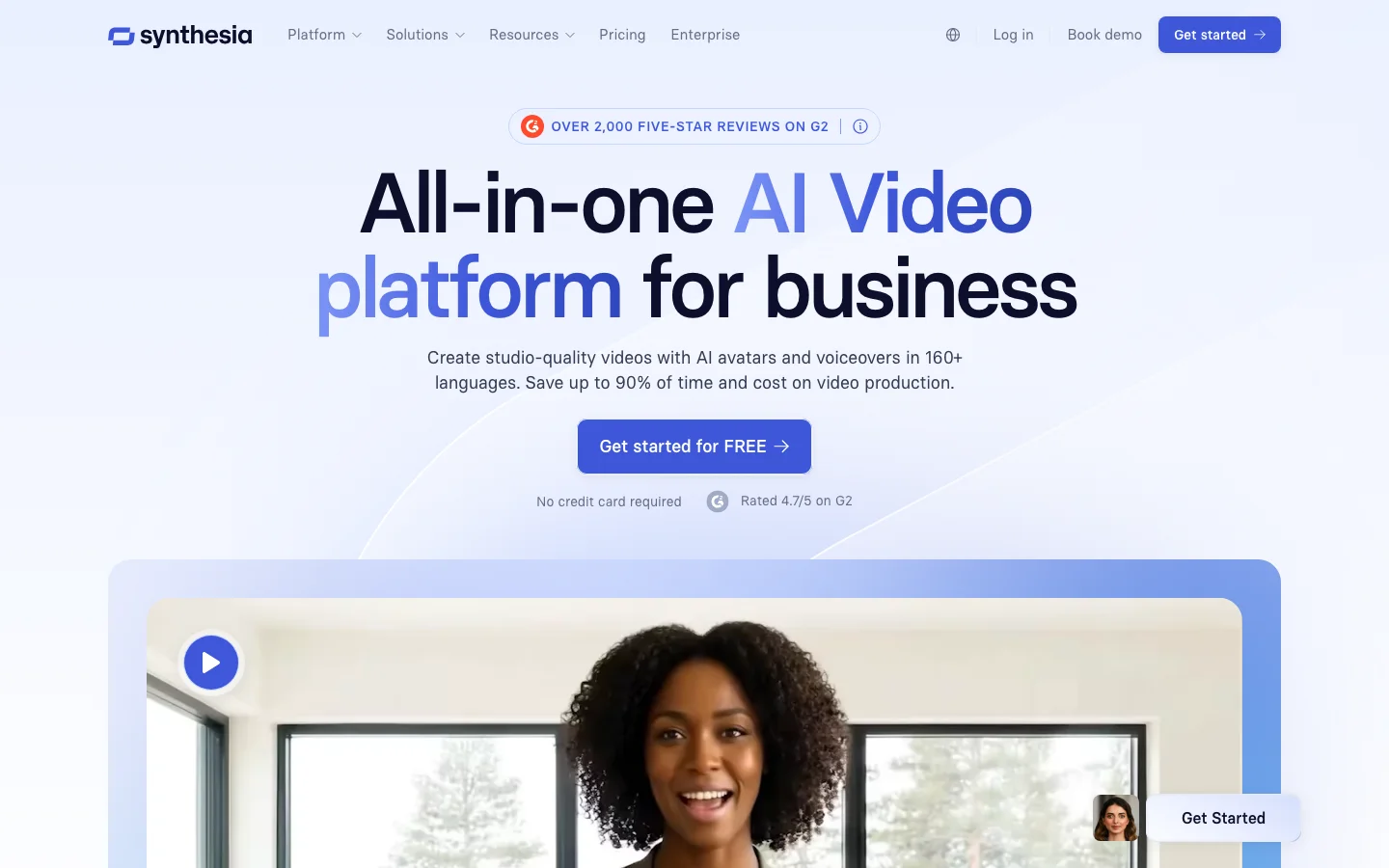

Synthesia is the enterprise standard for AI avatar video, and it earned that position the hard way - Reuters, BBC, and Accenture are documented users, and 50,000+ companies have deployed it for training content. When an L&D team needs to update 50 course modules because a regulation changed, Synthesia is what they reach for. Not because it's the flashiest tool in the category, but because it's reliable, the output is polished in corporate contexts, and a text edit plus regeneration beats re-booking voice talent and studio time every time. The core workflow is direct: write your script, pick from 230+ stock avatars or create a custom one from a 15-minute recording session, and the platform generates a lip-synced, professionally presented video in minutes. Multilingual dubbing in 140+ languages - same avatar, same script, different language - is where the ROI gets obvious for global teams who would otherwise run separate recording sessions per market. The platform is self-contained enough to handle full production: screen recording, slide-to-video converter, brand kit, media library. The AI voices are among the more natural-sounding in the category, which matters more than people admit - unnatural prosody in training video creates friction that kills retention. We want to be direct about where Synthesia stops working: this is a corporate presentation tool, not a creative one. The stock avatars are credible in a boardroom slide deck and look conspicuously artificial the moment you need emotional range or anything resembling storytelling. For creators, social media teams, or anyone producing content where realism matters, HeyGen's Avatar 4.0 has pulled ahead on output quality and has a far more active creator community. If you need cinematic generation, scene composition, or camera control, you're in RunwayML territory entirely - Synthesia doesn't touch that use case. Browse the full AI video category to orient yourself if you're still deciding which direction fits, or read our AI video generation roundup for a direct comparison across tools. The platform is cloud-only with no API on lower tiers, which is a real constraint for teams wanting to integrate video generation into custom content pipelines. Custom avatar recording requires controlled conditions - poor lighting or background movement produces unusable results, so don't try it in a home office without prep. Synthesia is the right call for enterprise and mid-market teams producing training, onboarding, internal communications, and multilingual corporate video at scale. It's the wrong call for everything else. Pricing: Starter ~$29/month with restricted video minutes; Pro ~$89/month; Enterprise custom. Free demo video available without payment at synthesia.io. Frequently Asked Questions Is Synthesia legit and safe to use? Synthesia is one of the most credentialed AI video companies in the market. Its enterprise customer list includes Reuters, BBC, and Accenture, institutions whose procurement processes include serious security and data handling review. The platform operates under enterprise-grade privacy terms with SOC 2 compliance and data residency options for regulated industries. No significant security incidents or trust concerns appear in independent community coverage. For enterprise L&D buyers doing vendor due diligence, Synthesia has the strongest institutional trust signal in the AI avatar video category. How much does Synthesia cost in 2026? Synthesia's Starter plan runs approximately $29 per month with strict video time limits. Per-minute charges apply above the included allowance. This makes it relatively expensive for individual creators compared to HeyGen's Creator plan at a similar price point with a 15-video cap. Enterprise pricing is custom and includes SCORM export, SSO, and additional data governance controls that justify the premium for large-scale corporate L&D deployment. The higher-tier plans are where Synthesia's value proposition is strongest. The per-video cost becomes more defensible at volume. Verify current pricing at synthesia.io. Is Synthesia worth the subscription? For enterprise L&D teams producing multilingual training content at scale, Synthesia is the category standard and worth the subscription. The ability to update a script and regenerate video instantly, without re-booking talent or re-editing footage, delivering real ROI for organizations that produce regulatory, compliance, and product training content regularly. The 140-language dubbing capability eliminates separate recording sessions for global teams. For creators wanting realistic, emotional, or social-media-facing avatar content, HeyGen's Avatar 4.0 is more appropriate. Synthesia is built for the boardroom; HeyGen is built for the creator economy. Does Synthesia have a free trial or free plan? Synthesia offers a free plan that allows you to create a limited number of AI videos to evaluate the platform before purchasing. The free tier includes access to a subset of the avatar library and basic scripting features, which is sufficient to assess video quality and workflow fit for your use case. Custom avatar creation, SCORM export, and enterprise controls require a paid plan. Try the free tier at synthesia.io to test a specific avatar and script before committing to a Starter subscription.
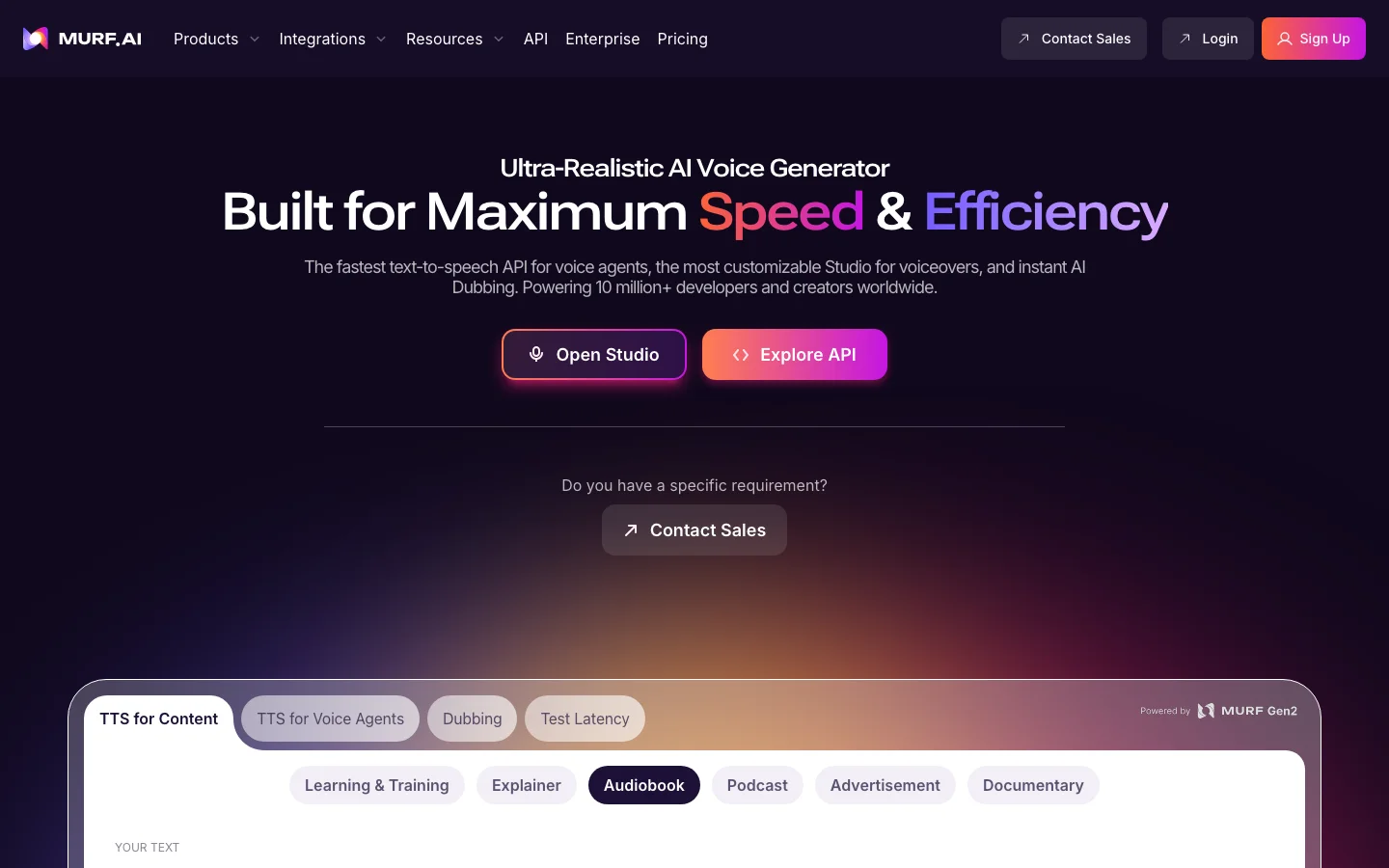

Murf AI occupies a clear niche in the AI voice tools market, and it owns that niche well: business-focused text-to-speech for e-learning producers, L&D teams, and YouTube creators who need clean, consistent narration at a price they can defend to a manager. We tested Murf alongside ElevenLabs for two weeks across different workflow types, and the conclusions split cleanly by use case. For corporate e-learning and training module production, Murf is genuinely the better fit. Not because it sounds better than ElevenLabs - it does not, but because it is built for that workflow in ways ElevenLabs is not. The studio interface is independently praised by multiple users in separate communities: word-level pitch, emphasis, and pause controls make timing adjustments fast without fighting the tool. Batch export with LMS-compatible output and consistent loudness normalization are features Murf has and ElevenLabs does not prioritize. An L&D manager at a 500-person SaaS company we researched cited Murf specifically as "$19/month, business focused" when comparing options for scaling training module production. That framing is exactly right. The built-in video editor means e-learning producers can add voiceover to video without a separate editing tool in the stack, a workflow simplification that matters when you are producing at volume. The predictable billing model is a real advantage over ElevenLabs' credit-anxiety situation: you know what you are paying, you know what you get. The honest picture against ElevenLabs: "too robotic or corporate" is the consistent quality criticism from anyone comparing them side-by-side. Users who need emotional, expressive, or authoritative narration consistently choose ElevenLabs despite the higher cost, and we agree with that verdict. Murf's voice cloning exists but is not competitive; ElevenLabs' Instant Voice Cloning from short samples is in a materially different quality tier. Developer and API signal is weak. If programmatic integration is a requirement, ElevenLabs' ecosystem is more mature by a wide margin. Check Lovo AI for a middle-ground option between the two. Our full head-to-head is in our AI voice generator comparison. Friction worth knowing before subscribing: the free tier is capped at 10 minutes of audio per month, not enough to evaluate the platform for any real production project. Pronunciation fine-tuning for technical terms and acronyms is gated behind higher plan tiers, a real problem for e-learning producers dealing with industry jargon. There is no transcript-based editing workflow (Descript's model) for producers who prefer editing audio by editing text. Pricing starts at approximately $19/month. Verify current tiers at murf.ai. Frequently Asked Questions Is Murf AI legit and safe to use? Murf AI is a legitimate, established text-to-speech platform with a growing enterprise customer base and active product investment. The leadership team includes former Amazon Alexa alumni. The platform operates with standard SaaS data handling terms and has not been involved in the voice harvesting controversies that have affected competitors like Lovo AI. No major security incidents appear in independent community coverage. For e-learning producers and corporate content teams, Murf is a stable, professionally operated platform. How much does Murf AI cost in 2026? Murf AI starts at $19 per month for the entry plan, placing it below ElevenLabs Creator at $22 per month, a meaningful comparison point for budget-conscious L&D teams. Higher tiers include pronunciation fine-tuning for technical terms, voice cloning, team collaboration workspaces, and API access. The predictable billing model (no credit-anxiety, no per-generation metering on standard voice output) is specifically cited by e-learning producers as a reason to choose Murf over ElevenLabs. Verify current plan pricing and generation limits at murf.ai. Is Murf AI worth the subscription? For e-learning producers and L&D teams running consistent monthly batch work, yes. The word-level studio controls, LMS-compatible batch export, and predictable billing make Murf the right fit for corporate training video production at scale. The built-in video editor eliminates a separate tool from the workflow. For creators who need emotional expressiveness, conversational naturalness, or competitive voice cloning depth, ElevenLabs is worth the extra cost despite higher pricing. Murf wins on workflow fit for corporate production; ElevenLabs wins on voice quality for everything else. Does Murf AI have a free trial or free plan? Yes, Murf AI offers a free plan that includes 10 minutes of audio generation, enough to test voice quality and the studio interface on a short script, but insufficient for evaluating the platform on a real production project. The free tier covers core voice features without collaboration or API access. For a proper evaluation, the entry paid plan is the practical minimum. The 10-minute free allowance is better used to compare specific voices and language coverage against your actual use case before purchasing.
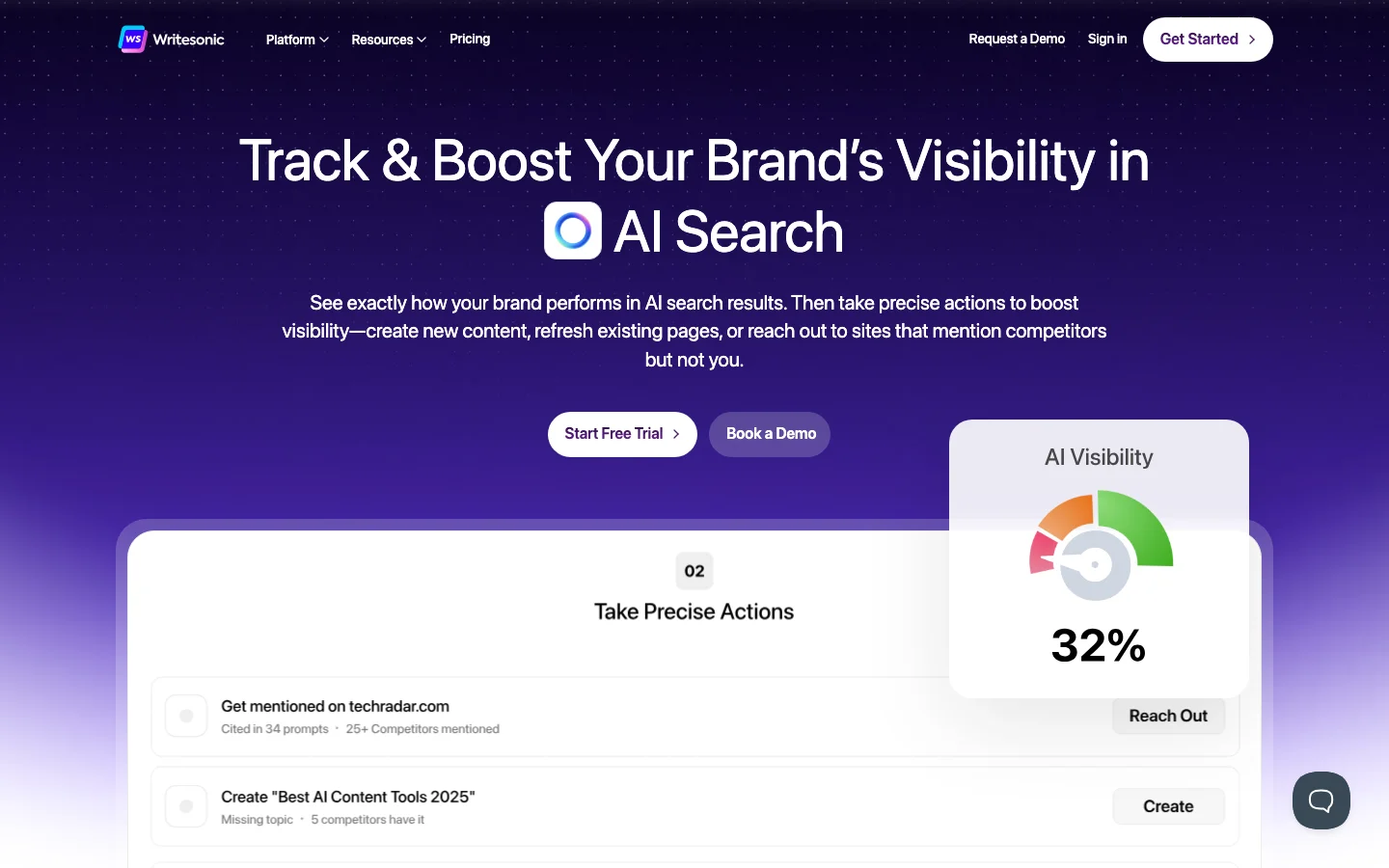

Writesonic is a GEO (Generative Engine Optimization) and AI writing platform used by marketing agencies to track brand mentions in ChatGPT, Perplexity, Google AI Overviews, and a growing list of AI search engines. It started as an AI writing tool in 2021, but its 2025-2026 pivot changed the product fundamentally: brand visibility in AI search is now the headline, with SEO content tools and an AI chatbot bundled in. The GEO dashboard tracks where your brand appears in AI-generated answers, what sentiment surrounds those mentions, and what to do about it through an Action Center. The $399/month Growth plan (billed annually) bundles this with an SEO toolkit that includes article generation, site auditing, and Chatsonic, the AI chat interface that now supports GPT-4o and Claude 3.7 Sonnet. Agency users report leads telling clients they found them through AI search, with the Action Center called out specifically for knowing what to fix. The AI writing product is still present: long-form article generation, Chatsonic with live web access, brand voice training, bulk generation. The honest picture from real users is that writing output has a persistent stiffness that prompting cannot reliably remove. Users describe it as solid for rough drafts and idea angles, not publish-ready copy. If your goal is writing quality alone, ChatGPT or Claude used directly outperform Writesonic's output. The development focus has shifted toward GEO, and the writing tools reflect that. What Makes Writesonic Different in 2026 The core differentiation is GEO tracking depth. Writesonic now monitors brand visibility across ChatGPT, Perplexity, Google AI Overviews, Google AI Mode, Claude, Gemini, Microsoft Copilot, Grok, DeepSeek, and Meta AI. That is a wider AI platform coverage than most competitors at this price point. The Action Center is what makes this tracking useful rather than decorative. It generates Prompt Diversification strategies using SEO keywords pulled from Ahrefs, Reddit, and People Also Asked, so you are not just watching your visibility score drop but actually getting directions for improving it. The Prompt Explorer maps how ChatGPT Shopping results are surfacing products in your category, which is a genuinely different data layer for e-commerce brands and agencies. Chatsonic has been upgraded significantly for 2026. It now supports model switching between GPT-4o and Claude 3.7 Sonnet inside the same session, with web browsing, file uploads, image generation via ChatGPT Image and Flux 1.1, and data integrations pulling from Google, Ahrefs, and Semrush. That positions it as more than a standard AI chatbot: it is a research and analysis workspace with SEO context built in. The SEO site audit has AI-powered automatic fixes, not just issue flagging. Growth plan users get 2,500 pages analyzed per audit with 50 audits per month. The SEO Content AI Agent generates articles with unlimited runs on paid plans. For agencies managing multiple clients, the Projects and Team structure lets you isolate client environments within a single subscription. The competitive field for GEO is active. Profound is the enterprise market leader but priced above what most agencies can justify. Guzu.ai is cheaper with comparable charts. SearchParty sits at a similar price point. Writesonic's clearest moat is the Agency Partner Program: 20% recurring commissions, exclusive features, and pitch support. That has built a real advocate layer in marketing communities that pure feature comparisons do not capture. Writesonic Pricing Plans 2026 Writesonic restructured its pricing significantly for 2026. The old $299 agency tier is gone. The current plan structure is: Free: Limited article generation, no GEO tracking, Chatsonic access with model limits. Not viable for evaluating the core GEO product. Useful only for a quick test of the writing interface. Starter: $99/month ($79/month billed annually). 50 AI prompts tracked (ChatGPT only), daily tracking frequency, 1 region, 1 language. 15 article generations per month, 10 site audits, 100 pages analyzed. Chatsonic with GPT-4o and Claude 3.7 Sonnet. Suitable for early-stage brands building initial AI search presence. Basic: $249/month ($199/month billed annually). Expanded GEO tracking across ChatGPT, Google AI Overviews, and Gemini. More article generations and audit capacity. Adds 2 additional user seats at $50/seat. Growth: $499/month ($399/month billed annually). 200 prompts tracked daily across ChatGPT, Google AI Overviews, and Gemini. 50 article generations per month, 50 audits, 2,500 pages analyzed. 5 portfolio tracking groups. Up to 5 additional seats at $60/each. This is where the full GEO and SEO bundle becomes viable for agencies running multiple client campaigns. Enterprise : Custom pricing: Custom prompt volume, tracking frequency, regions, languages. Includes a dedicated GEO strategist and Slack or Teams support. For brands running AI visibility campaigns across multiple markets. Billed annually, the Growth plan works out to $399/month. For agencies that would otherwise pay separately for a GEO monitoring tool and an SEO suite, the bundling argument holds. Verify current pricing at writesonic.com/pricing, as the tier structure has shifted multiple times in the past 18 months. Writesonic vs Alternatives For GEO tracking specifically, the comparison set is Profound (enterprise, higher cost), Guzu.ai (cheaper, strong on chart features), and SearchParty (similar price, less bundled). Writesonic differentiates on the SEO content bundle and the Agency Partner Program rather than raw GEO feature depth alone. For AI writing quality, Jasper AI has invested more in workflow integration and Brand Voice consistency. Jasper is the better choice if your team's primary need is on-brand content operations at volume. Writesonic's writing output is useful for drafts but requires editing to be publish-ready, which Jasper also requires but with stronger brand controls to guide the output. Copy.ai pivoted to B2B sales automation and is no longer a relevant comparison for GEO or content writing use cases. If AI search visibility tracking is the goal, Writesonic is the practical mid-market option. Browse the full AI writing tools category for a complete comparison across price points. Is Writesonic Worth It in 2026? For agencies tracking brand visibility in AI search, Writesonic delivers real value at the Growth tier. Sentiment analysis and visibility tracking are specifically praised by agency users for being actionable, not just informational. The bundled SEO content tools and Chatsonic with GPT-4o and Claude 3.7 Sonnet access make the subscription defensible if you are replacing separate tools. For teams whose primary need is AI writing quality, the math is harder to justify. Chatsonic with GPT-4o access works, but the standalone article writer requires editing before publication. ChatGPT or Claude used directly costs less and produces output that requires similar editing effort. The GEO dashboard is what makes Writesonic worth the premium, not the writing capability. The agency churn risk is real. Users testing all GEO competitors simultaneously means loyalty is conditional on the feature-to-price ratio holding as Guzu, SearchParty, and eventually Ahrefs mature. If GEO tracking is central to your agency's service offering, Writesonic is a workable bet at current pricing. If GEO tracking is exploratory, start at Starter to validate before committing to Growth. Frequently Asked Questions Is Writesonic better than Jasper or Copy.ai? For GEO and AI search tracking, Writesonic is the only one in this comparison that offers it as a core product. Jasper AI is the better choice for on-brand content operations with team workflows. Copy.ai pivoted to B2B sales automation and is not a relevant writing tool comparison. The tools serve different primary jobs in 2026. How much does Writesonic cost in 2026? Plans run from free to $499/month. The Growth plan at $399/month billed annually is the practical entry point for agencies needing full GEO tracking. Starter at $79/month annually covers early-stage brands. A free trial is available. Verify at writesonic.com/pricing. Does Writesonic generate factual content with sources? Chatsonic, Writesonic's AI chat tool, includes real-time web browsing and pulls sources. The AI Article Writer generates content from training data without real-time sourcing by default. For factual research workflows, Chatsonic with web access is the relevant product. The article writer requires manual fact-checking before publication. Can I use Writesonic for SEO articles? Yes. All paid plans include the SEO Content AI Agent for unlimited article generation runs and a site audit tool with AI-powered fixes. The Growth plan allows 50 full article generations per month. Output quality is suitable for drafts and outlines; it typically needs editing before publication. The GEO-focused plans also include keyword research and content strategy tools. Is there a free plan? Yes, but it is limited. The free plan provides restricted article generation and no access to GEO tracking features, which are the product's core value in 2026. Chatsonic on the free tier has model limitations. For evaluating the actual GEO dashboard, a paid plan is necessary.
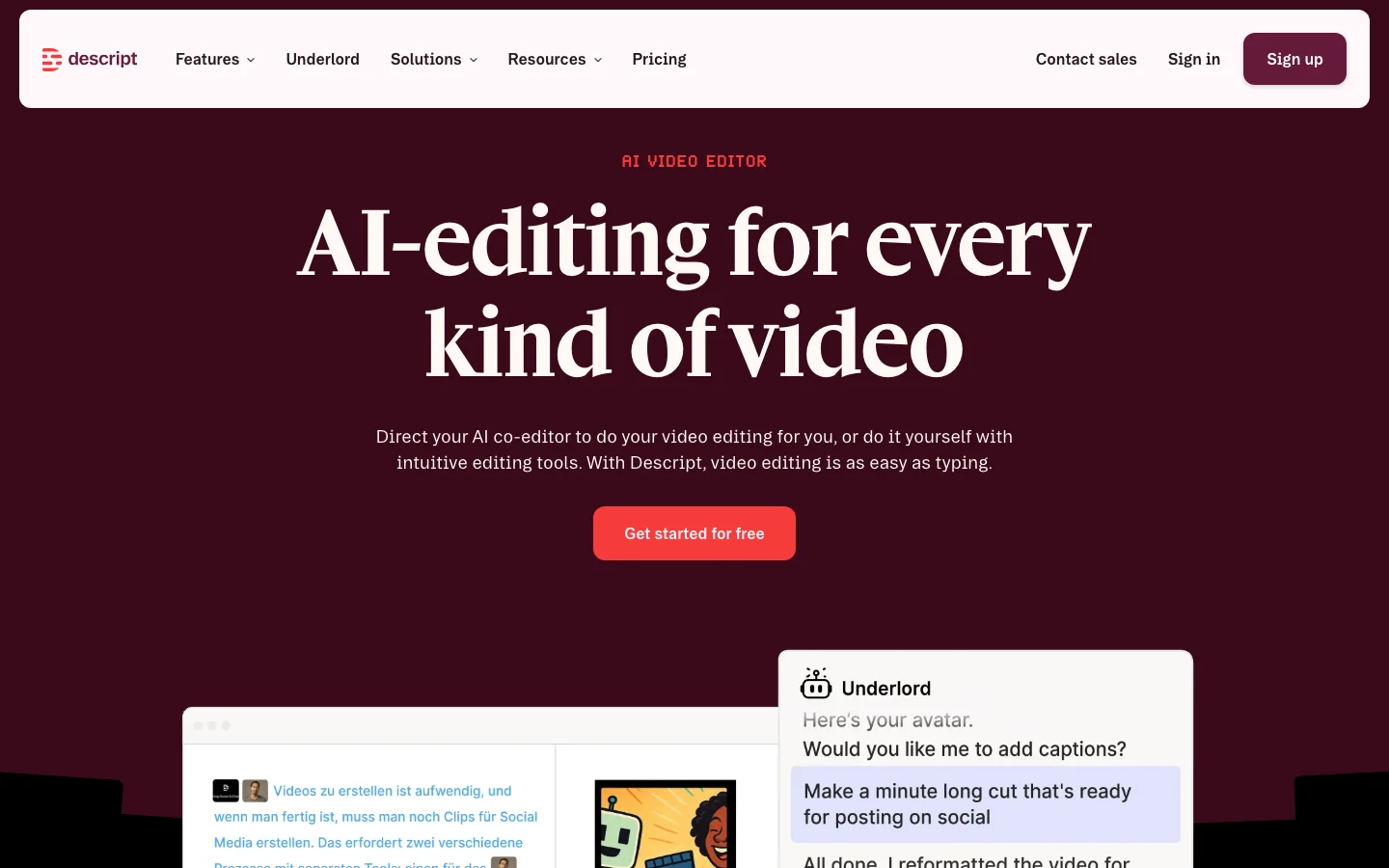

Descript is an AI-powered audio and video editor built around a simple idea: you edit media by editing the transcript. Instead of scrubbing through waveforms and timelines, you read the words, delete the ones you do not want, and the audio and video follow. After testing it across podcast editing and video content workflows, this core concept genuinely changes how you approach editing spoken content. For podcasters and video creators who work primarily with talking-head material, it removes most of the friction that makes traditional timeline-based editing slow. The feature set extends well beyond transcript editing. Overdub lets you clone your own voice with AI and fix audio mistakes without re-recording, a capability podcasters consistently cite as a primary reason they stay with Descript. Filler word removal ("um," "uh," "like") works with one click and is the single most praised feature across user reviews. Studio Sound handles noise removal and audio enhancement. Underlord, the AI assistant, automates tasks like creating highlight clips, writing show notes, and generating chapter markers. Descript Rooms, built on the SquadCast acquisition, handles remote guest recording. And an API now in early access opens automation through Zapier and Claude/MCP integration. Pricing restructured to a credit-based model in 2025 and the community reaction has been consistently negative. The free plan is too limited to finish a real project. Hobbyist starts at $16/month billed annually ($24 monthly), Creator at $24/month annually ($35 monthly), Business at $50/user/month annually ($65 monthly). Descript has no lifetime-deal option: every plan is a recurring subscription, billed monthly or annually. Credits get consumed by both successful and failed AI tasks, meaning Underlord can drain your budget on work it does not complete. One user reported a quote of over $1,200/month for heavy text-to-speech usage. For standard podcast editing the pricing is workable, but anyone relying heavily on AI features needs to track credit burn carefully. Descript pioneered transcript-based editing and that core innovation remains genuinely useful. The tool is best-in-class for the podcast and online course workflow it was designed for. Underlord is unreliable enough that users describe it bluntly in community threads, and the credit pricing has created real churn among long-term subscribers. Competitors including CapCut, Adobe Premiere with AI features, and Riverside.fm are absorbing some of that outflow. If you are evaluating AI video editing tools, compare Descript with Vozo AI for a different approach to AI-assisted editing, or explore ElevenLabs if voice generation quality is your primary concern. What Makes Descript Different Most video editors treat the timeline as the primary interface. You scrub through footage, find the section you want to cut, and mark in and out points. Descript inverts this: the transcript is the primary interface, and the timeline is secondary. You read the transcript like a document, select the words or sentences you want to remove, hit delete, and both the audio and video are cut. For anyone who edits spoken content, this is a fundamentally faster workflow. The practical impact is significant for podcasters and course creators. A 60-minute recording might generate 9,000 words of transcript. Finding a rambling section by skimming text takes seconds. Finding the same section by scrubbing a waveform takes minutes. Multiply that across every edit in a 60-minute episode and the time savings compound. This is why Descript retains loyal users even as they complain loudly about pricing: the editing paradigm is genuinely better for spoken content than anything else on the market. Beyond the transcript core, several features distinguish Descript from other AI video editors: Overdub (AI Voice Cloning): You train a voice model on 10 minutes of your own audio. After that, you can type corrections directly into the transcript and Overdub generates audio in your voice. No re-recording, no audio mismatches, no retakes. For podcasters who record alone and catch mistakes in post, this is genuinely useful. No close competitor offers this natively at the same quality level. Studio Sound: One-click noise removal and audio enhancement powered by AI. Upload a recording from a noisy home office and Studio Sound strips the background, normalizes levels, and improves clarity. The known limitation is that it adds subtle reverb artifacts when applied to very short sections, which some users find worse than the original problem. Eye Contact Correction: Available on Creator and above, this feature uses AI to adjust your gaze in recorded video so you appear to be looking at the camera even when reading notes or looking at a second screen. It is imperfect at extreme angles but works well for standard webcam recordings. Underlord AI Agent: Underlord is meant to automate the tedious parts of editing: removing filler words, shortening silences, generating highlight clips for social media, writing show notes, and building chapter markers. In practice it is less reliable than the marketing suggests. The community reaction is split: some users get consistent value from filler removal and silence shortening; others report Underlord failing tasks without warning and consuming credits for incomplete work. AI Speakers (Text-to-Speech): Descript offers a library of AI-generated voices for narration, voiceovers, and commentary. Useful for adding narration to screen recordings without recording audio yourself. The credit cost becomes a serious concern at production scale. Descript Rooms: Remote recording for podcast guests, built on the SquadCast infrastructure Descript acquired. Records each participant on separate tracks, at high quality, in-browser. The integration means you can go from remote recording to finished edit without leaving Descript. API Access: An API opened in early access in 2026 allows importing files, triggering Underlord workflows, and integrating with Zapier or Claude/MCP for automated production pipelines. The developer community has responded positively, though the API is early and feature coverage is limited. The result is a tool that covers the full podcast and online course production workflow: remote recording, transcription, editing, filler removal, noise cleanup, captions, social clips, and publishing, without switching between applications. For the right use case, replacing five separate tools with one is a meaningful operational simplification. Descript Pricing Plans 2026 Descript switched to a credit-based pricing model in 2025. Each AI action, including transcription, Overdub, Underlord tasks, and AI Speakers, consumes credits from your monthly allocation. The shift away from simple minute-based plans created significant frustration because credits are less predictable than minutes, and because failed Underlord tasks still consume credits even when they produce no usable output. Free Plan The free tier gives you access to Descript with very limited AI credits. It is realistic as a trial window to test the transcript editing interface, but there is not enough credit allocation to complete a full podcast episode or course module from recording to publish. If you want to genuinely evaluate Descript, you will need at least a Hobbyist subscription. Hobbyist: $16/month billed annually ($24 monthly) The entry paid tier. Includes transcript editing, basic Underlord access, captions, and screen recording. AI credit allocation is limited. Suitable for occasional content creators publishing one or two pieces per month who do not rely heavily on AI automation. Overdub voice cloning is not included at this tier. Creator: $24/month billed annually ($35 monthly) The tier where Descript becomes a serious production tool. Creator adds Overdub voice cloning, expanded Underlord credit allocation, AI clip generation, Eye Contact correction, and Green Screen background removal. This is the recommended tier for podcasters publishing weekly and YouTube creators with regular upload schedules. The $24/month price is comparable to a single Riverside.fm subscription, a single Otter.ai subscription, and a Canva Pro subscription combined, which gives context to the "all-in-one" value proposition. Business: $50/user/month billed annually ($65 monthly) Business adds a larger AI credit pool, team collaboration features, priority support, and API access. At $50/user/month billed annually ($65 monthly) it is meaningfully more expensive than Creator for solo operators. The tier makes sense for production agencies or marketing teams where multiple editors need access and the credit volume justifies the per-seat cost. If you are a solo podcaster or solo YouTuber, Creator is almost certainly enough. Enterprise: Custom pricing Enterprise provides volume credit allocations, SLA guarantees, dedicated onboarding, and compliance documentation. Aimed at media companies and large marketing operations with high-volume production requirements. Get a quote from Descript's sales team for specifics. What to Watch for with Credits The credit model has practical implications worth understanding before you subscribe. Underlord tasks that fail mid-process still consume credits. AI Speakers (text-to-speech) burns credits at a rate that becomes expensive for high-volume narration work: users with production-scale TTS workflows report quotes exceeding $1,200/month when using Descript for this purpose. If text-to-speech is central to your use case, evaluate Murf AI or ElevenLabs as dedicated alternatives with predictable pricing. For editing podcasts and videos where TTS is occasional, the Creator tier credit allocation is workable. Descript vs Traditional Video Editors The honest comparison between Descript and traditional NLEs (non-linear editors) is not "Descript is better." It is "Descript is better for specific workflows and worse for others." Descript vs Adobe Premiere Pro Premiere Pro is a professional production environment for highly produced video: multicam with complex color grading, visual effects, advanced audio mixing, and broadcast output. If your workflow involves multiple camera angles, motion graphics, significant color work, or cinematic production values, Premiere is the right tool and Descript is not a replacement. Where Descript wins is the editing speed for spoken content. A podcast episode that takes 90 minutes to rough cut in Premiere might take 30 minutes in Descript if the edit is primarily dialogue-based. Premiere has added AI features (auto-transcription, remix, enhance speech) but they are additions to a complex interface, not the primary interface. Descript vs Final Cut Pro Final Cut is Mac-only, one-time purchase ($299), and faster for timeline-heavy workflows on Apple hardware. Similar comparison to Premiere: better for visually complex production, slower for transcript-based dialogue editing. The one-time pricing is an advantage over Descript's subscription for low-volume creators. Descript vs CapCut CapCut is the strongest competitive threat to Descript in the short-form content space. CapCut is free for most features, mobile-native, has a large template library, and produces social-ready content quickly. For YouTube Shorts, TikTok, and Instagram Reels, CapCut is faster and cheaper. Descript is stronger for long-form content (full podcast episodes, 30+ minute YouTube videos, online courses) where transcript editing provides real advantage. If your primary output is short-form social content, CapCut is the more practical choice. For long-form spoken content, Descript wins. Descript vs Vozo AI For AI-first video editing within the Belreos catalog, Vozo AI takes a different approach, focusing on AI-generated video and short-form content rather than transcript-driven editing of recorded footage. They serve different primary use cases: Descript for editing real recordings, Vozo for generating and assembling AI-native video content. The bottom line: if your content is primarily dialogue-based (podcast episodes, online courses, talking-head YouTube videos, webinar recordings), Descript outperforms traditional NLEs on editing speed by a significant margin. If your content is visually complex or short-form social-first, the traditional tools or CapCut are likely better fits. Is Descript Worth It in 2026? It depends on which tier you are evaluating and how you use AI features. For podcasters publishing weekly, the Creator tier at $24/month delivers real value. Transcript editing is faster than waveform editing for dialogue. Filler word removal works consistently and is the feature users cite most often as genuinely useful. Overdub handles the "I need to re-record this sentence but I am already at the edit stage" problem that every podcaster eventually hits. If you publish one episode per week, the time savings over a year likely exceed the subscription cost by a meaningful margin. For online course creators, the value calculation is similar. Transcript editing, captions, and Overdub for correcting narration errors are genuinely useful. Eye Contact correction helps if you are reading from notes while recording. Studio Sound cleans up audio from home office environments. Where the value calculation gets complicated is with Underlord. If you are subscribing primarily for AI automation, specifically for automated social clip generation and AI-written show notes, the reality is more frustrating than the marketing. Underlord's clip generation still requires significant manual curation, and failed Underlord tasks consume credits. Several users report feeling the AI layer is "mostly useless" in its current state, with the transcript editing and Overdub carrying the actual value. The 2025 pricing restructure also shifted the value calculation for legacy users. Former plan holders who migrated reported paying roughly 26% more for equivalent access. That sting is real, and it explains the churn discussion in the community. For new subscribers evaluating Descript fresh, the Creator tier at $24/month is priced reasonably against the combination of tools it replaces. For users who joined at lower legacy rates, the comparison is less favorable. If Descript is on your shortlist, start with the free tier to confirm the transcript editing interface works for your content type, then trial Creator for one billing cycle before committing. The interface is either a revelation or a frustration depending on your workflow, and it is worth verifying before committing annually. Frequently Asked Questions Is Descript worth the Creator tier price? For podcasters and course creators publishing at least twice a month, yes. The $24/month Creator tier includes transcript editing, Overdub voice cloning, filler word removal, captions, and expanded Underlord credits. The combined time savings on a regular publishing schedule typically exceed the subscription cost. For occasional creators publishing once a month or less, the Hobbyist tier at $16/month billed annually ($24 monthly) or a free trial cycle is a better starting point. How does Descript pricing compare to CapCut? CapCut is free for most features, which makes it difficult to compare directly. CapCut wins on price for short-form social content where its template library and mobile workflow are strongest. Descript wins on editing speed for long-form spoken content where transcript editing provides advantage CapCut does not offer. If you are primarily making YouTube Shorts or TikToks, CapCut is the more cost-effective choice. If you are primarily editing full podcast episodes or online course modules, Descript's paid tiers are justified by the time savings. Does Descript work for long-form videos? Yes, transcript editing actually scales better with longer content than traditional timeline editing does. A 90-minute interview is faster to rough cut in Descript than in Premiere because you can read through the transcript and make selections in text rather than scrubbing 90 minutes of waveform. The known limitation for long-form content is that Underlord's automated clip generation for social media still requires substantial manual curation: the AI suggestions are a starting point, not a finished output. Plan for manual review of any AI-generated clips. What AI voices does Descript offer in 2026? Descript offers AI Speakers, a text-to-speech library of AI-generated voices for narration and voiceover work. The more distinctive feature is Overdub: you can create an AI model of your own voice by training on roughly 10 minutes of your existing recordings. Overdub lets you type transcript corrections that are then synthesized in your voice, useful for fixing errors in recorded audio without re-recording. For broader AI voice generation needs, dedicated tools like ElevenLabs offer more voice variety and higher output quality, though Overdub's personal voice cloning remains a unique offering for the editing use case. Can I export broadcast-quality video from Descript? Descript exports standard video formats at resolutions up to 4K on paid tiers. For podcast video content (talking head, screen recordings, multi-track remote interviews), the export quality is suitable for YouTube and social platforms. Where Descript is not a replacement for Premiere or Final Cut is in the post-production layer: color grading, visual effects, complex audio mixing, and broadcast master file delivery. If your output requires those capabilities, Descript fits earlier in the workflow (recording, transcript editing, rough cut) and you hand off to a traditional NLE for finishing. Does Descript replace traditional video editors? For podcast and online course workflows, it replaces most of what creators actually do in traditional NLEs: rough cutting, filler removal, silence shortening, caption generation, and basic audio cleanup. For cinematic video production requiring color grading, visual effects, advanced audio design, or broadcast output specifications, it does not. Many professional video creators use Descript for the transcript-based rough cut stage and finish in Premiere or Final Cut for color and audio polish. The two tools serve different parts of the production workflow rather than being direct replacements.
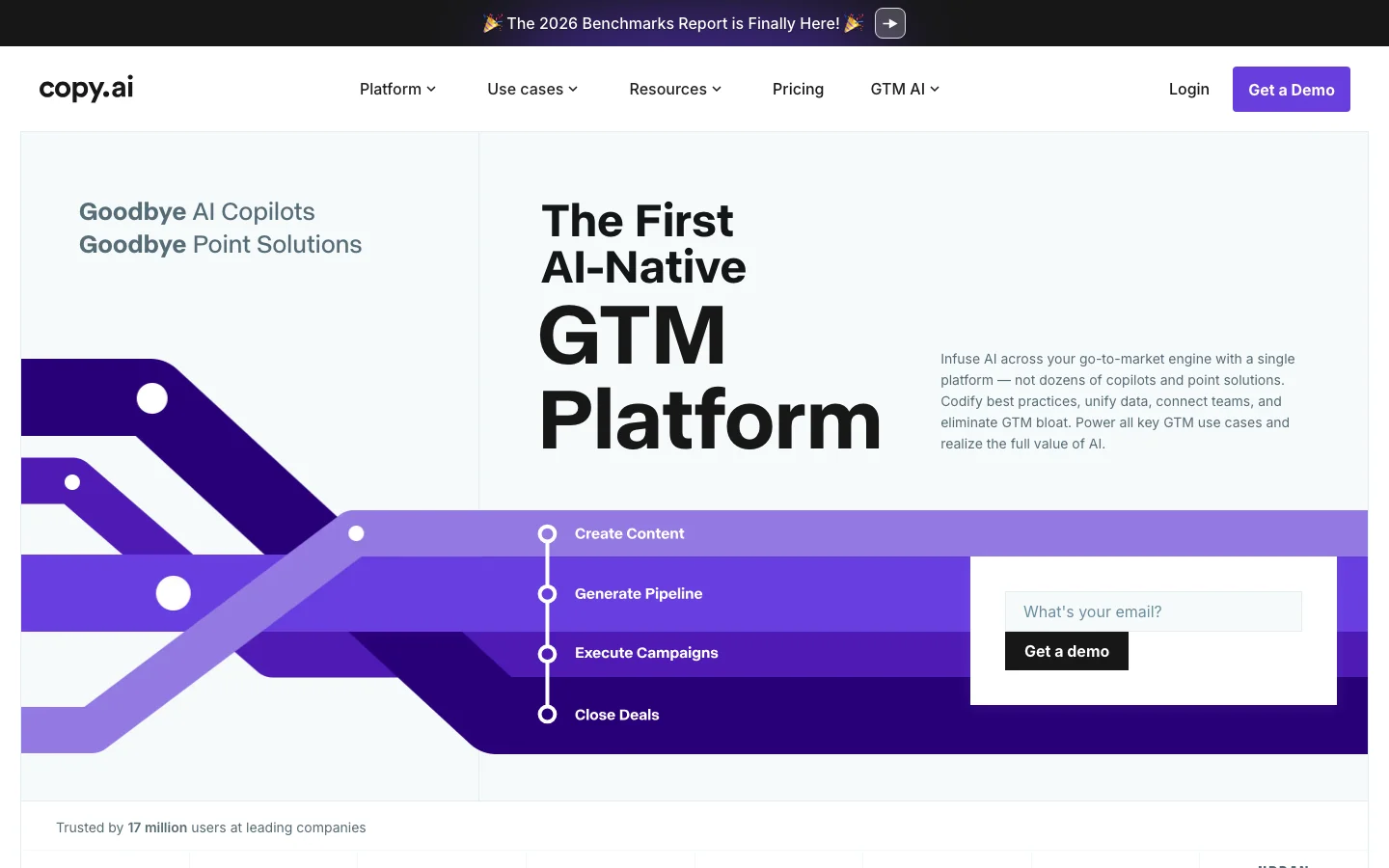

Copy.ai started as an AI copywriting tool and pivoted hard into B2B GTM automation, and that pivot is the entire lens through which this tool makes sense. We tested it as a writing tool and as a sales workflow platform, and the conclusions are completely different depending on which hat you are wearing. As a writing tool, Copy.ai is not competitive. We ran the same briefs through Copy.ai and through Jasper and the quality gap was visible in the first paragraph. The community consensus in every thread we read is identical: ChatGPT Plus at $20/month beats Copy.ai for general writing at a fraction of the cost. If you found Copy.ai through a writing tool comparison and are considering it for blog posts or brand content, stop here and look elsewhere. The product is no longer built for you. As a B2B GTM platform, the story changes. The GTM Workflows product chains prospect research, outreach drafting, personalization, and CRM push into automated sequences that actually reduce SDR research time. The Perplexity integration brings real-time web intelligence into the generation layer. Sales reps can generate prospect-aware outreach informed by current news without leaving the platform. The Salesforce and HubSpot connections mean sequences get pushed without manual handoffs. In the gap between raw Writesonic-style AI writing and full enterprise sales platforms like Outreach or Salesloft, Copy.ai fills a real space for SMB B2B teams running outbound at volume. See our AI writing tools comparison for a full breakdown of where Copy.ai fits versus Jasper and Writesonic. The friction is real too. The free trial burns through credits before you can properly evaluate the GTM features that justify the purchase, a frustrating onboarding experience that pushes users away before they reach the value. Brand voice capability is weaker than Jasper's trained system. And the GTM pivot creates genuine positioning confusion: a lot of people buy the wrong thing and leave disappointed. Copy.ai has consolidated to a single self-serve plan, Chat at $29/month for 5 seats; Enterprise is available at custom pricing for larger teams. Browse the full AI writing tools category if you are still evaluating alternatives. Verify current pricing at copy.ai. Frequently Asked Questions Is Copy.ai legit and safe to use? Copy.ai is a legitimate, funded AI software company operating since 2020 with a documented enterprise customer base. The platform handles your content data under standard SaaS privacy terms; enterprise plans include additional data governance controls. It is a real product with real customers. The credibility question is less about legitimacy and more about fit: Copy.ai has pivoted hard toward B2B GTM automation, and buyers expecting a general-purpose writing tool often feel misled by the positioning. How much does Copy.ai cost in 2026? Copy.ai has consolidated to a single self-serve plan: Chat at $29 per month for 5 seats, placing it below Jasper's entry pricing. Enterprise is available at custom pricing for larger teams needing guided implementation. There is no free plan on the current self-serve pricing page; a separate "Free Tools" section offers one-off templates, not a subscription tier. Verify pricing at copy.ai. Is Copy.ai worth the subscription? For B2B sales teams running CRM-integrated outbound sequences, Copy.ai delivers real time savings that justify the cost: the GTM Workflows chain prospect research, drafting, and CRM push into automated sequences that would otherwise require manual steps across multiple tools. For general writing (blog posts, articles, marketing copy), the community consensus is clear: ChatGPT Plus at $20 per month outperforms Copy.ai at a fraction of the cost. Know which buyer you are before subscribing. Does Copy.ai have a free trial or free plan? No, Copy.ai does not currently offer a free plan on its self-serve pricing page. A separate "Free Tools" section offers one-off templates and basic AI writing without a subscription, but excludes the GTM Workflow automation features that define the paid tier. Evaluating the GTM capabilities, the main reason to consider Copy.ai over cheaper alternatives, requires the paid Chat plan at $29/month.
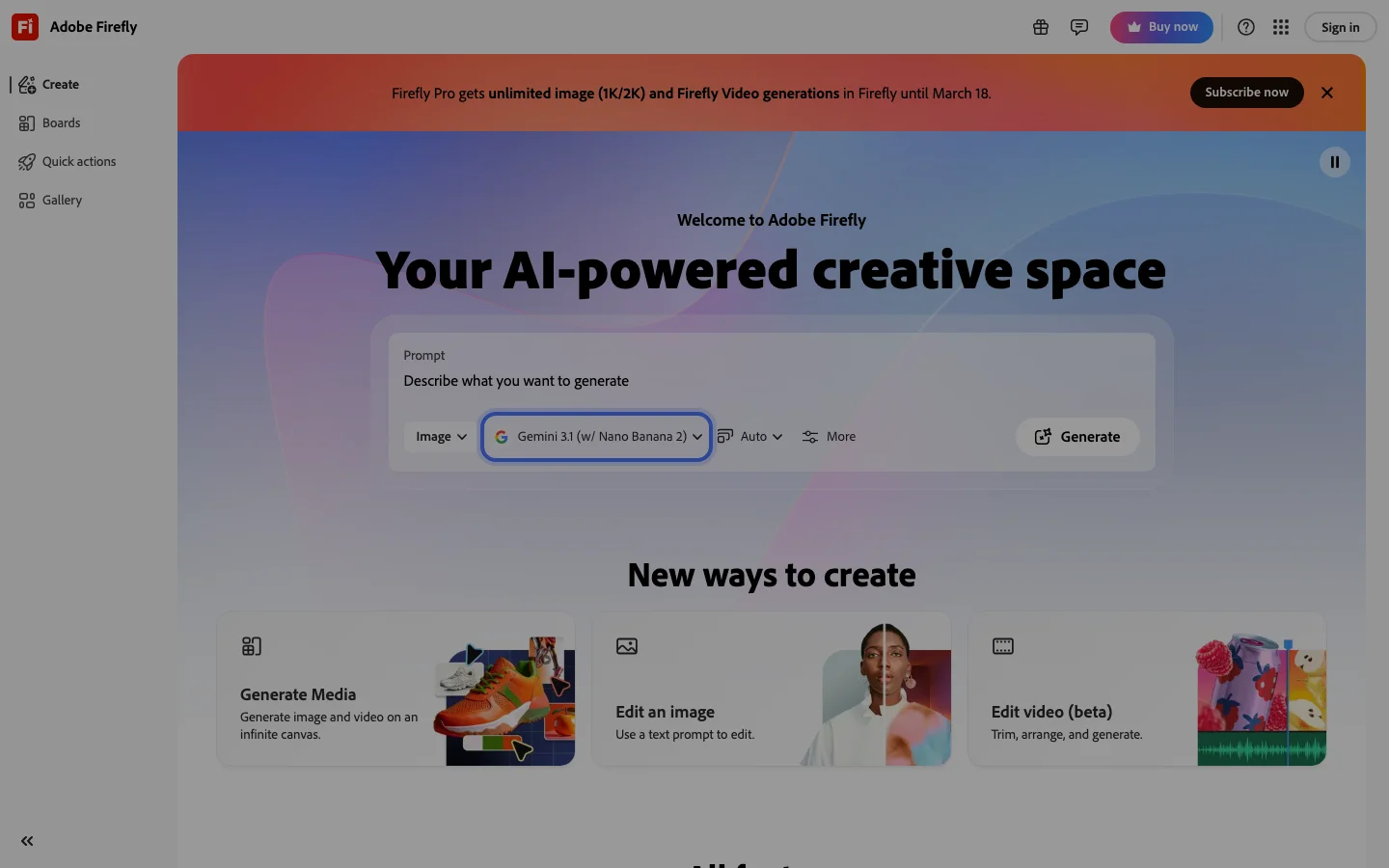

Adobe Firefly is the commercially safe AI image generation platform for professional designers and agencies, and that specific value proposition is the only reason it belongs in a serious tool comparison. Every other major AI image generator (Midjourney, DALL-E 3, Flux, Stable Diffusion) was trained on web-scraped content with unresolved copyright exposure. Firefly was trained exclusively on licensed Adobe Stock imagery and public domain material. More importantly, Adobe backs that training with IP indemnification: if Firefly output is used in client work and a copyright claim arises, Adobe covers the legal liability. No other major AI image tool offers this. For agencies running client campaigns, packaging designers, and marketing teams producing commercial assets at scale, this indemnification removes a genuine legal risk that every competitor carries unacknowledged. The integration argument is equally concrete. Generative Fill lives inside Photoshop and Illustrator as a native panel: no export, no tab-switch, no friction against deadline-driven client workflows. A designer already in Photoshop can select a region, type a prompt, and iterate without leaving the application. The Harmonize feature (launched Adobe MAX 2025) automatically matches lighting and color between composite layers, removing a manual step that previously required Color Match adjustments or manual masking. Custom Firefly Models (also Adobe MAX 2025) let teams upload their own visual work to generate assets in their established house style. The most significant 2026 development: Adobe integrated Gemini 2.5 Flash Image and FLUX.1 Kontext as selectable partner models inside Photoshop Generative Fill in March 2026; users now choose between Firefly, a Google model, or a Black Forest Labs model in the same panel. Adobe's strategy has shifted from competing on model quality to providing a commercially safe platform wrapper around best-in-class partner models. The quality gap is honest and documented. Community verdict on standalone Firefly output is consistently harsh: prompt adherence is poor ("the more you prompt the worse it gets"), resolution is insufficient for print at standard output sizes, and the model has not received the meaningful quality improvements that Midjourney and DALL-E 3 have shipped. Firefly does not appear in AI generation leaderboards. The credit system enforcement was tightened in 2025 to block all generative features after credit exhaustion with no warning, including for paid subscribers mid-session. The "Unlimited Generative Fill" plan tier still generates throttling messages in practice, which is a misleading plan name that has generated sustained community complaint. Heavy Firefly users have documented workarounds including switching to partner models (Gemini, Flux) when Firefly credits exhaust. Firefly makes sense as an embedded layer in an existing Creative Cloud workflow where legal compliance and client-work indemnification are non-negotiable requirements. It does not make sense as a standalone AI image generator for users prioritizing output quality, prompt control, or cost efficiency. The right buyer is a Creative Cloud subscriber at an agency or brand with active client work who needs to document that their AI-generated assets are commercially safe. The wrong buyer is a freelancer, content creator, or developer who wants the best visual output per dollar. Firefly is primarily bundled with Creative Cloud subscriptions (~$75/month for All Apps); standalone Firefly plans exist at lower price points. Verify current pricing at firefly.adobe.com. Frequently Asked Questions Is Adobe Firefly legit and safe to use? Adobe Firefly is a legitimate product from Adobe Inc., a publicly traded company with over 40 years in the creative software industry. It is one of the most commercially safe AI image generators available: Adobe trained Firefly exclusively on licensed Adobe Stock content and public domain material, and provides legal indemnification for output used in client work. Your data is handled under Adobe's enterprise privacy terms, which are among the most scrutinized in the software industry. How much does Adobe Firefly cost in 2026? Firefly is primarily bundled with Adobe Creative Cloud subscriptions. All Apps runs approximately $75 per month, which is the highest entry cost in the AI image generation category. Standalone Firefly plans exist at lower price points for users who do not need the full Creative Cloud suite. All plans include a monthly generative credit allowance; credits reset each billing cycle and unused credits do not roll over. Verify current plan pricing at firefly.adobe.com as Adobe has adjusted credit allocations multiple times. Is Adobe Firefly worth the subscription? For Creative Cloud subscribers at agencies or brands producing client work, yes. The IP indemnification alone justifies the cost. Adobe legally covers liability if Firefly output generates a copyright claim in commercial work, which no other accessible AI image tool provides. For anyone outside that specific context (freelancers, content creators, developers who want raw image quality), Firefly is not worth the premium. Output quality lags behind Midjourney and DALL-E 3, and community consensus on prompt adherence is consistently harsh. It earns its seat at the table only through legal safety, not visual capability. Does Adobe Firefly have a free trial or free plan? Yes. Adobe offers a free tier for Firefly that includes a limited monthly generative credit allowance, accessible at firefly.adobe.com without a Creative Cloud subscription. Existing Creative Cloud subscribers also receive Firefly credits included in their plan. The free tier is functional for testing but credit exhaustion blocks all generative features mid-session with no warning. Evaluate how quickly you burn through credits before committing to a paid plan.
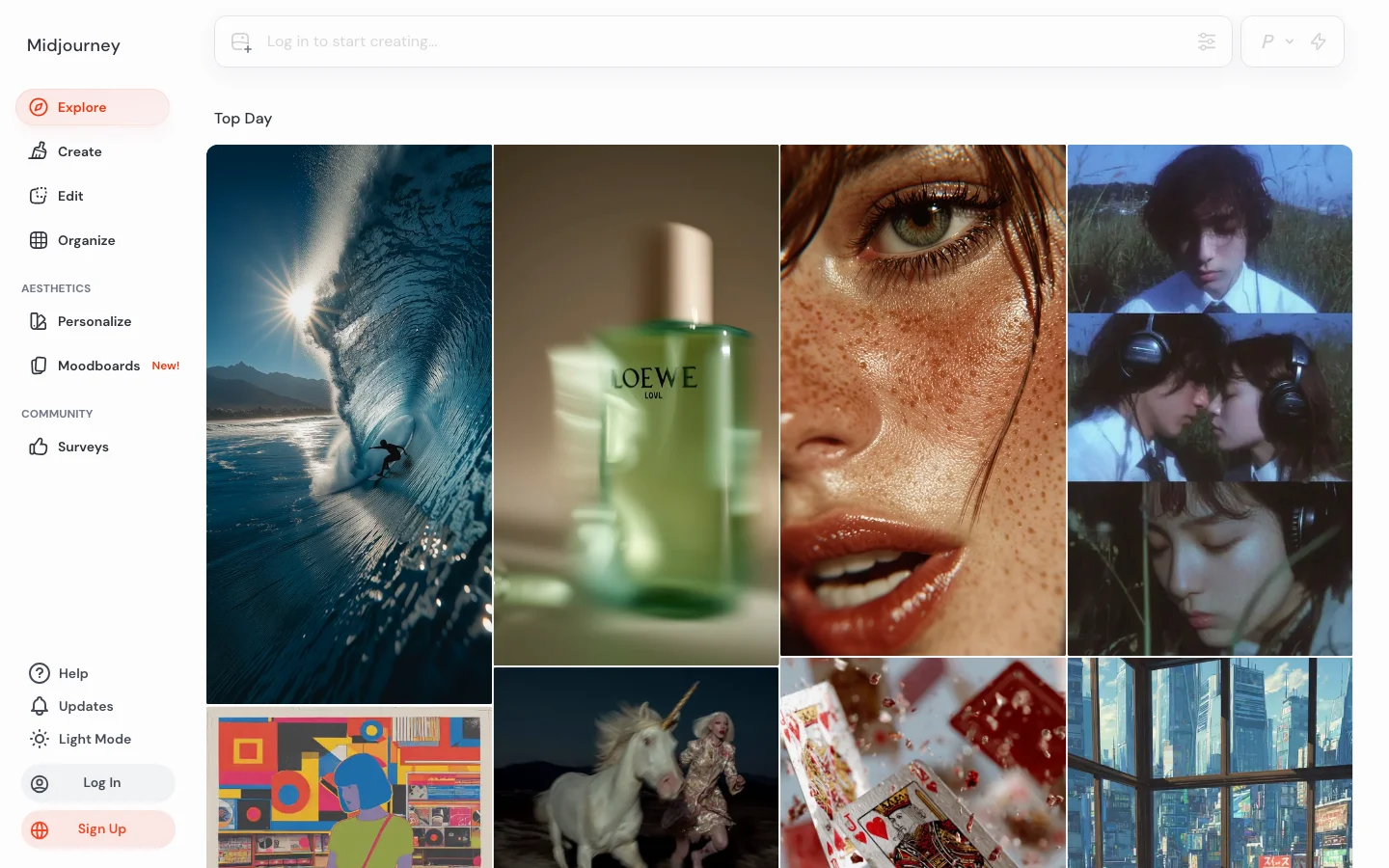

Midjourney is the aesthetic quality benchmark for AI image generation. In every community comparison thread across r/StableDiffusion, r/midjourney, and r/AIArt, the recurring verdict is consistent: no competitor definitively beats Midjourney on photorealism, painterly styles, and compositional sophistication for general-purpose creative work. V6.1 remains the stable workhorse that experienced users trust for predictable professional output. V7, released in early 2025, introduced personalization by default and meaningfully improved anatomical accuracy and hand rendering, though it received a split reception from veteran users who found it a regression for stylized work. Brand recognition compounds the moat. Midjourney is the default name that non-technical buyers say when they mean AI art. Agencies and clients reference it by name in creative briefs, reducing friction for AI-generated work in proposals. The Image-to-Video feature generates 5-second clips extendable to 21 seconds, giving Midjourney a credible entry into motion content without leaving the platform. What Makes Midjourney Different The V7 personalization system is Midjourney's most significant competitive moat. After approximately five minutes of preference ranking, users get a personal style profile that shapes all subsequent outputs. The longer you use the platform, the more tuned your results become. This compounding advantage rewards consistent users in a way that erodes the argument for switching platforms on model quality alone. No competitor has replicated personalization at this platform level. The Layers and Editor canvas feature extends Midjourney toward inpainting, outpainting, and compositing without leaving the interface. The community-driven Style Ranking system lets users shape the model's aesthetic direction, with the top 1,000 raters earning free fast GPU hours each month. Style Reference and Character Reference tools launched in 2024 have become standard workflow components for character consistency across a project. Midjourney's web interface at midjourney.com now handles most generation workflows. Discord remains available and is still preferred by many power users for batch generation speed, but new users no longer need a Discord account to get started. The unified gallery, search, and prompt history tools in the web interface meaningfully reduce friction compared to the 2023 Discord-only era. Midjourney Pricing Plans 2026 Midjourney uses a subscription model with fast GPU hours as the core resource. Plans as of 2026: Basic at $10/month (200 fast GPU minutes), Standard at $30/month (15 fast GPU hours plus unlimited relax mode), Pro at $60/month (30 fast GPU hours plus stealth mode for private generation), and Mega at $120/month (60 fast GPU hours). Annual billing reduces each plan by approximately 20 percent. There is no confirmed free tier as of 2026. Midjourney ran a limited free trial in 2022 and briefly in 2023 before discontinuing it. Verify current access at midjourney.com before assuming a trial is available. The Basic plan at $10/month is one of the lower entry points for a premium AI image subscription, though 200 fast minutes goes quickly for active users who generate at volume. Stealth mode on Pro and Mega plans keeps your generations private and out of the public community gallery. This matters for commercial work where clients or competitors should not see early creative exploration. Standard plan users generate publicly unless they explicitly set a job to private, which counts against fast hours at a higher rate. Midjourney vs Adobe Firefly The comparison between Midjourney and Adobe Firefly reflects two fundamentally different product decisions. Midjourney optimizes for aesthetic quality and model power. Adobe Firefly optimizes for commercial safety and Creative Cloud integration. Firefly's training on licensed and public domain images means every output is commercially safe with legal indemnification. Midjourney's ongoing Disney and Universal copyright lawsuit, filed June 2025, is a material risk that IP-sensitive agencies are monitoring. For output quality on photorealism, painterly styles, and cinematic composition, Midjourney leads by a margin that the Firefly team has not closed as of mid-2026. Firefly excels for in-context editing tasks inside Photoshop and Illustrator, where Generative Fill has become a genuinely useful part of professional design workflows. If your work is output-only generation, Midjourney wins on quality. If your work requires commercial IP indemnification or tight Creative Cloud integration, Firefly wins on safety and workflow fit. For game asset generation and concept art depth, Leonardo AI is the stronger option over both, with purpose-trained models and a deeper fine-tuning system. For AI video at meaningful scale, see the AI video category rather than Midjourney's Image-to-Video feature. Is Midjourney Worth It in 2026? For creative professionals whose primary need is visual quality and aesthetic range, Midjourney is worth it. Illustrators, concept artists, marketing designers, and agencies producing campaigns where output fidelity is the brief will find no subscription that delivers comparable results at the $10-$60/month price range. The V7 personalization system creates a compounding return on investment that grows with platform tenure. It is the wrong choice for several specific buyer profiles. Developers building AI generation into applications will hit the no-public-API wall immediately and should look at Flux, DALL-E 4, or Stable Diffusion. Teams needing commercial IP indemnification must use Adobe Firefly. Game studios requiring purpose-trained game asset models and LoRA fine-tuning get better results from Leonardo AI. Video production teams needing camera control and native audio should evaluate RunwayML or Kling AI instead. The structural friction points have not resolved. No public API remains a deliberate product decision. The privacy gap (users cannot delete individual images from public gallery) has not been addressed despite repeated community requests. Content filtering on commercial fashion and lifestyle work remains aggressive and inconsistent. These are known tradeoffs, not bugs being fixed. Browse the full AI art generators category to compare Midjourney against all major alternatives. Frequently Asked Questions Does Midjourney still require Discord in 2026? No. Midjourney launched a full web interface at midjourney.com that handles image generation, gallery management, and billing without Discord. Discord remains available and many power users prefer it for speed and batch generation workflows, but new users can sign up and start generating entirely through the web app. Discord is no longer a prerequisite. How much does Midjourney cost in 2026? Plans run from $10/month (Basic, 200 fast GPU minutes) to $120/month (Mega, 60 fast GPU hours). The Standard plan at $30/month includes unlimited Relax mode generations for users who can tolerate queue wait times, making it the best value tier for moderate-volume users. Annual billing saves roughly 20 percent across all plans. There is no confirmed free tier as of 2026. Can I use Midjourney commercially? Paid subscribers on any plan can use Midjourney outputs commercially, including for client work and product sales. The key exception is the ongoing Disney and Universal copyright lawsuit filed June 2025, which introduces legal uncertainty about training data. Midjourney does not provide commercial IP indemnification. For client work requiring legal indemnification, Adobe Firefly's Generative AI terms include explicit commercial coverage that Midjourney does not offer. Verify the current Terms of Service at midjourney.com before using outputs in high-stakes commercial contexts. Is Midjourney V7 worth the upgrade from V6.1? It depends on your use case. V7's improved anatomical accuracy and hand rendering are genuine advances, and the personalization system is V7-native. For photorealism and character work, V7 is the better model. For stylized illustration and abstract work, many experienced users have stayed on V6.1, finding V7 pulls toward a naturalistic rendering style they do not want. Both versions are available on all plans, so you are not forced to choose. Run your standard prompts on both and compare outputs before committing to a workflow. Midjourney vs DALL-E 4 vs Flux for creative work? Midjourney leads on aesthetic quality and cinematic composition for general creative work. DALL-E 4, bundled in ChatGPT Plus, is convenient but positions below Midjourney on stylistic range. Flux (open weights from Black Forest Labs) is the leading alternative for developers who need API access or local inference. Flux 1.1 Pro approaches Midjourney quality in specific photography and realism tasks. For pure aesthetic output without API requirements, Midjourney remains the benchmark. For programmatic integration, Flux or DALL-E 4 are the practical choices. If Midjourney's price puts you off Midjourney starts at $10/month and has no free trial. If you want to test AI image generation before paying anything, two alternatives are worth knowing about. Leonardo AI gives you 150 free tokens per day -- a daily reset, not a one-time trial. That works out to around 30 high-quality images daily on a free account with no credit card required. OpenArt starts at $12/month and includes access to multiple generation models (Flux, SDXL, and others), so it costs less and gives you more model variety if you work across different styles. Both have full reviews in the Belreos catalog.
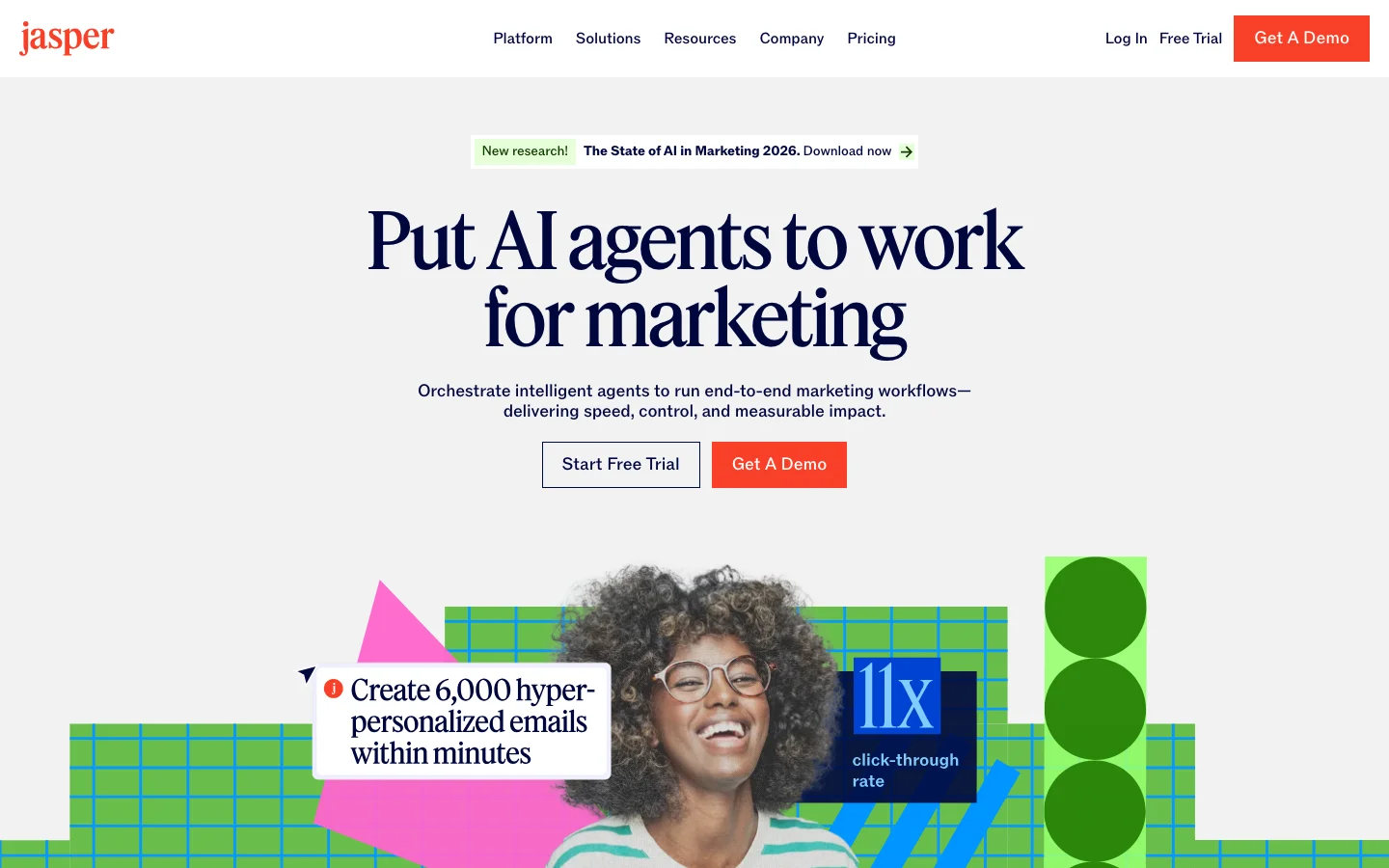
Jasper AI is the premium AI platform built for marketing teams. Its 2026 positioning has shifted substantially: Jasper no longer describes itself as an AI writing tool. The current headline is "AI agents for marketing," with Brand Voice, governance controls, and campaign workflow automation as the primary selling points. If you are evaluating it as a writing assistant, you are looking at a product that has moved past that framing entirely. We tested it across a three-person content team for two weeks. The verdict is unchanged from prior assessments but with important updates on pricing and new features: if you have a real brand voice and a content operation to maintain across multiple writers, Jasper earns its price. If you are a solo writer or a small team comparing it to ChatGPT Plus at $20/month, the case is much harder to make at $69/seat/month. The Brand Voice feature remains the core differentiator. Train it on your existing landing pages, past articles, and email sequences and every output applies your company tone and vocabulary without starting from scratch each session. We ran the same brief through Jasper and through raw GPT-4. Jasper's output sounded like us. GPT-4's output sounded like the internet. For a team where multiple writers need to produce on-brand copy at volume, that consistency has real dollar value. The 2026 additions layer agents and governance controls on top of that foundation. What Makes Jasper Different in 2026 The 2026 Jasper product is built around three interconnected layers: Jasper IQ, Canvas, and Agents. Jasper IQ is the knowledge and governance layer. It stores your Brand Voice (trained on your content), Visual Guidelines, Style Guide, a Knowledge base of company and product facts, and Audience definitions. Every generation pulls from these assets automatically. This is what separates Jasper from raw GPT-4: you are not re-explaining your brand in every prompt. The system already knows it. Pro plan users get 2 Brand Voices, 5 Knowledge assets, and 3 Audience definitions. Business plan users get unlimited. Canvas is the writing workspace, rebuilt as a structured content creation environment rather than a simple editor. It integrates with HubSpot and Google Docs so teams can write and publish without leaving their existing workflow. The Surfer SEO integration for real-time content scoring inside the editor is still present on integrated plans. Agents are the major 2026 addition. Pro plan includes Essential Agents for core marketing workflows: research, optimization, personalization at the task level. Business plan adds Advanced Agents for complex campaign orchestration, a no-code AI App Builder for creating custom agents without developers, and Jasper Grid for scaled systematic content execution. Jasper Grid lets you run one brief into 50 variations simultaneously, which is the kind of feature that changes how performance marketing teams operate at scale. Jasper also launched a Brand Compliance Diagnostic in 2026, a free tool that scans your website and public content to score how consistently you present brand governance. It is a lead generator for Jasper's IQ governance pitch, but it is genuinely useful as a standalone diagnostic. Jasper Art is still available but has been deemphasized significantly. It is no longer a primary selling point in the 2026 product lineup. If AI image generation is a core need, dedicated tools outperform what Jasper offers here. Jasper AI Pricing Plans 2026 Jasper restructured its pricing for 2026. The old Creator and Teams tiers at $39-$125/month are gone. Current pricing is per-seat: Pro : $69/seat/month (monthly) or $59/seat/month (annual): Includes 1 seat, Canvas workspace, Essential Agents for core marketing workflows, 2 Brand Voices, 5 Knowledge assets, 3 Audience definitions. 7-day free trial available. This is the practical entry point for marketing teams and individual power users who need brand consistency. Business : Custom pricing (contact sales): Everything in Pro, plus Advanced Agents for complex campaign orchestration, the no-code AI App Builder for custom agent creation, Jasper Grid for scaled content execution, unlimited Brand Voices, Knowledge assets, and Audiences, API access, MCP integration, enterprise governance with admin controls and groups, dedicated account management, and priority support. Required for teams running multi-channel campaigns at scale. There is no free tier. The 7-day Pro trial requires a credit card. For teams that need to evaluate Jasper properly before committing, the trial period is short relative to the setup time required for Brand Voice and Knowledge base configuration. Budget time for onboarding before you can fairly assess the output quality. At $69/seat, a three-person content team pays $207/month. Compared to ChatGPT Plus at $20/person ($60/month for three), the Jasper premium is $147/month. That premium is justified if Brand Voice consistency, workflow integration with HubSpot or Surfer, and Agent automation save meaningful editing time or reduce brand review cycles. It is not justified for teams that primarily need a capable writing model without the workflow layer. Jasper AI Pricing 2026: Complete Plan Breakdown Jasper currently offers two plans: Pro at $69/month and Business at custom pricing. There is no free plan, no Creator plan, and no entry-level tier below $69/month. The 7-day trial requires a credit card and auto-converts if you do not cancel before day 7. Plan Monthly price Annual price (per month) Seats Brand Voices Key limits Pro $69/mo $59/mo 1 2 5 multi-modal Knowledge assets, Canvas workspace, Essential Agents Business Custom (contact sales) Custom, 12-month minimum Unlimited Unlimited Advanced Agents, AI App Builder, Jasper Grid, API, MCP, SSO, SCIM, dedicated account manager Annual billing on Pro saves $10/month ($59 vs $69). Business requires a 12-month minimum commitment with no monthly option. Both tiers are marketed as unlimited words. What happened to the cheaper Jasper plans? Jasper's entry-level options have been stripped back in stages. The $29/month Starter plan was discontinued first. The $49/month Creator plan was listed on earlier pricing pages and is no longer shown on jasper.ai/pricing as of mid-2026. As of today, the lowest price you can pay for Jasper is Pro at $69/month ($59/month on annual billing). That is a significant shift for users who were paying $29 or $49. This is almost certainly driving the +1950% spike in searches for "jasper ai price." Former Starter and Creator users are re-checking what Jasper costs now and finding the floor has more than doubled from what they were paying. If you are one of those users, the short answer is: there is no path back to a cheaper Jasper plan. Pro at $69/month is the entry point. What happened to Boss Mode? Boss Mode was replaced by the Pro plan. If you are searching for Boss Mode pricing, Pro at $69/month monthly or $59/month annual is the current equivalent. The feature set has expanded since Boss Mode (Agents, Knowledge base, Canvas workspace), but the price has risen from old Boss Mode rates. The Surfer SEO hidden cost Surfer SEO integration requires a separate Surfer subscription. Surfer starts at $99/month. The real all-in cost for a content SEO workflow on Jasper Pro is approximately $168/month ($69 Jasper + $99 Surfer). Jasper's pricing page does not surface this additional cost. If SEO content is the primary reason you are considering Jasper, budget $168/month rather than $69, and compare that total against alternatives where SEO tooling is bundled. The seat wall Pro is a single-seat plan. Adding a second user requires Business, which is custom-priced with a 12-month minimum commitment. Procurement data suggests Business typically starts around $500+/month for small teams. There is no published 2-3 seat middle tier. Freelancers managing multiple client brands hit the 2 Brand Voice cap on Pro and have no upgrade path short of Business pricing. Is the 7-day trial actually free? The trial gives full Pro plan access. A credit card is required at signup, and the account auto-converts to a paid subscription at the end of day 7. Multiple Trustpilot reviews flag unexpected charges from users who believed they had cancelled. Jasper's stated policy: no refund unless you email them within 7 days of the charge. Set a calendar reminder for day 5 or 6, not day 7. Cancel through the account settings, not by stopping use of the tool. Jasper AI vs Alternatives The competitive positioning has clarified in 2026. Writesonic pivoted toward GEO and AI search tracking, competing on different ground. Copy.ai went B2B sales automation. That leaves Jasper as the primary dedicated AI writing and marketing workflow platform for content teams, which is both its strength and its risk. The pressure from below is real: ChatGPT Plus pulls away solo writers who do not need the workflow layer. For teams already using HubSpot, Jasper's native CRM integration is the strongest workflow argument. Write and publish without leaving your CRM. For teams using Surfer SEO, the in-editor scoring eliminates the tab-switching that fragments writing sessions. Neither integration is available in ChatGPT or Claude directly. For GEO and AI search visibility tracking, Jasper does not compete. That is Writesonic's territory. Jasper added SEO, AEO, and GEO as solution categories in 2026, but the actual tracking infrastructure is not yet comparable to dedicated GEO tools. Browse the full AI writing tools category for a side-by-side comparison, or see how it stacks up against Copy.ai for content automation use cases. Is Jasper AI Worth It in 2026? For marketing teams with real brand governance needs and HubSpot or Surfer SEO already in the stack, yes. For solo writers or small teams without those integration requirements, the math is hard to justify at $69/month when ChatGPT Plus and Claude Pro are $20/month and cover the raw writing use case. Worth it if: you run a content team where multiple writers need to produce in the same brand voice, you are already using Surfer SEO and HubSpot, or you need Agent-driven campaign automation. The Brand Voice and Knowledge base layer has real ROI for teams doing high-volume on-brand content production. Not worth it if: you are a solo writer or freelancer, you are comparing it to ChatGPT Plus at $20/month (Jasper costs 3.5x more and the raw writing quality advantage is marginal), or you need more than one seat without Business pricing. The discontinued $29 Starter and the no-longer-listed $49 Creator were the value-for-money entry points; with both gone from the pricing page, the solo-user case for Jasper is weak. Pro is one seat at $69/month. For a writing team that needs two or three people in the same tool, the next step is Business at custom pricing with a 12-month minimum. That jump is steep, and it is the most common reason teams re-evaluate Jasper at budget time. Jasper AI Pricing FAQ How much does Jasper AI cost per month? Jasper Pro costs $69/month on monthly billing or $59/month on annual billing. Business is custom pricing. There is no free plan and no lower-priced tier below Pro. Does Jasper AI have a free plan? No. There is a 7-day trial on Pro that requires a credit card. It auto-converts to a paid subscription if not cancelled before day 7. There is no permanent free tier. What happened to the Jasper AI Starter and Creator plans? The $29/month Starter plan was removed. The $49/month Creator plan is no longer shown on jasper.ai/pricing as of mid-2026. Pro at $69/month is now the cheapest way into Jasper. If you were on one of those plans and are re-checking pricing, there is no equivalent lower-cost option currently available. What happened to Jasper Boss Mode? Boss Mode was replaced by the Pro plan. The current equivalent is Pro at $69/month monthly or $59/month annual, with expanded features including Agents, the Knowledge base layer, and Canvas workspace. Does Jasper AI include Surfer SEO? The Pro plan includes a Surfer SEO integration, but Surfer SEO is a separate paid product. You need your own Surfer subscription (starting at $99/month) to use the integration. The all-in cost for an SEO content workflow on Jasper Pro is approximately $168/month.

Vozo AI is a web-based video localization and translation platform built around three tasks: AI video dubbing of existing content into other languages, syncing the speaker's lip movements to match the new audio track, and generating short-form video content from scratch. The core workflow (upload a clip, select a target language, review and edit the translated script line by line, then export) is genuinely differentiated from tools that simply overlay translated subtitles. The platform claims support for 110+ languages, a proprietary lip sync system (marketed as LipREAL), and voice cloning that preserves the original speaker's tone rather than substituting a generic AI voice. A companion mobile app, Blink by Vozo, targets solo Instagram and TikTok creators with AI zoom, background noise removal, and subtitle editing, a separate product serving a different use case. The honest caveat: Vozo has almost no organic Reddit presence as of early 2026. In a category where HeyGen is mentioned by name in nearly every relevant thread, Vozo does not appear unprompted in r/videography, r/VideoEditing, or professional communities. The promotional posts that do mention it (primarily r/bestai2025) show the signature pattern of coordinated marketing: same tools cross-promoted across multiple posts by overlapping accounts. This does not mean the product is bad, but it does mean the enthusiastic claims about lip sync superiority and tone fidelity cannot yet be independently verified from user experience. Treat the marketing copy as a hypothesis, not a proven outcome. Rask AI, another direct competitor in video translation, has a larger user base but lacks Vozo's monthly pricing flexibility. Where Vozo has a genuine, verifiable edge is pricing structure. HeyGen requires an annual subscription to access 4K export, a real friction point that comes up repeatedly in organic user threads. Vozo's $29/month Creator tier with no annual lock-in is a concrete differentiator for anyone with a one-time project, a short-term need, or a budget that cannot commit to annual SaaS spend. For that specific buyer (a videographer needing to dub one client interview, a content creator testing multilingual reach before scaling), the monthly pricing model alone makes Vozo worth evaluating against HeyGen. Go in with realistic expectations about lip sync quality: the category-wide pain point (sync fails on complex expressions, multiple speakers, robotic delivery) applies to every tool here until proven otherwise. Vozo is listed in the AI video editing category alongside HeyGen and similar localization tools. For broader context on AI video in 2026, see our AI video generation tools comparison. Frequently Asked Questions Is Vozo AI legit and safe to use? Vozo AI is a real product. The lip sync, video translation, and voice editing features function as described. However, organic user validation is essentially absent from independent communities in 2026: near-zero Reddit presence, and the promotional activity that does exist follows coordinated marketing patterns (r/bestai2025 posts). This does not make it a scam, but it does mean you cannot verify real-world performance claims from third-party sources the way you can with HeyGen, which has substantial independent community discussion. For a tool handling video content and user data, the lack of organic proof is worth factoring in. How much does Vozo AI cost in 2026? Vozo AI's Creator plan is priced at $29 per month with no annual lock-in requirement, explicitly a differentiator against HeyGen's annual subscription model for buyers who want monthly flexibility. The 110+ languages claim covers most use cases, but per-language pricing variation has been reported, meaning the total cost can exceed the stated monthly figure depending on language pair. Verify current plan pricing at vozo.ai, and confirm whether per-language surcharges apply to your target languages before subscribing. Is Vozo AI worth the subscription? If your specific need is AI video dubbing without annual lock-in, and the $29 per month Creator tier undercuts what HeyGen or Magic Hour AI would cost you, Vozo AI may be worth a trial. The sentence-level script editing (fixing individual translated lines without reprocessing the full video) is a practical differentiator over blunter translation tools. The case weakens significantly without independent user validation to confirm the LipREAL and VoiceREAL quality claims. HeyGen is the higher-confidence choice for anyone who needs proven community validation alongside lip sync capability. Does Vozo AI have a free trial or free plan? Yes, Vozo AI offers a free trial that allows you to test the full dubbing workflow before committing to a paid plan. Testing the trial is the minimum recommended step before any subscription, given the limited independent validation available for this platform. Upload a short video clip, run it through translation and lip sync in the language you need, and assess output quality directly. That hands-on test is more reliable than any marketing claim given the current state of third-party coverage.

Lovo AI (sold as Genny editor) is a text-to-speech and AI voice generator platform that bundles AI voice generation, video editing, a ChatGPT-powered scriptwriter, AI image generation, and stock footage into one subscription. The voice library covers 500+ voices across 140+ languages with 30+ emotional styles, and users can apply pitch, emphasis, and pause controls at the word level. Voice cloning lets you create a custom voice from a short audio sample. The platform has real paying users: an e-learning company (Bookoora.com) confirmed six months of production use for audiobooks, and a developer community thread documented stable API integration in a FileMaker-to-After Effects automation pipeline. Genny shareable audio links (genny.lovo.ai/share/...) appear organically in fiction writing communities, where authors use them to distribute narrated stories. Lovo carries a significant trust problem that any buyer should evaluate before subscribing. A class action lawsuit (Lehrman v. LOVO, Inc., filed in Manhattan federal court) alleges that LOVO hired voice actors on Fiverr under the pretense of a "secret research project with no commercial use," paid them around $1,200, and then commercialized those recordings as AI voice clones without consent. The amended complaint added a second plaintiff class: paying Lovo customers who unknowingly used those voices. LOVO has not engaged publicly on Reddit in any of the lawsuit-related threads. Separately, despite the 140+ language claim, users testing non-English production found the output inadequate. There is also a documented bug where numbered list items (text starting with a digit) fail to generate correctly, with no fix or official response found. Lovo AI pricing includes monthly generation time limits as a hard cap, a primary subscription friction point: the platform caps voice output per billing cycle, which drives high-volume users away. In the current TTS market, ElevenLabs is the default recommendation whenever naturalness matters. In any Lovo AI vs ElevenLabs comparison, ElevenLabs consistently wins for English voice quality. Murf AI and Play.ht sit in the same tier as Lovo AI and appear in the same comparison threads. For developers who need conversational AI voice quality, tools like Inflection AI's Pi set a ceiling neither Lovo nor ElevenLabs has reached. Open-source options (Bark, OpenVoice) are suggested for technical users who want no generation limits at all. Lovo's real advantage is the all-in-one argument: content creators who would otherwise pay separately for a TTS tool, a video editor, and a scriptwriter can consolidate into one Genny subscription. For non-English content in smaller language markets (Eastern European, South Asian, LATAM), Lovo's language breadth is mentioned as an advantage over ElevenLabs. The target user is a solo creator producing e-learning, training videos, or narrated content at moderate volume. They want fewer subscriptions and are not prioritizing the best available English voice naturalness. Lovo is featured in our AI voice generator comparison alongside ElevenLabs and PlayHT. Browse every option in the AI voice generators category. Frequently Asked Questions Is Lovo AI legit and safe to use? Lovo AI is a real product with documented production use in e-learning and API integrations, but it is currently facing an active class action lawsuit (Lehrman v. LOVO) that alleges deceptive voice harvesting. Voice actors were allegedly hired under false pretenses with their recordings commercialized without consent. Paying customers are named as a second plaintiff class in the suit. This is not a resolved matter and represents a meaningful risk to both the ethical standing and potential continuity of the platform. The company has not engaged publicly on Reddit threads covering the lawsuit. How much does Lovo AI cost in 2026? Lovo AI uses a freemium model with a free tier and paid plans that scale by monthly generation time. High-volume users hit the hard monthly cap and look for alternatives, which is a limitation worth understanding before committing to a production workflow. Paid plans include access to the Genny all-in-one editor, voice cloning, batch processing, and API access on higher tiers. Verify current plan pricing and monthly generation limits at lovo.ai. The tier structure has evolved alongside the product. Is Lovo AI worth the subscription? For solo creators who want TTS, video editing, AI scripting, and stock media in one subscription, Lovo's Genny editor bundles meaningful functionality that would otherwise require separate tools. The 140+ language coverage is broader than ElevenLabs, making it practical for multilingual content in smaller language markets. However: English voice quality is consistently ranked below ElevenLabs in independent comparisons, the active lawsuit creates both ethical and platform-continuity risk, and the developer community engagement is thin. If voice quality in English is the priority, ElevenLabs is the clearer choice despite higher cost. Does Lovo AI have a free trial or free plan? Yes, Lovo AI has a free tier accessible without a credit card. The free plan allows limited voice generation and access to the Genny editor with restrictions on generation time and feature access. It is sufficient to evaluate voice quality for your use case. Upload a script and generate a few samples in the languages and styles you need before purchasing. Given the active lawsuit context, evaluating the free tier thoroughly before any subscription commitment is especially worth the time.

Fotor is a browser-based AI photo editor that has existed since 2012, which gives it name recognition, a large template library, and a feature set that genuinely covers the basics: sliders for brightness and contrast, AI background remover, batch crop editor, collage builder, and Canva-style social media templates. The interface is clean enough that users with no editing experience can produce a presentable image without reading a manual. In a Fotor vs Canva or Fotor vs Adobe Express comparison, the editing feature set is roughly even. No tool in this tier dramatically outperforms the others on core editing, and Fotor's web-first design means nothing to install and access from any machine. The AI features are where the story gets complicated. Fotor has pivoted hard toward AI gimmicks: dance video generators, cartoon filters, viral template effects aimed at TikTok and Instagram creators, which leaves its original photo-editing audience in an awkward product fit. Users who want AI enhancement for old family photos find the results mixed at best: one user described the free-tier AI as "honestly a lot cleaner than I expected" on an old scan, while another called Fotor's paid enhancer "junk - very plasticy" and switched to ComfyUI and SeedVR2 for quality upscaling. The credit system creates a secondary frustration: there are not enough credits on a free trial to properly evaluate the AI features, so the evaluation loop is broken by design. For AI-quality enhancement, Let's Enhance or Luminar AI are more serious options. The dominant Reddit narrative for Fotor is not about photo editing at all. It is about billing. A 1,721-upvote r/assholedesign post documents why canceling a Fotor subscription is blocked by design, with top comments advising users to replace their payment method with a disposable card and then cancel that card. Be aware that a chargeback will result in a permanent account ban. This is the trade-off to understand before pursuing that route. Multiple independent r/Scams threads confirm the same playbook: charges fire after stated cancellation, "network error" excuses are given for cancellation failures, and refunds are refused. A 2020 data breach reportedly exposed 13 million user records. If you try Fotor, use PayPal or a virtual card you control. Do not give them a real credit card without an independent cancellation mechanism. Fotor is listed in the AI photo editor category alongside stronger alternatives. It also appears in our best AI tools for small business roundup for teams that need basic image editing on a tight budget. Frequently Asked Questions Is Fotor legit and safe to use? Fotor is a real photo editing product with a large user base, but it carries documented safety concerns that are worth understanding before signing up. A 2020 data breach reportedly exposed 13 million user records. More immediately relevant: cancellation is technically blocked on the platform. A 1,721-upvote Reddit thread documents this, and the top community advice is to use a disposable payment method. Unauthorized charges after stated cancellation have been confirmed in multiple independent reports, and attempting a chargeback results in a permanent account ban. The tool works, but the billing practices are a significant red flag. How much does Fotor cost in 2026? Fotor operates on a freemium model with a free tier and paid Pro and Pro+ plans. The free tier provides access to basic editing tools; AI-powered features require a paid subscription. Pricing has varied over time. Verify current rates at fotor.com. Given the documented cancellation issues, if you do purchase a subscription, the community strongly recommends using a virtual card or disposable payment method rather than a primary credit card, so you can cancel payment-side if the in-app cancellation flow does not work. Is Fotor worth the subscription? For casual, one-off photo touchups and social media template creation, Fotor's editing tools do the job well enough. The AI portrait enhancement and background removal work reliably for standard use cases, and the browser-based interface means no installation required. However, the combination of billing misconduct, a past data breach, and AI upscaling quality that users describe as "very plasticy" compared to alternatives like ComfyUI means the subscription is hard to recommend confidently. If you proceed, use a virtual card and treat it as a month-to-month experiment. Does Fotor have a free trial or free plan? Yes, Fotor has a free plan with access to basic photo editing, templates, and some AI tools. The free tier credit system is intentionally restrictive. The evaluation loop is designed to push you toward purchase before you can fully test the AI features. Fotor is browser-based with no download required, so testing the free tier costs nothing but time. Given the billing concerns, fully exploring the free tier before any payment is the recommended approach.

Lexi AI (lexilexi.ai) is a Meta Ads automation platform, a Facebook ads AI tool aimed at small businesses and solo operators who want to run Facebook and Instagram campaigns without hiring an agency. The pitch is fast setup: paste your website URL, let the platform analyze your business, and it generates ad creatives, audience targeting, and a starter budget, claiming a full campaign can be live in under a minute. Ongoing automation handles creative testing, budget reallocation, and 24/7 monitoring. The core plan is listed at $39.90 per month, a price point designed to undercut agency retainers for operators spending modest ad budgets. The problem is trust. Across the Reddit communities where Meta advertising is discussed, Lexi AI has almost no independent footprint: no YouTube walkthroughs, no third-party reviews on G2 or Capterra, no verifiable case studies. When potential buyers ask "has anyone actually used this?", the answer has consistently been silence. One user who contacted Lexi AI support to verify the team's identities reported that the COO named by the support team appeared to have no verifiable business background (a claim Belreos has not independently confirmed), but which was raised publicly and never addressed by the company. The sole hands-on test found in the wild rated Lexi's output as fast but generic: audiences described as "scattered," ad copy as "long," and creatives as unremarkable. The tester noted that if you have to rewrite everything the AI produces, the time savings disappear. Adding to the friction: Lexi AI's site lists $39.90 per month, while the same tool appeared priced at $200 per month in another Reddit thread, an unexplained gap that adds to the trust friction for an already skeptical audience. For a very small operator willing to experiment at low spend and who has no existing agency relationship, Lexi AI's automation may be worth a trial given its price point. But in the only Lexi AI vs Midas head-to-head test found, Midas Ads Copilot , a free tool with ad-logic-aware suggestions, was rated the smoother experience. Compared to established platforms like Madgicx or Adzooma , which serve larger advertisers with proven review trails, Lexi AI is a lower-cost option without the independent validation. Until Lexi AI publishes verifiable case studies, resolves the team transparency questions, and builds a public track record, the risk-to-reward ratio favors waiting or trying the free alternative first. For anyone searching for a Lexi AI alternative with a verified track record, Midas Ads Copilot is the current benchmark, and it's free. Lexi AI is listed in the AI ads tools category. For a broader look at AI tools that help small businesses reduce ad spend and manual effort, see our best AI tools for small business guide. Frequently Asked Questions Is Lexi AI legit and safe to use? Lexi AI is a real, functioning Meta ad automation tool, but it carries unresolved transparency concerns that raise legitimate questions for new buyers. Near-zero independent reviews exist as of 2026: no verifiable G2, Capterra, or YouTube coverage from third parties. An unresolved identity question about a named team member was raised publicly and has not been addressed by the company. The onboarding flow collects significant personal data, which at least one user flagged as excessive given the team opacity. This is not a confirmed scam, but the due diligence picture is significantly weaker than for established ad platforms. How much does Lexi AI cost in 2026? The Lexi AI website lists pricing at $39.90 per month, but in-the-wild reports of $200 per month have created unexplained pricing confusion for prospects doing due diligence. The Starter plan caps daily ad spend at approximately $150 per day, limiting utility for growing businesses. An Enterprise tier supports multiple Facebook Business Manager accounts for agency use. Verify current pricing directly at lexi.ai before making any purchasing decision. The discrepancy between advertised and reported prices is unresolved as of this review. Is Lexi AI worth the subscription? Based on available evidence, Lexi AI is not worth it for most small businesses in 2026. The near-zero independent review coverage means you cannot verify its actual performance against claims, the team transparency concerns are unresolved, and a free competitor (Midas Ads Copilot) was rated as having a smoother UX in the only direct comparison found. The concept of automated Meta ad setup from a URL addresses a real pain point for SMBs burned by agency costs. But the evidence base required to recommend a subscription is not yet there. Does Lexi AI have a free trial or free plan? Lexi AI does not appear to have a free plan. The tool is paid-only, with the Starter plan as the entry point. Given the limited independent validation and unresolved transparency concerns, a free trial is the minimum warranted before any financial commitment. Check lexi.ai for whether a trial option is currently offered. If the platform requires payment with no trial, that is an additional caution signal worth weighing against the alternatives.
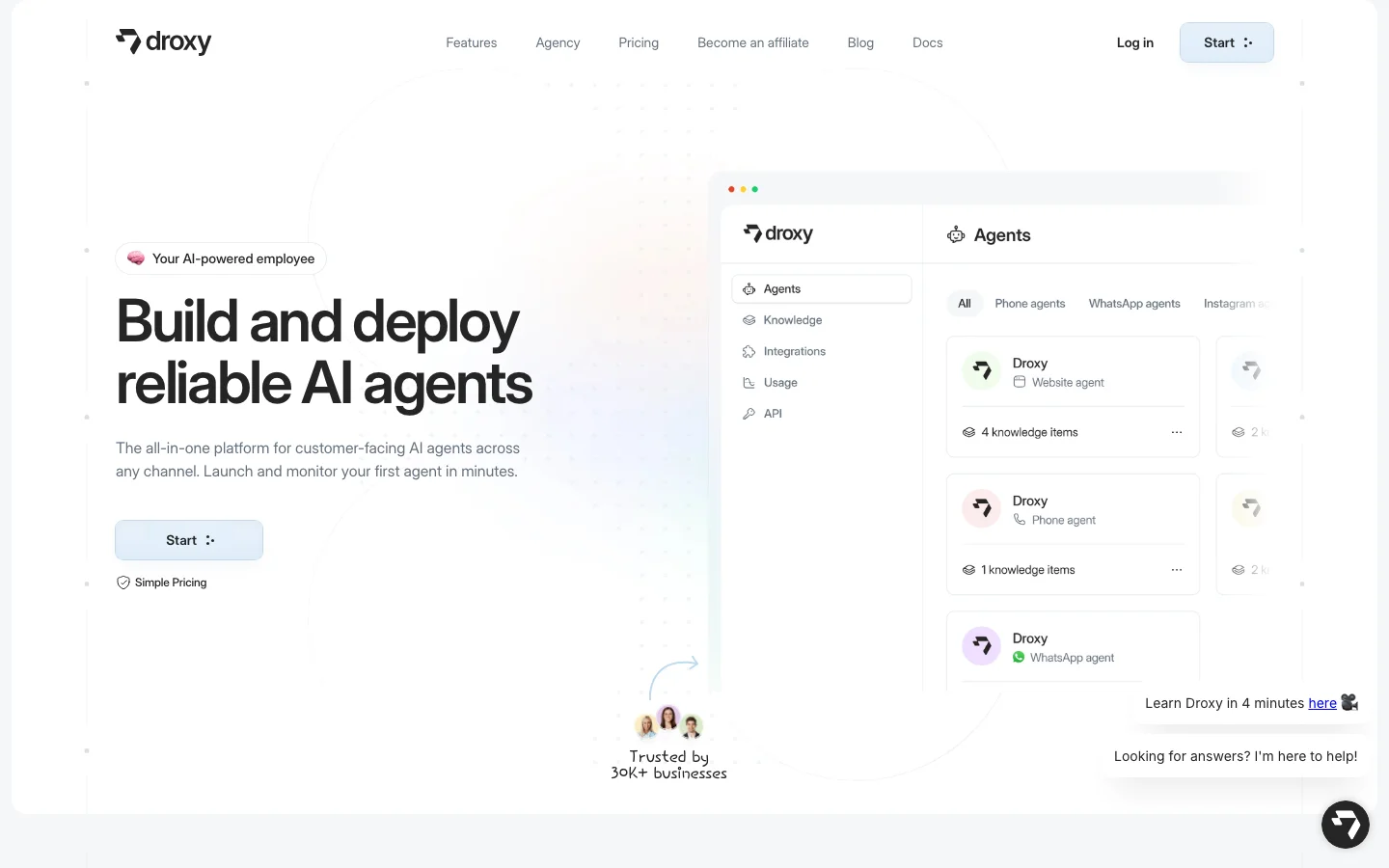

Droxy AI is a no-code AI chatbot builder that launched in 2023: connect your PDFs, YouTube videos, and website to deploy a customer-facing chatbot in minutes. By 2026 it had repositioned into something broader: a multi-channel AI agent platform that handles your website widget, answers inbound phone calls, replies to WhatsApp and Instagram DMs, and auto-responds to Facebook and Instagram comments, all from one dashboard. The differentiator that separates Droxy from Chatbase and similar AI chatbot builders is its AI phone agent. Most chatbot platforms stop at website chat and messaging, leaving inbound calls unanswered. Droxy bundles voice AI with text channels, which fills a gap few competitors address, ideal for HVAC companies, automotive dealerships, and law firms that need an AI receptionist handling both online inquiries and inbound phone calls. The knowledge base is trained from website URLs, PDFs, Google Drive files, YouTube videos, and e-commerce product catalogs, with automatic sync so the agent stays current without manual re-training. The AI backbone is multi-model: GPT-4o, Claude 3.5, and Gemini models are all selectable depending on your preferences. Droxy AI pricing is structured in three tiers (billed annually): Basic at $16/month, Advanced at $80/month, and Enterprise at $240/month. Monthly billing carries approximately a 20% premium. The range puts Droxy well below Intercom or Drift pricing, and above the free tiers of newer entrants like Chatbase. The constraint is that usage is metered by two separate token pools: knowledge tokens for training and message tokens for conversations, plus separate caps on call minutes and comment replies per month. The Basic plan's 30 call minutes per month and 100 comment replies are genuinely restrictive for any business with real inbound volume; a busy HVAC company handling a few calls per day would exceed this before the month ends. The Advanced plan at $80/month (billed annually) bumps to 175 call minutes and 500 comment replies, which is workable for moderate volume. An agency tier exists for resellers who want to white-label agents and manage multiple client accounts under their own brand, with separate pricing. Droxy claims 30,000+ businesses as customers, a figure that cannot be independently verified, as the platform has almost no organic Reddit presence, no HackerNews discussion, and no accessible G2 or Capterra review data. Compared to the direct competition, Droxy's clearest positioning advantage is channel breadth. Chatbase, the most directly comparable no-code chatbot builder, focuses on website widget and messaging but does not bundle a phone agent. Botpress and Voiceflow offer more sophisticated conversation design but require more technical skill and are aimed at developers rather than SMB owners. CustomGPT and Dante AI share Droxy's original "upload docs, get a chatbot" positioning without the multi-channel expansion. The social commenting automation (automatically replying to Instagram and Facebook comments with AI) is a feature category with almost no competition at this price point. What Droxy has not built is an independent user community: the Reddit signal is sparse and the existing threads tend to be self-promotional or aggregator noise. For a platform claiming 30,000 customers, the absence of organic user discussion is a yellow flag worth factoring into your decision. Droxy is listed in the AI chatbot builder category. If you are comparing no-code options, Chatbase is the most frequently mentioned alternative and worth a direct evaluation. Frequently Asked Questions Is Droxy AI legit and safe to use? Droxy AI is a functioning product used by businesses for website chat, phone agent, and social media automation. The company claims 30,000+ business customers, though this figure comes from curated marketing content rather than verifiable review platforms. No accessible G2 data exists to independently confirm it. A notable transparency gap: a question about whether customer conversation data is used for model training was asked publicly with no recorded response, which matters for B2B buyers under data governance requirements. For SMBs testing AI customer support, Droxy is a real tool; for regulated industries, verify their data handling terms directly before deploying. How much does Droxy AI cost in 2026? Droxy AI is paid-only with no free tier. Trial access appears to require payment, which creates friction for buyers wanting to evaluate before committing. Pricing uses a token-based metering model with two separate pools (knowledge tokens and message tokens), making monthly costs harder to predict than flat per-seat pricing. The Basic plan's 30 call minutes per month and 100 comment replies per month are too restrictive for real business use. Most meaningful deployments require at least the Standard or higher tier. Verify current plan pricing at droxy.ai. Is Droxy AI worth the subscription? Droxy is worth it for SMBs that specifically need website chat, inbound phone handling, and social media automation from a single vendor, a bundle genuinely rare at the SMB price point. The AI phone agent bundled with the chatbot platform is the key differentiator over Chatbase and similar tools. The case weakens if you only need web chat (Chatbase is better validated), or if you need high call volume on the Basic plan (30 minutes per month is inadequate). Near-zero independent community validation makes third-party proof harder to find than for established competitors. Does Droxy AI have a free trial or free plan? Droxy AI does not have a free plan. Trial access to the platform reportedly requires payment upfront, which is a meaningful barrier for buyers doing due diligence. This is an area where Droxy lags behind competitors like Chatbase, which offer free-tier access for initial evaluation. If you are evaluating Droxy, confirm directly at droxy.ai whether any trial option has been introduced since this review was published.
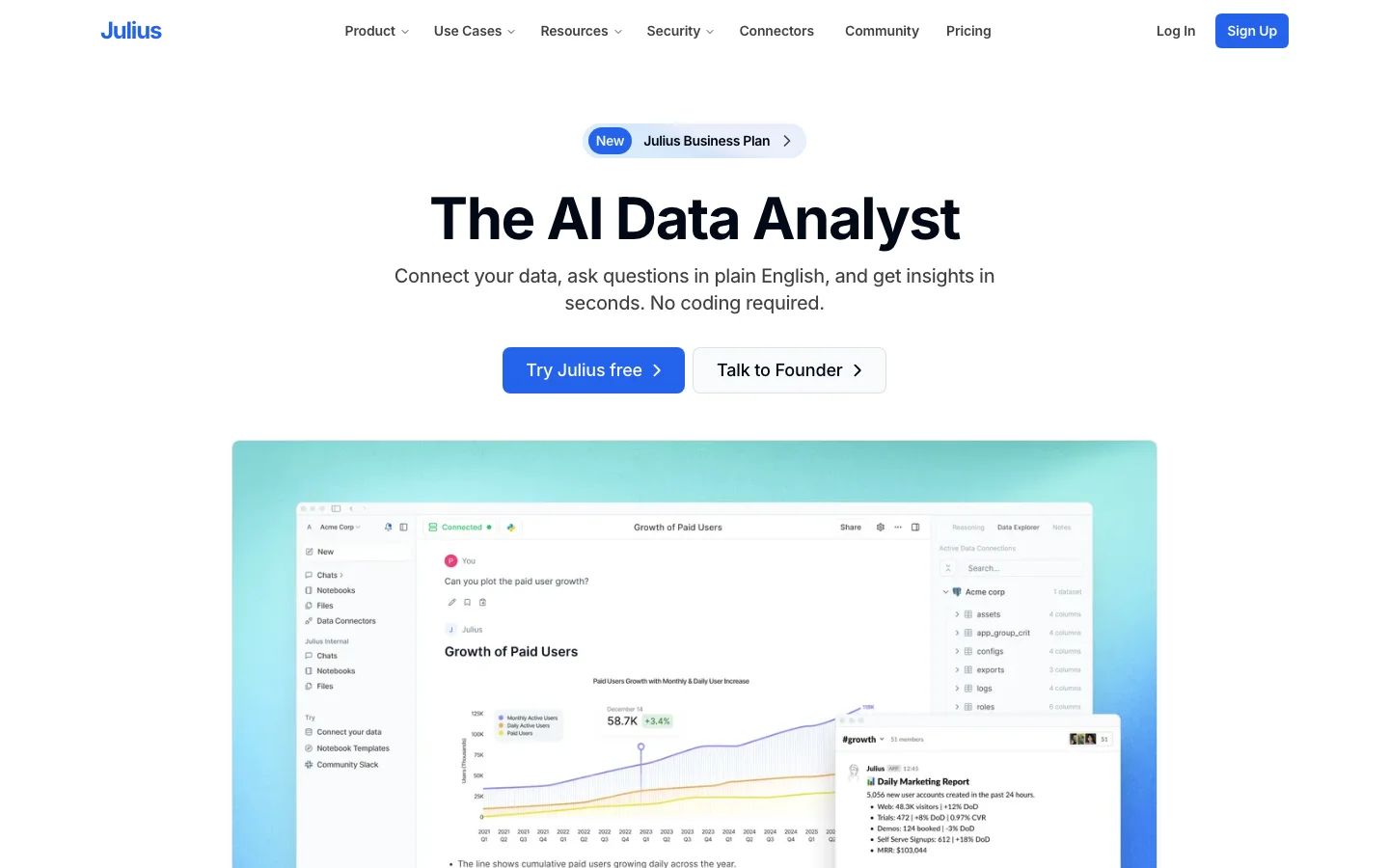

Julius AI, an AI data analysis tool, divides the room. Ask a PhD student grinding through dissertation regressions and you'll hear genuine relief: it debugs its own Python code and handles iterative analysis without requiring users to write manually. Ask a professional data scientist and you'll hear dismissal. The community consensus is that it's probably only good for generating ad hoc charts for PMs and non-technical users. Both reactions are accurate. Julius is not a data science tool pretending to be something it isn't. It is a statistics assistant built for the large population of researchers, social scientists, and non-technical professionals who need analysis done but cannot write the code to do it. That population is real, it is active, and Julius AI pricing has a free tier plus paid Pro plans with database connectors. The tool's core loop is deliberately simple: upload a CSV or connect a database, ask a question in plain English, and get a chart or statistical summary back in seconds. Julius writes and executes Python behind the scenes, self-debugs when the code fails, and returns clean output without requiring you to know what pandas is. Its Notebooks product extends this into a persistent, collaborative workspace where teams mix natural language prompts with auto-generated code and visualizations. In practice, regular users say the iterative chat interface works well for academic stats work: the back-and-forth of "now run a chi-square" and "break it down by cohort" feels native in Julius in a way a general-purpose chat thread does not. The limits are real and worth naming clearly. In a Julius AI vs ChatGPT Code Interpreter comparison, both handle the same jobs; Julius costs extra unless the UX for iterative academic stats justifies it. More critically: Julius requires uploading your data to its servers, which is a Julius AI data privacy limitation. For anyone under IRB approval, GDPR, or corporate governance, that is a structural blocker, not a preference. Community members in research subreddits flagged this sharply: "I hope you aren't doing this with identifiable data." One additional flag worth transparency: Julius has $8M in seed funding and a hiring controversy: a job posting promised a $4K/week contract to extract product strategy from applicants with no intent to hire, circulating on r/recruitinghell with 86 upvotes. It does not affect the product's functionality, but it is a company ethics signal that readers doing due diligence will encounter. Julius AI is listed in the AI data analysis tools category. It also appears in our best AI tools for small business guide as a pick for operators who need lightweight data analysis without a data science background. Frequently Asked Questions Is Julius AI legit and safe to use? Julius AI is a legitimate, seed-funded ($8M) data analysis product with real production users: IO psychologists, PhD students, and non-technical analysts who use it for genuine statistical work. One documented credibility concern: a r/recruitinghell thread (score 86) alleged Julius used a job posting to extract free product strategy from candidates with no hiring intent. For data safety, Julius AI operates on a cloud-upload model, which means your data leaves your environment. This is a hard block for IRB-regulated research, GDPR contexts, and corporate data governance. It is not a preference issue; it is the product's architecture. Evaluate this constraint before any sensitive data workflow. How much does Julius AI cost in 2026? Julius AI offers a free tier with limited monthly queries and a Plus plan for individual analysts. Pro and Teams plans add database connectors (Snowflake, BigQuery, PostgreSQL), advanced reasoning mode, and live collaboration. The Max tier includes access to all models including Claude Opus 4. Custom Enterprise pricing is available for organizations needing on-premise data governance or unlimited usage. Verify current plan pricing at julius.ai. The tier structure and model availability have evolved since launch. Is Julius AI worth the subscription? For non-technical users (PhD students, IO psychologists, operations managers) who need to run legitimate statistical analysis without Python or R, Julius AI is genuinely useful. The self-debugging execution loop (writes code, runs it, catches errors, retries without user intervention) is the feature that earns the most organic praise, and it differentiates Julius from manually prompting ChatGPT for analysis. For data professionals and engineers, the answer is clearly no. The r/datascience consensus is that Julius is primarily for non-technical users, and ChatGPT Code Interpreter handles most of the same tasks for anyone already paying for ChatGPT Plus. Does Julius AI have a free trial or free plan? Yes, Julius AI has a free tier that allows you to upload a CSV and run analysis queries without a credit card. The free tier limits the number of monthly queries and the context size (2,400 characters vs. 10,000 on Max/Enterprise). It is enough to test whether the interface matches your workflow. Upload a real dataset you work with and run a few analyses. If the free tier's query limit is too restrictive for proper evaluation, the Plus plan is the natural next step.
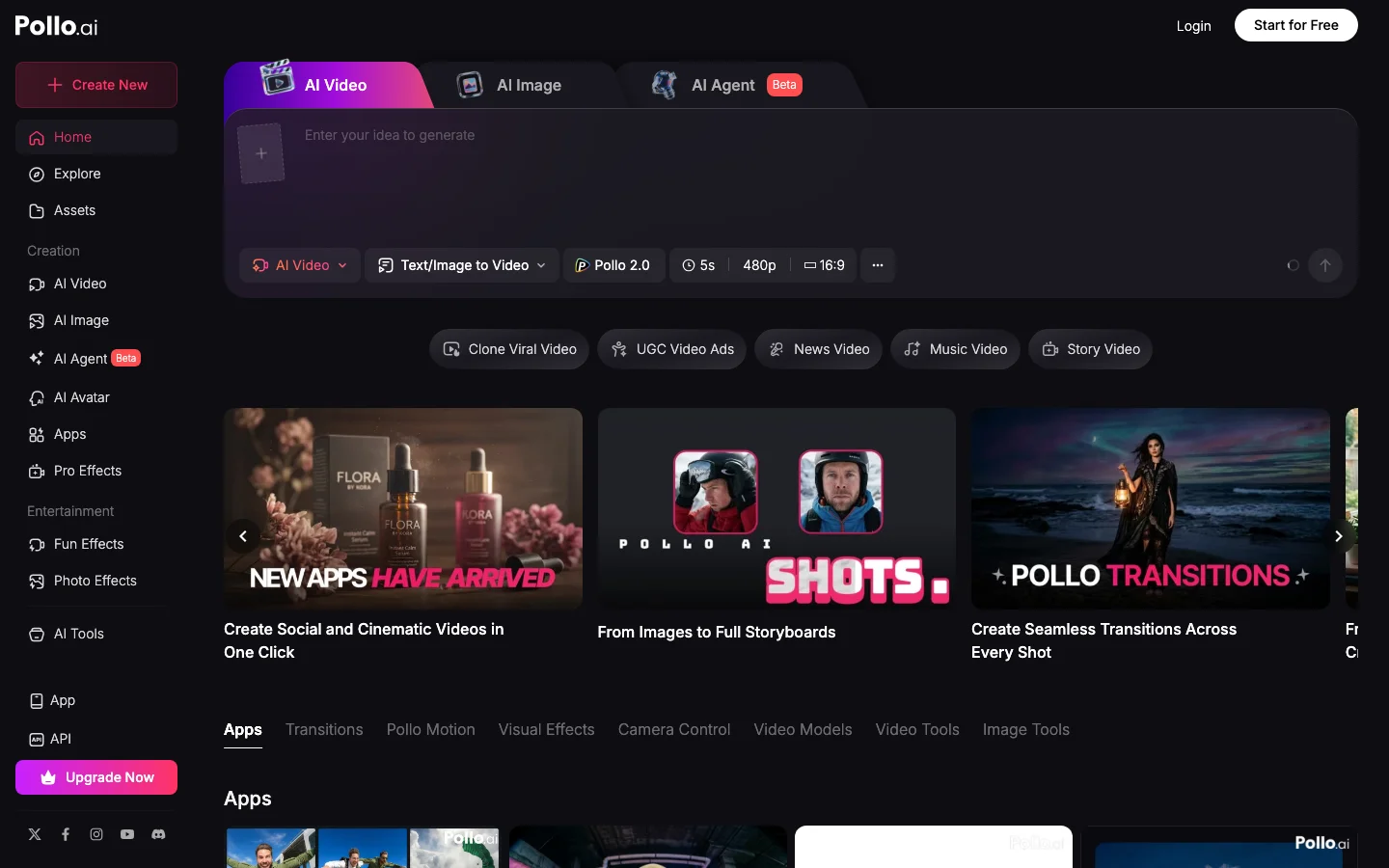

Pollo AI is a multi-model AI video generator that bundles Kling 2.1, Google Veo 3, Wan, and Seedream into a single interface, competing in a market alongside RunwayML, Sora, and standalone Kling subscriptions. Instead of maintaining separate accounts across video model providers, you get one dashboard to run text-to-video, image-to-video, face swaps, and AI avatar generation from the same prompt box. The UX is clean and the model-switching is fast. It genuinely delivers on the "Greatest Hits wrapper" promise that draws users in. For social media creators who want to audition multiple AI video engines without committing to individual subscriptions, the concept is sound and the output quality on Kling-powered generations is smooth enough to drop directly into an editor. The credit model is where the platform falls apart. The $15/month Lite plan provides 300 credits, which sounds substantial until you do the math: a single 5-to-10 second video runs 30-37 credits, yielding roughly 8-10 videos before you hit the wall. Users across multiple Reddit threads report canceling after the first billing cycle. The most-cited Pollo AI alternative is OpenArt at $7/month (annual) for approximately 50 videos, a price-per-video gap that is simply not defensible. Credit top-up packs exist but are hidden behind the upgrade modal's sidebar navigation, meaning users who would pay for more credits are leaving instead of finding the option. The billing trust crisis is the more serious problem. In late 2025, multiple subscribers reported unauthorized recurring charges continuing months after cancellation, with support completely unresponsive from October 4 onward: no Discord replies, no email acknowledgment. Formal complaints were filed with the FTC and ACCC, with payment disputes escalated through Stripe and Apple. Separately, 15 or more Creator Partner Program members reported that September and October 2025 credit distributions were never issued; the company acknowledged the credits were "naturally not issued." These are not isolated support tickets. They are documented regulatory complaints and a contract breach. The platform is well-funded (¥2 billion seed, 20M+ users reported) and is not going away, but the business model behavior documented in 2025 represents a material risk for any paying subscriber. Pollo AI is covered in our AI video generation tools comparison. See the full lineup in the AI video generators category. Frequently Asked Questions Is Pollo AI legit and safe to use? Pollo AI is a functioning video generation platform, but it has serious documented billing and trust concerns as of late 2025. Unauthorized recurring charges after stated cancellation have been reported by multiple users, with regulatory complaints filed with the FTC and ACCC, and disputes escalated through Stripe and Apple. A Creator Partner Program contract breach affected 15+ affiliates who never received promised payments. Support was completely unresponsive for months. These are not isolated complaints. They represent a pattern of operational failures that prospective subscribers should weigh seriously before providing payment information. How much does Pollo AI cost in 2026? Pollo AI's Lite plan is priced at approximately $15 per month, but the value equation is poor: 300 credits yields only 8 to 10 videos at 30-37 credits per video. By comparison, OpenArt at approximately $8 per month (annual billing) delivers roughly 50 videos, making Pollo significantly more expensive per output than its credit price suggests. The credit top-up option is hidden in the upgrade modal sidebar, which creates confusion for users trying to manage costs. No PayPal support has been specifically cited as a trust barrier by users reluctant to provide credit card data. Is Pollo AI worth the subscription? No, not at the Lite tier, and not given the documented billing conduct. The multi-model aggregation concept (Kling 2.1, Google Veo 3, Wan, Seedream in one dashboard) is genuinely useful, and image-to-video quality on Kling-powered generations is strong. But the credit value is poor, WAN 2.5 and "Banana" model access were removed from paying subscribers without notice, and the FTC and ACCC complaints represent a level of billing misconduct that is disqualifying for a subscription recommendation. The free tier is useful for model comparison before any purchase; stop there. Does Pollo AI have a free trial or free plan? Yes, Pollo AI has a free tier that allows access to multiple AI video models without a subscription. The free tier rate-limiting is aggressive enough that many users cycle through new accounts to continue testing rather than converting, which tells you something about the conversion experience. The free tier is the safest way to evaluate model quality comparison across Kling, Veo 3, and Wan without financial risk, especially given the billing concerns associated with paid plans.