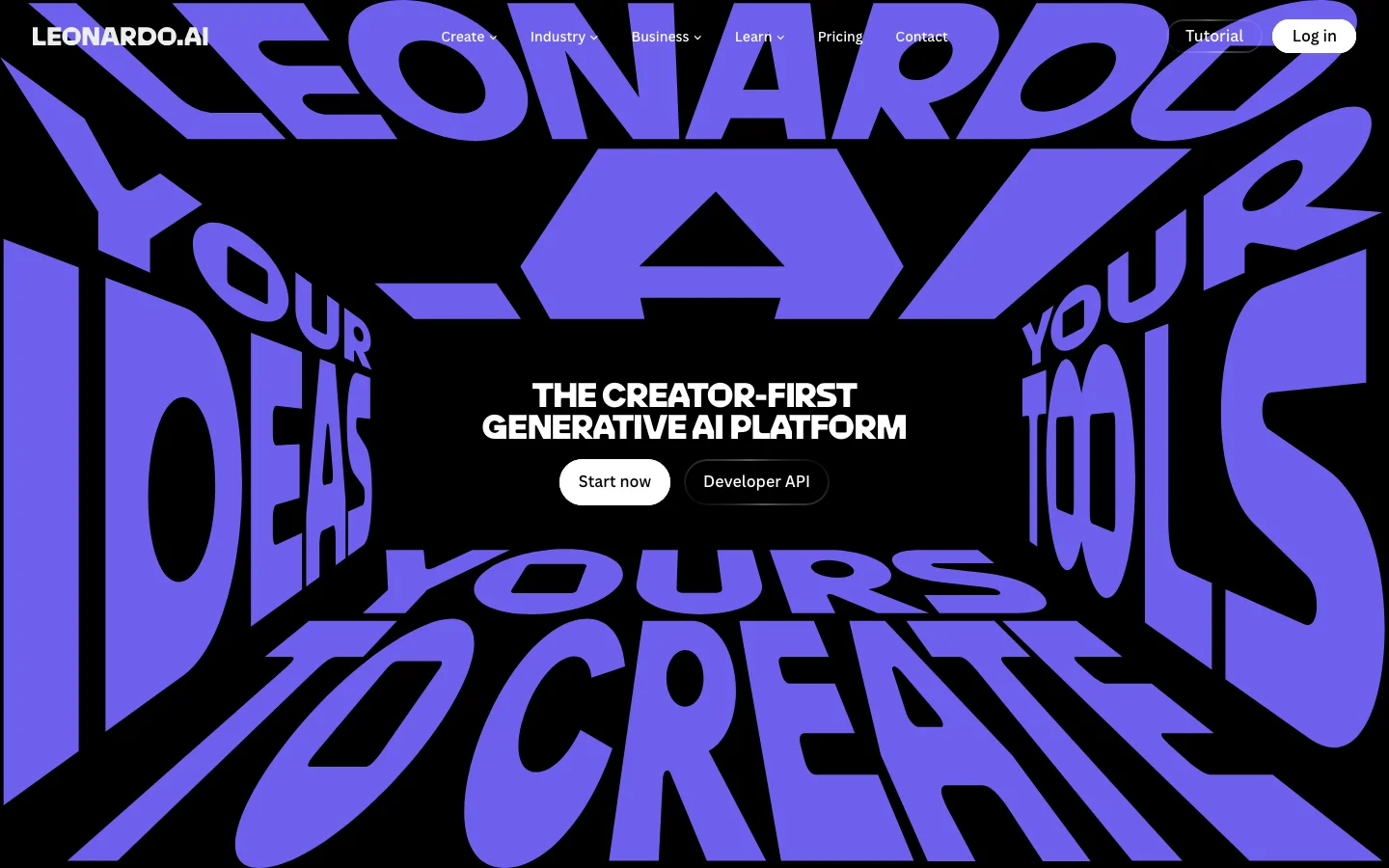
Leonardo AI is a browser-based AI image and art generation platform acquired by Canva in July 2024. It remains the leading hosted tool for game developers, concept artists, and creative teams needing depth beyond what single-model tools provide. The founding team and CEO JJ Fiasson continue running Leonardo as an independent product while Canva integrates the underlying technology into Magic Studio. The honest assessment is that nothing has broken post-acquisition, and the product roadmap has continued shipping at pace.
The Phoenix AI model, Leonardo's in-house flagship, handles multi-subject prompt adherence and functional in-image text generation at a level that Midjourney cannot reliably match. Logos, banners, and posters where legible text is the point are practical use cases in Leonardo that remain unreliable in most competing tools. The Real-time Canvas updates as you type, which compresses iteration time for concept development.
What Makes Leonardo AI Different
Leonardo AI is the deepest hosted creative suite in the AI image generation market. Where Midjourney gives you a prompt box and Adobe Firefly gives you commercial safety, Leonardo gives you a multi-model library spanning Phoenix, KinoXL, anime presets, and purpose-trained game asset models. On top of that base sits a full canvas with inpainting, outpainting, and compositing; ControlNet-style pose and depth guidance; a fine-tuning system for training custom LoRA models on your own reference images without touching code; and the Real-time Canvas.
The game developer community has converged on Leonardo AI as the category leader for game asset generation: textures, character sheets, tilesets, and concept art. No competitor offers purpose-trained game asset models at this depth for a hosted subscription. Game studios that would otherwise run local Stable Diffusion pipelines use Leonardo for the hosted LoRA library, fine-tuning system, and API access that integrates into production asset pipelines.
The Phoenix model's text-in-image generation is genuinely useful for branded content creation. Generating a product banner where the brand name renders legibly is a repeatable workflow in Leonardo that requires significant prompt engineering workarounds in Midjourney and is hit-or-miss in DALL-E 4. For design teams generating marketing assets at scale, this is a practical workflow advantage rather than a niche capability.
Leonardo AI Pricing Plans 2026
Leonardo AI uses a token-based pricing model where generation costs vary by model, resolution, and features enabled. This makes spend less predictable than a flat monthly fee, which is the most consistent documented community complaint. The free tier provides approximately 150 tokens per day, giving real access to most models and features for evaluation. Paid plans as of 2026: Essential at $12/month (8,500 tokens), Premium at $30/month (25,000 tokens), and Ultimate at $60/month (60,000 tokens).
Token consumption varies by model. Standard Phoenix generations cost around 1.5 tokens per image at base settings. Premium models and high-resolution outputs consume significantly more. Advanced features like Alchemy upscaling and image-to-image with high strength consume additional tokens per operation. For power users running high volumes across multiple models, the token math adds up quickly. A grey market of token resellers pricing at "90% off retail" has emerged on Reddit, which signals the official pricing is unsustainable for some user segments.
The API is available on paid plans and is one of the key reasons game studios and content operations choose Leonardo over Midjourney. Programmatic access to fine-tuned custom models through the Leonardo API is a capability that Midjourney does not offer on any plan. Verify current token allocations and pricing at leonardo.ai/pricing as these have been adjusted multiple times.
Leonardo AI vs Midjourney for Creative Work
The choice between Leonardo AI and Midjourney depends almost entirely on your primary use case. For general-purpose photorealism, painterly styles, and cinematic composition, Midjourney leads on aesthetic quality. For game asset generation, concept art with reference consistency, branded text-in-image work, and programmatic API integration, Leonardo leads on depth and flexibility.
Midjourney's V7 personalization system is a compounding moat that Leonardo has not replicated. The longer you use Midjourney, the more tuned your results become. Leonardo's LoRA fine-tuning system is the closer equivalent, requiring more upfront investment (uploading reference images, configuring training runs) but delivering model-level customization rather than a preference ranking system.
For commercial use, both tools have copyright uncertainty. Midjourney has an active Disney and Universal lawsuit. Leonardo's Canva acquisition introduces its own IP questions as Canva integrates Leonardo's training data into its commercial suite. For commercial safety with legal indemnification, Adobe Firefly is the only major tool that covers client work explicitly. Browse the full AI art generators category for a complete comparison.
Is Leonardo AI Worth It in 2026?
For game developers and concept artists, Leonardo AI is worth it. The purpose-trained game asset and character art models are a genuine moat. Phoenix's multi-subject prompt adherence and functional text-in-image generation make it practically useful for logos and banners. The Real-time Canvas and browser-based fine-tuning system are compelling for studios that want LoRA training without GPU infrastructure investment.
For casual users who want the best-looking image per prompt with minimal learning curve, Midjourney produces better aesthetic results with less tuning. Leonardo rewards users who take time to learn the model library and fine-tuning system. The depth that makes it valuable for professionals also makes it more complex to onboard for non-technical users.
The content filter behavior is the one area where the honest assessment is negative. The loudest sustained complaint in r/leonardoai is paid Artisan-tier users blocked on words like "city," "nightmare," and "sheer gown." This is not occasional friction. It is "censorship out of control," per the community's own language, and some experienced users have left over it. If content filter unpredictability is a dealbreaker for your workflow, test the free tier against your specific use cases before committing to a paid plan.
Frequently Asked Questions
Is Leonardo AI free in 2026?
Yes, Leonardo AI has a free tier that provides approximately 150 tokens per day. The free tier gives real access to most models and features, including the Real-time Canvas and Phoenix model, making it genuinely useful for evaluation rather than just a demo. Some advanced features like Alchemy upscaling and certain fine-tuning capabilities are gated to paid plans. Sign up at leonardo.ai to test the current free allocation against your actual use case before subscribing.
What is the Leonardo Phoenix model upgrade?
Phoenix is Leonardo's in-house flagship model, replacing earlier models as the primary recommendation for most generation tasks. The key advances are multi-subject prompt adherence (following complex prompts with multiple characters, objects, and settings more accurately) and functional text-in-image generation (rendering legible text like logos, signs, and banners inside generated images). For game asset work, KinoXL and the purpose-trained game asset models remain strong alternatives to Phoenix for specific tasks. Phoenix is the starting point for new users; explore the model library from there.
Leonardo vs Midjourney for commercial use
Both tools allow commercial use on paid plans, but neither provides legal indemnification for copyright claims on generated outputs. Midjourney has an active copyright lawsuit from Disney and Universal filed June 2025. Leonardo's Canva acquisition introduces additional questions about training data and IP as the platforms integrate. For client work requiring explicit commercial coverage, Adobe Firefly's terms include legal indemnification that neither Leonardo nor Midjourney provides. Verify current terms at leonardo.ai/terms before using outputs in high-stakes commercial contexts.
Does Leonardo AI train on user images?
By default, images you generate on Leonardo may be used to improve the platform's models unless you opt out or are on a plan that includes privacy settings. The fine-tuning datasets you upload for LoRA training are treated separately and are not shared publicly. The Canva acquisition has prompted community concern about data practices as Canva integrates Leonardo into Magic Studio. Review the current privacy policy at leonardo.ai and check your account settings for privacy and training opt-out options before uploading sensitive reference material.
Leonardo AI pricing tiers explained
Leonardo uses tokens as the billing unit, with consumption varying by model, resolution, and features. The free tier provides roughly 150 tokens per day. Paid tiers as of 2026: Essential at $12/month (8,500 tokens), Premium at $30/month (25,000 tokens), and Ultimate at $60/month (60,000 tokens). Token usage is the unpredictable variable: a standard Phoenix generation at base settings costs around 1.5 tokens, but premium models and Alchemy upscaling consume significantly more. Test your typical workflow on the free tier to understand your actual token consumption before selecting a plan.
- Free tier provides 150 tokens per day (roughly 30-50 images), giving meaningful access before any payment is required
- Fine-tuning lets you train custom models on your own reference images directly in the browser without any ML knowledge
- AI Canvas combines generation, inpainting, outpainting, and image compositing in one non-destructive workspace
- ControlNet-style guidance (pose, depth, edge detection) gives precise control over character posture and composition
- Real-time generation mode updates the preview as you type, making prompt iteration dramatically faster
- Built-in model library includes purpose-trained models for game assets, anime, concept art, and photorealism
- Motion module generates short looping video clips from a still image with a single click
- Output quality requires more prompt engineering and parameter tuning than Midjourney to reach the same aesthetic polish
- Token system is confusing: costs vary by model, resolution, and features used, making it hard to predict how fast credits drain
- Precise text rendering inside images remains unreliable, lagging behind DALL-E 3 on any design work with legible copy
- Custom model training can produce inconsistent results if your reference dataset has mixed styles or insufficient diversity
- UI has grown cluttered as features accumulated; new users face a steep discovery curve before finding the right workflow
- Generation speed on the free tier slows significantly during peak hours when paid-tier users take queue priority
Game asset creation and concept art
Output quality requires more prompt engineering and parameter tuning than Midjourney to reach the same aesthetic polish. Token system is confusing: costs vary by model, resolution, and features used, making it hard to predict how fast credits drain.
Pricing
As of Oct 2026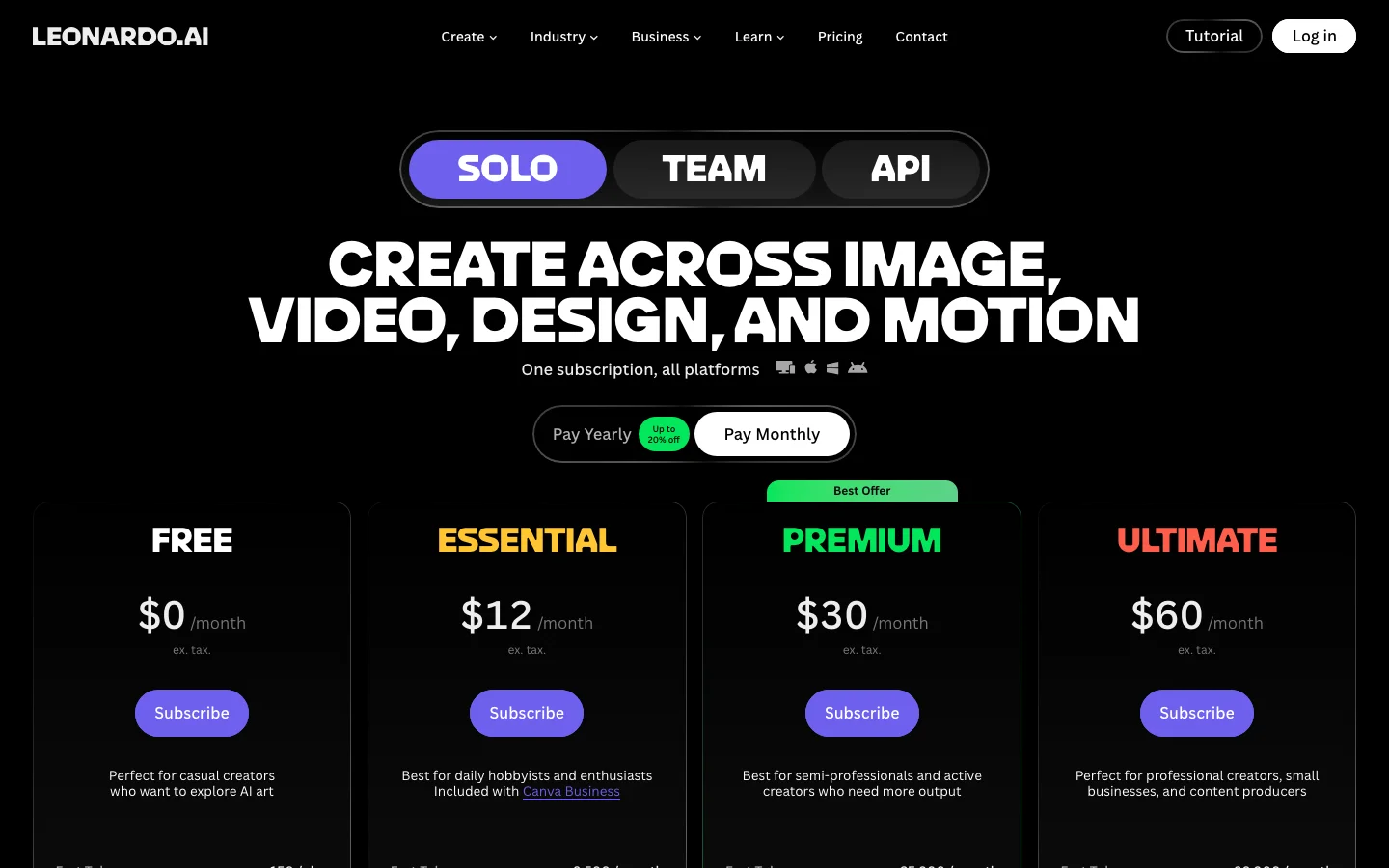
This review was produced independently by the Belreos editorial team. See how we score and test AI tools. Looking for more options? Browse all AI Art Generators tools on Belreos.