
OpenArt is an AI image and video generation platform built by former Googlers. It started as a Stable Diffusion prompt discovery tool before expanding into a 100+ model creative suite. The SD Prompt Book (1,400+ upvotes on r/StableDiffusion) and a LoRA training guide that landed on HackerNews established the platform's credibility among serious AI artists before it sold a single subscription. The users who are now the loudest critics are not newcomers who misunderstood the product. They are the users who were there first, who built their workflows on OpenArt over years, and who expected better than a UI overhaul that buried 120 folders of organized work overnight. The platform's technical value proposition is real. OpenArt aggregates 100+ models: Stable Diffusion variants, Flux, Kling, Veo3, Seedream, Nano Banana, under one account, which is a genuine differentiator against single-model tools like Midjourney. For Kling AI video generation at the ~$30/month tier, OpenArt delivers 125 Kling 2.6 (1080p, 5s) videos and 168 Kling o1 credits per month, more than Higgsfield (120), Freepik (82), or Krea (37). For buyers specifically researching Kling credit volume, OpenArt is the best-value entry point. The Consistent Character feature (upload a reference image and generate the same character identity across scenes) is actively used in UGC creator and social media content pipelines. Paired with HeyGen for lip sync, it forms a complete AI character video workflow. LoRA custom model training is also available on mid-tier plans. For creators who want to generate, train, edit, and export in one place, no other platform at this price aggregates all four under one login. Competitor Leonardo.ai offers a more stable UI; Higgsfield offers more image credits at the same price; ComfyUI and RunPod offer self-hosted freedom with no UX rug-pulls. The execution problems are structural enough to shape the recommendation. Character Creator 2.0 launched to immediate backlash: users documented that the new version delivers generic outputs regardless of reference input, doubled the credit cost, and required users to pay to upgrade existing characters just to use them in video generation, affecting anyone with large existing character libraries. The credit loss bug is independently documented across multiple subreddits: credits deducted for failed generations, no refund on email contact, and a recurring pattern where the platform works well on the free tier and starts malfunctioning after payment. OpenArt's annual plan pricing creates compounding risk. The 40 one-time free trial credits are insufficient to evaluate a multi-generation workflow, and annual commitments of $700-$800/year are generating public buyer regret at a high enough rate that it has become a visible Reddit thread type. The platform is not a scam; it is a capable tool that is currently burning through its community goodwill faster than it is earning it back. OpenArt is featured in our best AI art generators comparison. Browse all tools in the AI art generators category or compare it directly with Leonardo AI. ## Is OpenArt AI Legit and Safe? OpenArt is a legitimate company, not a scam. It was founded in 2022 by a team of former Google engineers, including co-founders Zhen Li and Zongyi Li, and is headquartered in San Francisco. The platform launched publicly as a Stable Diffusion prompt discovery tool and grew organically within the AI art community before moving into paid subscriptions. Its SD Prompt Book reached over 1,400 upvotes on r/StableDiffusion, and its LoRA training content was featured on HackerNews, both signals of genuine community credibility. On data handling: OpenArt's terms of service state that users retain ownership of the images they generate. The platform uses uploaded reference images to run the Consistent Character and LoRA training features, but does not claim rights to your output or source images for redistribution. Generated images on paid plans are not used to train the model without consent. The legitimate concern is not fraud, it is execution. Credit loss bugs after payment, support response times measured in weeks, and the Character Creator 2.0 rollout that retroactively gated existing work behind new costs, these are documented patterns across independent Reddit threads. OpenArt is a real product that has earned real community frustration. The trust assessment: safe to use on a monthly plan, risky to commit to annually until the platform stabilizes. Compare alternatives at Leonardo AI and Adobe Firefly before making an annual commitment. ## OpenArt Pricing and Subscription Plans 2026 OpenArt uses a credit-based subscription model across four tiers. Pricing as of April 2026: **Free** ($0/month): 40 one-time credits on signup. Suitable for testing only, insufficient for evaluating multi-step workflows. **Starter** (~$12/month billed monthly, ~$8/month billed annually): Basic credit allocation covering standard Stable Diffusion and Flux image generation. Does not include Kling video credits or LoRA training. **Hobbyist** (~$30/month billed monthly, ~$20/month billed annually): The main tier for serious users. Includes Kling 2.6 video credits (approximately 125 clips at 1080p/5s per month), access to 100+ models, and LoRA custom model training. Commercial use is permitted on this tier. **Pro** (~$67/month billed monthly, ~$45/month billed annually): Higher credit volume, priority generation queue, and expanded model access including newer video models like Veo3 and Seedream as they are added. The credit system means actual generation counts vary by model. A single Kling 2.6 video costs more credits than a standard image. The free trial (40 credits) is not enough to meaningfully test video workflows before committing. Monthly plans are the lower-risk entry point given the documented annual plan regret on Reddit at the $700-$800/year price point. Verify current pricing at openart.ai before purchasing, as credit allocations have changed with each model addition. ## Frequently Asked Questions **Is OpenArt AI legit?** Yes. Founded in 2022 by former Google engineers in San Francisco, with an established Reddit and HackerNews community presence. User complaints center on execution quality (credit bugs, UI changes), not legitimacy. **Is openart.ai safe to use?** The platform itself is safe and follows standard data practices - you retain image ownership. The risk is financial: credit-loss bugs and slow support mean lost credits can go unresolved. Stick to monthly billing to limit exposure. **What are OpenArt's subscription plans in 2026?** Four tiers: Free (40 one-time credits), Starter (~$12/month), Hobbyist (~$30/month), and Pro (~$67/month). Annual billing cuts prices by roughly 30-35%. The Hobbyist tier is where most paid users land because it includes Kling video credits and LoRA training. **How much does OpenArt cost?** $12 to $67 per month depending on tier, with annual billing dropping to $8-$45/month. Annual plans run $700-$800 upfront, which has generated significant buyer regret on Reddit. Start monthly. **Do I need an OpenArt account to try it?** Yes, there is no guest mode. Signup is free and gives you 40 one-time credits, enough for basic image tests but not for evaluating video generation or LoRA training.
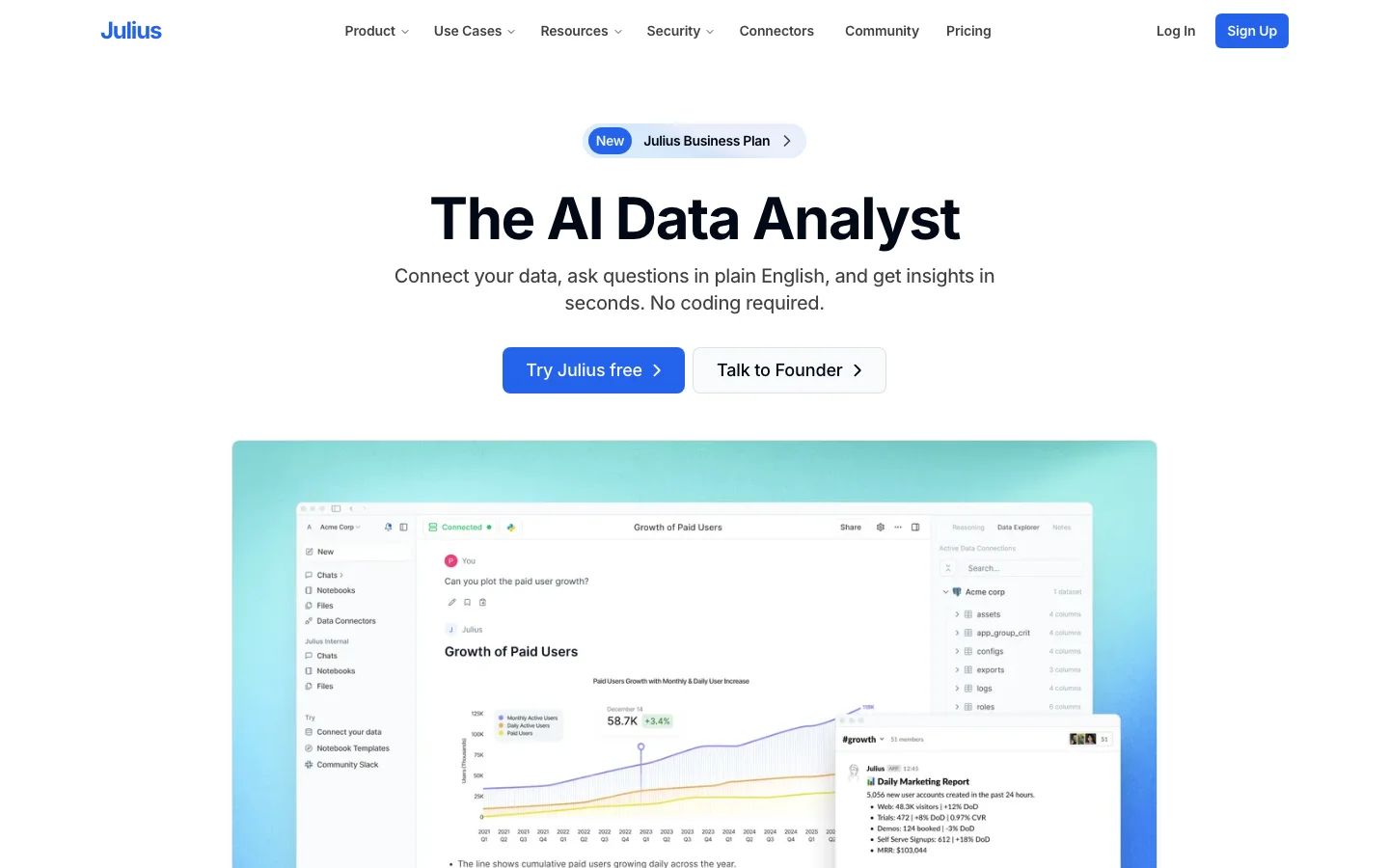
Julius AI, an AI data analysis tool, divides the room. Ask a PhD student grinding through dissertation regressions and you'll hear genuine relief: it debugs its own Python code and handles iterative analysis without requiring users to write manually. Ask a professional data scientist and you'll hear dismissal. The community consensus is that it's probably only good for generating ad hoc charts for PMs and non-technical users. Both reactions are accurate. Julius is not a data science tool pretending to be something it isn't. It is a statistics assistant built for the large population of researchers, social scientists, and non-technical professionals who need analysis done but cannot write the code to do it. That population is real, it is active, and Julius AI pricing has a free tier plus paid Pro plans with database connectors. The tool's core loop is deliberately simple: upload a CSV or connect a database, ask a question in plain English, and get a chart or statistical summary back in seconds. Julius writes and executes Python behind the scenes, self-debugs when the code fails, and returns clean output without requiring you to know what pandas is. Its Notebooks product extends this into a persistent, collaborative workspace where teams mix natural language prompts with auto-generated code and visualizations. In practice, regular users say the iterative chat interface works well for academic stats work: the back-and-forth of "now run a chi-square" and "break it down by cohort" feels native in Julius in a way a general-purpose chat thread does not. The limits are real and worth naming clearly. In a Julius AI vs ChatGPT Code Interpreter comparison, both handle the same jobs; Julius costs extra unless the UX for iterative academic stats justifies it. More critically: Julius requires uploading your data to its servers, which is a Julius AI data privacy limitation. For anyone under IRB approval, GDPR, or corporate governance, that is a structural blocker, not a preference. Community members in research subreddits flagged this sharply: "I hope you aren't doing this with identifiable data." One additional flag worth transparency: Julius has $8M in seed funding and a hiring controversy: a job posting promised a $4K/week contract to extract product strategy from applicants with no intent to hire, circulating on r/recruitinghell with 86 upvotes. It does not affect the product's functionality, but it is a company ethics signal that readers doing due diligence will encounter. Julius AI is listed in the AI data analysis tools category. It also appears in our best AI tools for small business guide as a pick for operators who need lightweight data analysis without a data science background. Frequently Asked Questions Is Julius AI legit and safe to use? Julius AI is a legitimate, seed-funded ($8M) data analysis product with real production users: IO psychologists, PhD students, and non-technical analysts who use it for genuine statistical work. One documented credibility concern: a r/recruitinghell thread (score 86) alleged Julius used a job posting to extract free product strategy from candidates with no hiring intent. For data safety, Julius AI operates on a cloud-upload model, which means your data leaves your environment. This is a hard block for IRB-regulated research, GDPR contexts, and corporate data governance. It is not a preference issue; it is the product's architecture. Evaluate this constraint before any sensitive data workflow. How much does Julius AI cost in 2026? Julius AI offers a free tier with limited monthly queries and a Plus plan for individual analysts. Pro and Teams plans add database connectors (Snowflake, BigQuery, PostgreSQL), advanced reasoning mode, and live collaboration. The Max tier includes access to all models including Claude Opus 4. Custom Enterprise pricing is available for organizations needing on-premise data governance or unlimited usage. Verify current plan pricing at julius.ai. The tier structure and model availability have evolved since launch. Is Julius AI worth the subscription? For non-technical users (PhD students, IO psychologists, operations managers) who need to run legitimate statistical analysis without Python or R, Julius AI is genuinely useful. The self-debugging execution loop (writes code, runs it, catches errors, retries without user intervention) is the feature that earns the most organic praise, and it differentiates Julius from manually prompting ChatGPT for analysis. For data professionals and engineers, the answer is clearly no. The r/datascience consensus is that Julius is primarily for non-technical users, and ChatGPT Code Interpreter handles most of the same tasks for anyone already paying for ChatGPT Plus. Does Julius AI have a free trial or free plan? Yes, Julius AI has a free tier that allows you to upload a CSV and run analysis queries without a credit card. The free tier limits the number of monthly queries and the context size (2,400 characters vs. 10,000 on Max/Enterprise). It is enough to test whether the interface matches your workflow. Upload a real dataset you work with and run a few analyses. If the free tier's query limit is too restrictive for proper evaluation, the Plus plan is the natural next step.
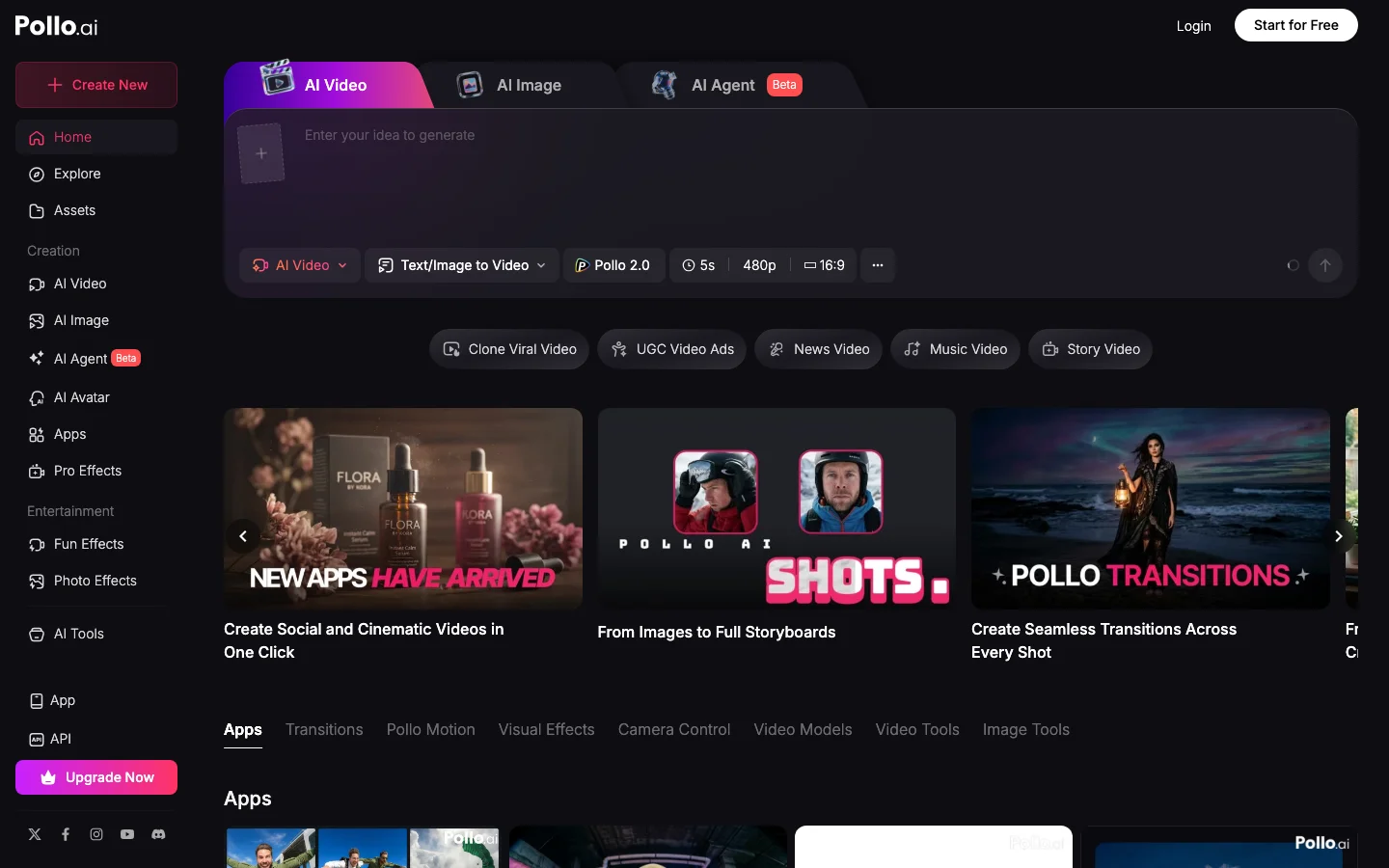

Pollo AI is a multi-model AI video generator that bundles Kling 2.1, Google Veo 3, Wan, and Seedream into a single interface, competing in a market alongside RunwayML, Sora, and standalone Kling subscriptions. Instead of maintaining separate accounts across video model providers, you get one dashboard to run text-to-video, image-to-video, face swaps, and AI avatar generation from the same prompt box. The UX is clean and the model-switching is fast. It genuinely delivers on the "Greatest Hits wrapper" promise that draws users in. For social media creators who want to audition multiple AI video engines without committing to individual subscriptions, the concept is sound and the output quality on Kling-powered generations is smooth enough to drop directly into an editor. The credit model is where the platform falls apart. The $15/month Lite plan provides 300 credits, which sounds substantial until you do the math: a single 5-to-10 second video runs 30-37 credits, yielding roughly 8-10 videos before you hit the wall. Users across multiple Reddit threads report canceling after the first billing cycle. The most-cited Pollo AI alternative is OpenArt at $7/month (annual) for approximately 50 videos, a price-per-video gap that is simply not defensible. Credit top-up packs exist but are hidden behind the upgrade modal's sidebar navigation, meaning users who would pay for more credits are leaving instead of finding the option. The billing trust crisis is the more serious problem. In late 2025, multiple subscribers reported unauthorized recurring charges continuing months after cancellation, with support completely unresponsive from October 4 onward: no Discord replies, no email acknowledgment. Formal complaints were filed with the FTC and ACCC, with payment disputes escalated through Stripe and Apple. Separately, 15 or more Creator Partner Program members reported that September and October 2025 credit distributions were never issued; the company acknowledged the credits were "naturally not issued." These are not isolated support tickets. They are documented regulatory complaints and a contract breach. The platform is well-funded (¥2 billion seed, 20M+ users reported) and is not going away, but the business model behavior documented in 2025 represents a material risk for any paying subscriber. Pollo AI is covered in our AI video generation tools comparison. See the full lineup in the AI video generators category. Frequently Asked Questions Is Pollo AI legit and safe to use? Pollo AI is a functioning video generation platform, but it has serious documented billing and trust concerns as of late 2025. Unauthorized recurring charges after stated cancellation have been reported by multiple users, with regulatory complaints filed with the FTC and ACCC, and disputes escalated through Stripe and Apple. A Creator Partner Program contract breach affected 15+ affiliates who never received promised payments. Support was completely unresponsive for months. These are not isolated complaints. They represent a pattern of operational failures that prospective subscribers should weigh seriously before providing payment information. How much does Pollo AI cost in 2026? Pollo AI's Lite plan is priced at approximately $15 per month, but the value equation is poor: 300 credits yields only 8 to 10 videos at 30-37 credits per video. By comparison, OpenArt at approximately $8 per month (annual billing) delivers roughly 50 videos, making Pollo significantly more expensive per output than its credit price suggests. The credit top-up option is hidden in the upgrade modal sidebar, which creates confusion for users trying to manage costs. No PayPal support has been specifically cited as a trust barrier by users reluctant to provide credit card data. Is Pollo AI worth the subscription? No, not at the Lite tier, and not given the documented billing conduct. The multi-model aggregation concept (Kling 2.1, Google Veo 3, Wan, Seedream in one dashboard) is genuinely useful, and image-to-video quality on Kling-powered generations is strong. But the credit value is poor, WAN 2.5 and "Banana" model access were removed from paying subscribers without notice, and the FTC and ACCC complaints represent a level of billing misconduct that is disqualifying for a subscription recommendation. The free tier is useful for model comparison before any purchase; stop there. Does Pollo AI have a free trial or free plan? Yes, Pollo AI has a free tier that allows access to multiple AI video models without a subscription. The free tier rate-limiting is aggressive enough that many users cycle through new accounts to continue testing rather than converting, which tells you something about the conversion experience. The free tier is the safest way to evaluate model quality comparison across Kling, Veo 3, and Wan without financial risk, especially given the billing concerns associated with paid plans.

Leonardo AI is a browser-based AI image and art generation platform acquired by Canva in July 2024. It remains the leading hosted tool for game developers, concept artists, and creative teams needing depth beyond what single-model tools provide. The founding team and CEO JJ Fiasson continue running Leonardo as an independent product while Canva integrates the underlying technology into Magic Studio. The honest assessment is that nothing has broken post-acquisition, and the product roadmap has continued shipping at pace. The Phoenix AI model, Leonardo's in-house flagship, handles multi-subject prompt adherence and functional in-image text generation at a level that Midjourney cannot reliably match. Logos, banners, and posters where legible text is the point are practical use cases in Leonardo that remain unreliable in most competing tools. The Real-time Canvas updates as you type, which compresses iteration time for concept development. What Makes Leonardo AI Different Leonardo AI is the deepest hosted creative suite in the AI image generation market. Where Midjourney gives you a prompt box and Adobe Firefly gives you commercial safety, Leonardo gives you a multi-model library spanning Phoenix, KinoXL, anime presets, and purpose-trained game asset models. On top of that base sits a full canvas with inpainting, outpainting, and compositing; ControlNet-style pose and depth guidance; a fine-tuning system for training custom LoRA models on your own reference images without touching code; and the Real-time Canvas. The game developer community has converged on Leonardo AI as the category leader for game asset generation: textures, character sheets, tilesets, and concept art. No competitor offers purpose-trained game asset models at this depth for a hosted subscription. Game studios that would otherwise run local Stable Diffusion pipelines use Leonardo for the hosted LoRA library, fine-tuning system, and API access that integrates into production asset pipelines. The Phoenix model's text-in-image generation is genuinely useful for branded content creation. Generating a product banner where the brand name renders legibly is a repeatable workflow in Leonardo that requires significant prompt engineering workarounds in Midjourney and is hit-or-miss in DALL-E 4. For design teams generating marketing assets at scale, this is a practical workflow advantage rather than a niche capability. Leonardo AI Pricing Plans 2026 Leonardo AI uses a token-based pricing model where generation costs vary by model, resolution, and features enabled. This makes spend less predictable than a flat monthly fee, which is the most consistent documented community complaint. The free tier provides approximately 150 tokens per day, giving real access to most models and features for evaluation. Paid plans as of 2026: Essential at $12/month (8,500 tokens), Premium at $30/month (25,000 tokens), and Ultimate at $60/month (60,000 tokens). Token consumption varies by model. Standard Phoenix generations cost around 1.5 tokens per image at base settings. Premium models and high-resolution outputs consume significantly more. Advanced features like Alchemy upscaling and image-to-image with high strength consume additional tokens per operation. For power users running high volumes across multiple models, the token math adds up quickly. A grey market of token resellers pricing at "90% off retail" has emerged on Reddit, which signals the official pricing is unsustainable for some user segments. The API is available on paid plans and is one of the key reasons game studios and content operations choose Leonardo over Midjourney. Programmatic access to fine-tuned custom models through the Leonardo API is a capability that Midjourney does not offer on any plan. Verify current token allocations and pricing at leonardo.ai/pricing as these have been adjusted multiple times. Leonardo AI vs Midjourney for Creative Work The choice between Leonardo AI and Midjourney depends almost entirely on your primary use case. For general-purpose photorealism, painterly styles, and cinematic composition, Midjourney leads on aesthetic quality. For game asset generation, concept art with reference consistency, branded text-in-image work, and programmatic API integration, Leonardo leads on depth and flexibility. Midjourney's V7 personalization system is a compounding moat that Leonardo has not replicated. The longer you use Midjourney, the more tuned your results become. Leonardo's LoRA fine-tuning system is the closer equivalent, requiring more upfront investment (uploading reference images, configuring training runs) but delivering model-level customization rather than a preference ranking system. For commercial use, both tools have copyright uncertainty. Midjourney has an active Disney and Universal lawsuit. Leonardo's Canva acquisition introduces its own IP questions as Canva integrates Leonardo's training data into its commercial suite. For commercial safety with legal indemnification, Adobe Firefly is the only major tool that covers client work explicitly. Browse the full AI art generators category for a complete comparison. Is Leonardo AI Worth It in 2026? For game developers and concept artists, Leonardo AI is worth it. The purpose-trained game asset and character art models are a genuine moat. Phoenix's multi-subject prompt adherence and functional text-in-image generation make it practically useful for logos and banners. The Real-time Canvas and browser-based fine-tuning system are compelling for studios that want LoRA training without GPU infrastructure investment. For casual users who want the best-looking image per prompt with minimal learning curve, Midjourney produces better aesthetic results with less tuning. Leonardo rewards users who take time to learn the model library and fine-tuning system. The depth that makes it valuable for professionals also makes it more complex to onboard for non-technical users. The content filter behavior is the one area where the honest assessment is negative. The loudest sustained complaint in r/leonardoai is paid Artisan-tier users blocked on words like "city," "nightmare," and "sheer gown." This is not occasional friction. It is "censorship out of control," per the community's own language, and some experienced users have left over it. If content filter unpredictability is a dealbreaker for your workflow, test the free tier against your specific use cases before committing to a paid plan. Frequently Asked Questions Is Leonardo AI free in 2026? Yes, Leonardo AI has a free tier that provides approximately 150 tokens per day. The free tier gives real access to most models and features, including the Real-time Canvas and Phoenix model, making it genuinely useful for evaluation rather than just a demo. Some advanced features like Alchemy upscaling and certain fine-tuning capabilities are gated to paid plans. Sign up at leonardo.ai to test the current free allocation against your actual use case before subscribing. What is the Leonardo Phoenix model upgrade? Phoenix is Leonardo's in-house flagship model, replacing earlier models as the primary recommendation for most generation tasks. The key advances are multi-subject prompt adherence (following complex prompts with multiple characters, objects, and settings more accurately) and functional text-in-image generation (rendering legible text like logos, signs, and banners inside generated images). For game asset work, KinoXL and the purpose-trained game asset models remain strong alternatives to Phoenix for specific tasks. Phoenix is the starting point for new users; explore the model library from there. Leonardo vs Midjourney for commercial use Both tools allow commercial use on paid plans, but neither provides legal indemnification for copyright claims on generated outputs. Midjourney has an active copyright lawsuit from Disney and Universal filed June 2025. Leonardo's Canva acquisition introduces additional questions about training data and IP as the platforms integrate. For client work requiring explicit commercial coverage, Adobe Firefly's terms include legal indemnification that neither Leonardo nor Midjourney provides. Verify current terms at leonardo.ai/terms before using outputs in high-stakes commercial contexts. Does Leonardo AI train on user images? By default, images you generate on Leonardo may be used to improve the platform's models unless you opt out or are on a plan that includes privacy settings. The fine-tuning datasets you upload for LoRA training are treated separately and are not shared publicly. The Canva acquisition has prompted community concern about data practices as Canva integrates Leonardo into Magic Studio. Review the current privacy policy at leonardo.ai and check your account settings for privacy and training opt-out options before uploading sensitive reference material. Leonardo AI pricing tiers explained Leonardo uses tokens as the billing unit, with consumption varying by model, resolution, and features. The free tier provides roughly 150 tokens per day. Paid tiers as of 2026: Essential at $12/month (8,500 tokens), Premium at $30/month (25,000 tokens), and Ultimate at $60/month (60,000 tokens). Token usage is the unpredictable variable: a standard Phoenix generation at base settings costs around 1.5 tokens, but premium models and Alchemy upscaling consume significantly more. Test your typical workflow on the free tier to understand your actual token consumption before selecting a plan.